2025-J2257
Sponsored By
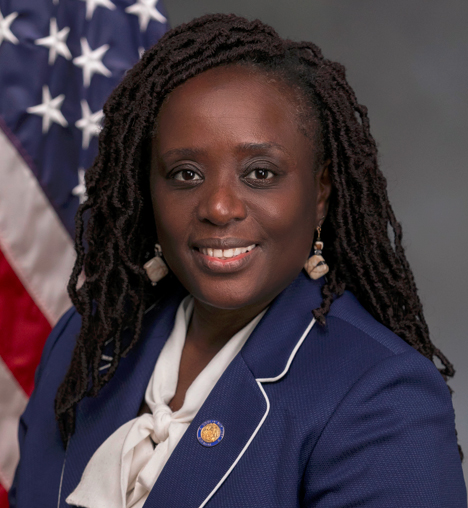
(D) 30th Senate District
text
2025-J2257
Senate Resolution No. 2257
BY: Senator CLEARE
MOURNING the death of legendary sax player, Sonny
Rollins, one of the most important and influential
jazz musicians in the history of American music
WHEREAS, It is the sense of this Legislative Body to honor and pay
tribute to those musical geniuses whose commitment and creative talents
have contributed to the entertainment and cultural enrichment of their
community, the State of New York, the Nation and the world; and
WHEREAS, It is with profound sorrow and deep regret that this
Legislative Body mourn the death of legendary sax player, Sonny Rollins,
one of the most important and influential jazz musicians in the history
of American music, noting the significance of his inspired life and
accomplishments; and
WHEREAS, Sonny Rollins, whose forceful and imaginative approach to
the tenor saxophone made him one of the dominant jazz musicians of the
post-World War II era, died at his home in Woodstock, New York, on
Monday May 25, 2026, at the age of 95; and
WHEREAS, Walter Theodore "Sonny" Rollins was born on September 7,
1930 in New York City to parents from the Virgin Islands; and
WHEREAS, The youngest of three siblings, Sonny Rollins grew up in
central Harlem and on Sugar Hill, not far from the Savoy Ballroom, the
Apollo Theatre, and the doorstep of his idol, Coleman Hawkins; receiving
his first alto saxophone at the age of seven or eight, he was inspired
by Louis Jordan, Fats Waller and Louis Armstrong; and
WHEREAS, Sonny Rollins switched to tenor saxophone in 1946 at the
age of 16 to emulate Coleman Hawkins; and
WHEREAS, During his high-school years, Sonny Rollins played in a
band with other future jazz legends Jackie McLean, Kenny Drew, and Art
Taylor; and
WHEREAS, Sonny Rollins attended Edward W. Stitt Junior High School
and graduated from Benjamin Franklin High School in East Harlem in 1948;
and
WHEREAS, While living in Sugar Hill in the early 1950's, Sonny
Rollins established a reputation first among musicians, then the public,
as the most brash and creative young tenor on the scene, through his
work and recordings with Babs Gonzales, J.J. Johnson, Bud Powell,
Thelonious Monk, the Modern Jazz Quartet, Charlie Parker, and Miles
Davis; and
WHEREAS, In 1956, after returning from a brief move to Chicago,
Sonny Rollins began recording the first of a series of landmark
recordings issued under his own name: "Valse Hot" introduced the
practice, now common, of playing bop in 3/4 meter; "St. Thomas"
initiated his explorations of calypso patterns; and "Blue 7" was hailed
by Gunther Schuller as demonstrating a new manner of "thematic
improvisation," in which the soloist develops motifs extracted from his
theme; and
WHEREAS, Sonny Rollins' 1956 album "Saxophone Colossus" was selected
for preservation by the National Recording Registry of the Library of
Congress in 2016; and
WHEREAS, During the years 1956 to 1958, Sonny Rollins was widely
regarded as the most talented and innovative tenor saxophonist in jazz,
and his first examples of the unaccompanied solo playing that would
become a specialty also appeared in this period; yet the perpetually
dissatisfied saxophonist questioned the acclaim his music was
attracting, and between 1959 and late 1961, he withdrew from public
performance; and
WHEREAS, Sonny Rollins returned to action in late 1961, his first
recording was appropriately titled "The Bridge" and by the mid-60s, his
live sets became grand, marathon stream-of-consciousness solos where he
would call forth melodies from his encyclopedic knowledge of popular
songs, including startling segues and sometimes barely visiting one
theme before surging into dazzling variations upon the next; and
WHEREAS, The period between 1962 and 1966 saw Sonny Rollins working
and striking productive relationships with Jim Hall, Don Cherry, Paul
Bley, and his idol Coleman Hawkins, yet he grew dissatisfied with the
music business once again and started yet another sabbatical in 1966;
and
WHEREAS, In 1965, Sonny Rollins married Lucille Pearson, in Kansas
City, Missouri; and
WHEREAS, In 1972, with the encouragement and support of his wife
Lucille, who had become his business manager, Rollins returned to
performing and recording, signing with Milestone and releasing "Next
Album"; and
WHEREAS, Sonny Rollins' lengthy association with the Berkeley-based
label, Milestone, produced two dozen albums in various settings-from his
working groups to all-star ensembles (Tommy Flanagan, Jack DeJohnette,
Stanley Clarke, Tony Williams); from a solo recital to tour recordings
with the Milestone Jazzstars (Ron Carter, McCoy Tyner); and
WHEREAS, After decades of innovating and influencing Jazz music,
Sonny Rollins won his first performance Grammy for "This Is What I Do"
in 2000, and his second for 2004's "Without a Song"; and
WHEREAS, Sonny Rollins received a Lifetime Achievement Award from
the National Academy of Recording Arts and Sciences in 2004, was
inducted into the Academy of Achievement in June 2006, was awarded the
Austrian Cross of Honor for Science and Art, First Class, in November
2009, became one of 229 leaders in the sciences, social sciences,
humanities, arts, business, and public affairs who have been elected
members of the American Academy of Arts and Sciences on the eve of his
80th Birthday in 2010, became the first jazz composer to be named the
Edward MacDowell Medalist in August 2010, and on March 2, 2011, Sonny
Rollins received the Medal of Arts, the Nation's highest honor for
artistic excellence, from President Barack Obama in a White House
ceremony; and
WHEREAS, Sonny Rollins would play his last public performance in
2012, and move to Woodstock, New York in 2013; and
WHEREAS, Sonny Rollins is predeceased by his wife Lucille who passed
away in 2004; and
WHEREAS, Armed with a humanistic spirit, imbued with a sense of
compassion, and an unparalleled talent that transcended generations,
Sonny Rollins leaves behind a legacy which will long endure the passage
of time and will remain an inspiration to all future musicians and
everyone his music touched; now, therefore, be it
RESOLVED, That this Legislative Body pause in its deliberations to
mourn the death of legendary sax player, Sonny Rollins, one of the most
important and influential jazz musicians in the history of American
music; and be it further
RESOLVED, That a copy of this Resolution, suitably engrossed, be
transmitted to the family of Sonny Rollins.
actions
-
28 / May / 2026
- REFERRED TO FINANCE
-
02 / Jun / 2026
- REPORTED TO CALENDAR FOR CONSIDERATION
-
02 / Jun / 2026
- ADOPTED
-
04 / Jun / 2026
- REPORTED TO CALENDAR FOR CONSIDERATION
-
04 / Jun / 2026
- ADOPTED
Resolution Details
- Law Section:
- Resolutions, Legislative
Find and Follow Issues
Explore IssuesComments
Open Legislation is a forum for New York State legislation. All comments are subject to review and community moderation is encouraged.
Comments deemed off-topic, commercial, campaign-related, self-promotional; or that contain profanity, hate or toxic speech; or that link to sites outside of the nysenate.gov domain are not permitted, and will not be published. Attempts to intimidate and silence contributors or deliberately deceive the public, including excessive or extraneous posting/posts, or coordinated activity, are prohibited and may result in the temporary or permanent banning of the user. Comment moderation is generally performed Monday through Friday. By contributing or voting you agree to the Terms of Participation and verify you are over 13.
Create an account. An account allows you to sign petitions with a single click, officially support or oppose key legislation, and follow issues, committees, and bills that matter to you. When you create an account, you agree to this platform's terms of participation.