
Lawmakers unite on pension fix for Orange County officers
Originally published in
Times Herald-Record
on
.
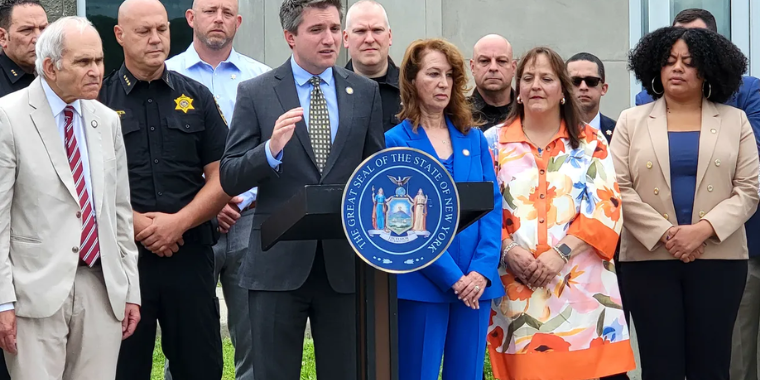
Touting a bipartisan, unanimous collaboration, lawmakers joined law enforcement officials at the Orange County Correctional Facility on July 30 to announce the passage of two “Death Gamble” bills.
Held outside the county facility on 110 Wells Farm Road in Goshen, the event drew a large group of legislators and state representatives, who, one after another, urged New York Gov. Kathy Hochul to promptly sign the bills and “Do the right thing.”
“There is no party line here,” said Orange County Sheriff Paul Arteta. He cited the 16-hour days law enforcement officers sometimes work. “We need to retain them after they reach retirement age.”
Some of the attendees included state senators James Skoufis and Rob Rolison, state assembly members Paula Elaine Kay, Jonathan Jacobson, Karl Brabenec and Chris Eachus, and Orange County Legislature Chairwoman Laurie Tautel. Skoufis and Kay sponsored the bills.
If signed into law by Hochul, the bills, which passed unanimously in the Senate and the Assembly, will provide “death gamble” benefits to Orange County’s corrections officers and sheriff’s deputies.
Under the current provisions, in the case of an employee dying before retirement, family members do not receive a pension and gain a one-time death benefit instead.
The new law would extend the full pension to a surviving spouse or children whether or not the county officer had filed for retirement. Corrections officers in state prisons and other public employees already have access to this benefit.
The measure will allow Orange County to retain "able and willing" sheriff’s deputies and corrections officers, Skoufis said — as otherwise they may be compelled to file for retirement upon eligibility. As few counties offer this benefit, this will also give Orange County an edge in recruitment.
As a result, the county will incur a nominal amount, and it currently has $200 million in its bank account, according to Skoufis.
Eligible employees are sheriff’s deputies with 20 years or more of service and corrections officers with 25 years or more.
Newsroom
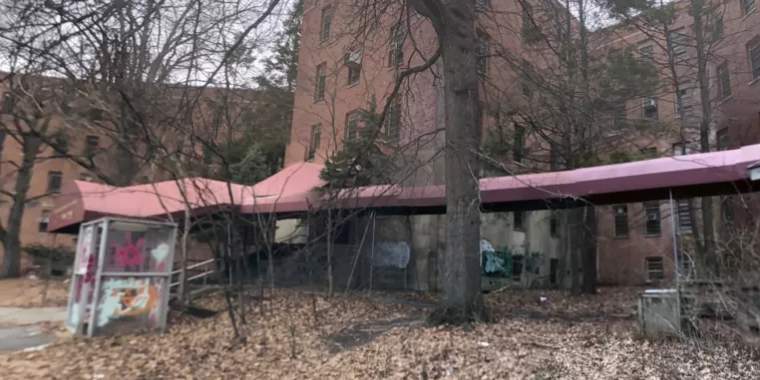
Go to NewsroomFormer Psychiatric Center Building Gets New Life In Middletown
October 22, 2026
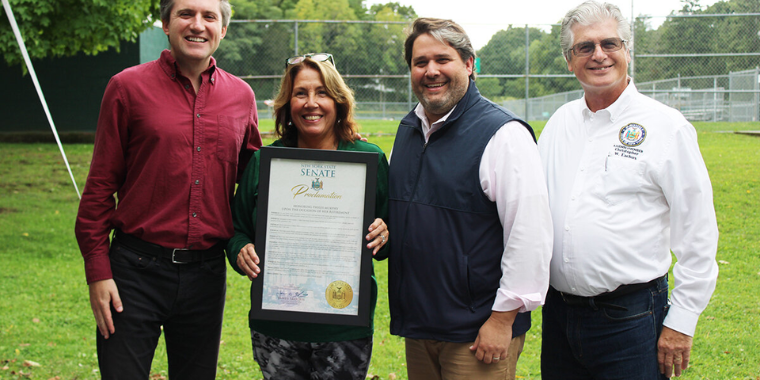
September 29 is now ‘Phylis Murphy Day’
October 7, 2026
Skoufis launches US Space Academy idea for Stewart Airport
October 6, 2026