Unions and Disabilities Committee Chairs Sound Alarm on Direct Care, Calling for 4% COLA and Guaranteed Wage Increases for Front Line Workers
March 26, 2026
-
COMMITTEE:
- Disabilities
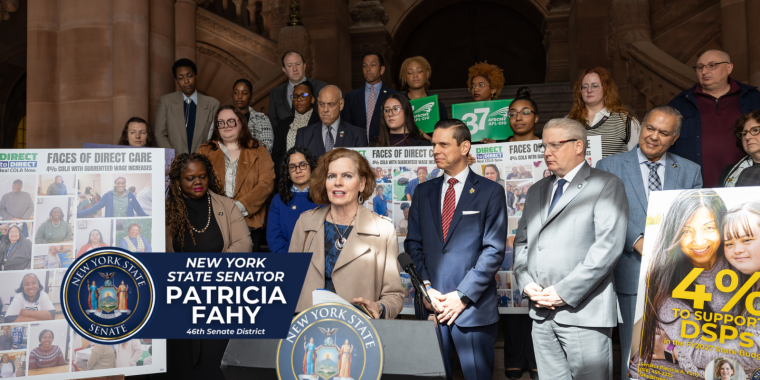
ALBANY, NY - Today, labor unions representing direct care workers employed by non-profit agencies that contract with OPWDD were joined by Chairs of the Senate and Assembly Disabilities Committees Senator Patricia Fahy and Assemblymember Angelo Santabarbara, and other members of the Senate and Assembly to demand immediate investment in direct care workers.
The coalition is calling on lawmakers to include both a 4% cost-of-living adjustment (COLA) and Article VII language that guarantees funding is used to raise wages for direct care workers. While both the Senate and Assembly included these provisions in their one-house budgets, union leaders stressed that the final budget must preserve these commitments to address the recruitment and retention crisis. Without action, they warned, low pay will continue to drive workers out of the field and could destabilize care for New Yorkers with disabilities.
“Direct Support Professionals (DSPs) struggle to make ends meet due to low wages, leading to intense burnout, turnover, and a developing crisis in direct and home care, especially for our neighbors living with disabilities,” said Senator Patricia Fahy (D–Albany), Chair of the Senate Disabilities Committee. “When New Yorkers living with disabilities want to live independently, they should be able to do so, and DSPs provide that independence and care through their work every day in our communities. These workers care for our most vulnerable, and now it’s up to us to care for them and deliver wage increases that allow them to continue their critical work, while being able to pay the bills and put food on the table. A 4% inflationary increase in this year’s state budget must be the floor; it is time for New York to meaningfully invest in its direct care workforce.”
“Across New York, our direct care workforce is under real strain. Providers are facing ongoing staffing shortages as wages struggle to keep pace with the cost of living, putting pressure on essential services that many individuals and families rely on every day,” said Assemblyman Angelo Santabarbara, Chair of the New York State Assembly Committee on People with Disabilities. “Strengthening support for providers — with clear accountability to ensure resources reach front-line workers — is critical to stabilizing this workforce, improving retention, and maintaining consistent, quality care in our communities. Investing in these essential workers means protecting the services that help people live safely and independently.”
Behind the speakers stood large images of direct care workers represented by Local 338 RWDSU/UFCW, SEIU Local 200 United, DC37, UFCW Local 888, CSEA, and AFSCME—a reminder of who is being forced to survive on shockingly low wages while providing essential care. According to 2023 data, 50% of these workers rely on public assistance and 40% live in or near poverty.
State Senator Shelley Mayer said, “I stand with caregivers, advocates, consumers, and Direct Support Professionals (DSPs) across New York in the fight for the long-overdue inflationary increase they deserve. DSPs perform essential, skilled, and deeply compassionate work every day, yet far too many are underpaid with wages that do not reflect the essential nature of their responsibilities and are inadequate to meet basic necessities. I am deeply grateful to the Direct Support Professionals and the organizations that support them for their commitment to serving New Yorkers every single day.”
“I often say that DSPs are doing God’s work. It takes a special person to have the patience and compassion to take care of the vulnerable individuals they serve day in and day out. This is an opportunity for elected officials to do the right thing by making sure direct support professionals get the guaranteed wage increases they deserve.” said President Max Bruny UFCW Local 888.
Union leaders and their supporters stated that without immediate investment in raising wages for direct support professionals (DSPs), the current staffing crisis, which is marked by a 35% turnover rate and widespread vacancies in both full-time and part-time positions, will only worsen, harming both workers and the people they care for.
“Quality care in our communities often starts in the halls of the Capitol. Ensuring that funding for wages makes it directly to workers doesn't just strengthen our essential services - it also improves our chances of recruiting and retaining the additional skilled staff that we desperately need. Every individual being served at direct care agencies deserves the best outcomes possible - and making sure our workforce can cover basic needs for themselves and their families is a crucial part of that.” said SEIU Local 200 United President Scott Phillipson.
This renewed demand comes after months of advocacy efforts in response to the Governor’s Executive Budget, which only allocated a 1.7% targeted inflationary increase–an amount that unions and their supporters say is too low and will cause wages across the industry to fall further behind the cost of living.
“The rising cost of living has been hard for all working people in New York, but especially so for our direct care workers,” said John Durso President of Local 338 RWDSU/UFCW. “Budgets are a reflection of our values and priorities, and we are grateful that both the Senate and Assembly have put forth budgets that prioritize the needs of these workers and reflects the value of the work they do. We will continue to fight to see that the final budget does the same.”
“Direct support professionals are the backbone of the care industry. Meaningful wage increases will improve the lives of these skilled workers who take care of our most vulnerable New Yorkers, and will go a long way toward retention and recruitment. These workers, who are predominantly women of color, deserve fair pay for delivering the essential care our communities rely on.” said Henry Garrido, Executive Director of District Council 37 AFSCME.
The unions hope that bringing the images of their members to the capitol will serve as a reminder of the human impact of budget negotiations and that the direct care workforce is made up predominantly of women and people of color, groups that have been historically marginalized and deprioritized in our budgets.
###