State Senate Passes 2026-27 Budget
May 28, 2026
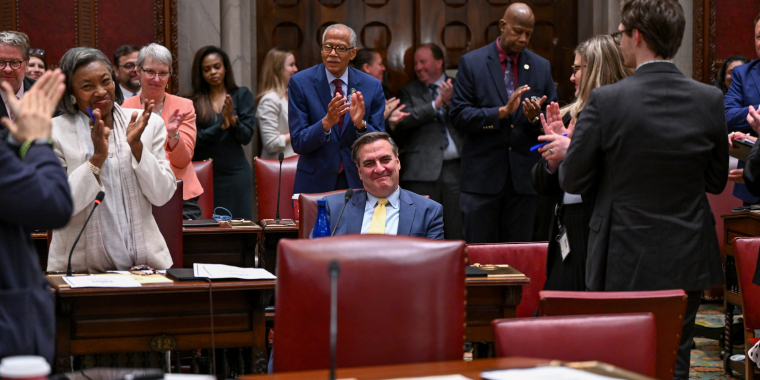
The New York State Senate today passed the State Fiscal Year (SFY) 2026-27 budget, designed to prioritize working families, lower everyday costs, and protect the essential services New Yorkers rely on most. This budget advances meaningful utility reforms and ratepayer protections, expands access to childcare and universal pre-K, safeguards healthcare and immigrant communities from harmful federal threats, and continues critical investments in education, local governments, and communities across the state.
Senate Majority Leader Andrea Stewart-Cousins said, “This year’s budget is centered on our shared commitment to addressing the everyday needs of New Yorkers. From lowering utility costs and advancing meaningful ratepayer protections, to expanding access to childcare and Universal Pre-K, we are taking real steps to ease the financial burden on New Yorkers and putting working families first. At the same time, we are standing up for our immigrant neighbors, defending our healthcare system from federal attacks, and continuing to invest in the essential services that New Yorkers rely on. Far too many families have been forced to simply get by while costs continue to rise, and affordability feels further out of reach. This budget is about changing that—lowering bills, expanding opportunity, and addressing New Yorkers’ desire to get ahead, not just get by.”
Senate Deputy Leader Mike Gianaris said, “While more work remains to be done, the state budget addresses New Yorkers’ burgeoning cost of living crisis, driven by reckless decisions from the federal government. We will continue to address this affordability crisis by ensuring New Yorkers have the resources they need to stay and thrive in our State, from keeping utility rates down to moving towards universal childcare to improving retirement options for our state workforce.”
Senate Finance Chair, Senator Liz Krueger said, “I am pleased that the Legislature was able to negotiate many big wins for the priorities that matter most to New Yorkers, including affordability, access to education, protecting our immigrant neighbors, and improving our environment. The final budget contains numerous policies to address rising utility costs, expands universal childcare, provides record environmental and clean water funding, increases public safety, and invests in housing affordability, including raising the income eligibility cap for SCRIE and DRIE for the first time in over a decade. Unfortunately, this budget also contains significant movement in the wrong direction on critical issues, most notably rolling back progress on the clean energy transition, which will not only mean dirtier air and more greenhouse gas emissions, but will result in higher utility costs for New Yorkers. Although progress has been made in this budget, the Legislature still has a lot of work ahead of us to continue delivering what New Yorkers need.”
Standing up to U.S. Immigration and Customs Enforcement (ICE) and federal overreach, we have included measures to protect the rights, safety, and stability of all New Yorkers, regardless of their immigration status.
- New York State Bivens Act/New York Civil Rights Act: Ensures every New Yorker can enforce their constitutional rights by allowing private individuals to sue federal, state, or local government officials who violate the U.S. Constitution.
- Access to Public Education Regardless of Citizenship or Immigration Status: Codifies Plyler v. Doe to ensure that every child will have the right to an education, regardless of immigration status—prohibiting schools from inquiring about or collecting information about a student’s or parent’s immigration status, and requiring immigration officials to present a judicial warrant to enter the non-public areas of a school.
- Law Enforcement Face Coverings: Prohibits local, state, or federal law enforcement officers from wearing a mask while interacting with the public and requiring an officer to be clearly identified by name or the badge number on their uniform.
- Sensitive Locations: Empowers childcare providers, healthcare facilities, houses of worship, housing accommodations, non-public schools, certain state-sponsored private schools, higher education institutions, nursery schools, summer camps, senior centers, parks, playgrounds, athletic fields or recreation centers, and polling places to adopt policies denying immigration enforcement officials access to non-public areas without a warrant.
- Local Cops, Local Crimes: Fully bans formal and informal 287(g) agreements and IGSAs exclusively for immigration purposes, prohibiting counties and municipalities from entering into future contracts and dissolving existing ones.
- Information Sharing: Prohibits certain state and local agencies from inquiring about, collecting, or sharing an individual’s personally identifiable information or immigration status unless required by law.
- Provides an additional $10 million for the Office of New Americans, for a total of $74.2 million.
This year’s budget includes critical reforms championed by the Senate to help reduce utility rates, hold utilities more accountable, and reform the rate case process. They include:
- Ratepayer Affordability:
- Requires utilities to return more excess revenue earned back to ratepayers and ensures that ratepayers receive the excess revenues earlier on. (Modified S.7693).
- Requires increased scrutiny of utility executive salaries, authorized rates of return, and costs passed on to ratepayers in order to prevent unnecessary rate hikes (S.3734, S.7693).
- Establishes a blue-ribbon commission to study the causes of rising utility rates and make recommendations to the legislature on future reforms.
- Limiting Utility Profits & Increasing Accountability:
- Requires utility companies to file budget-constrained proposals with the PSC that would limit potential rate increases to the rate of inflation, subject to limited exceptions like safety, reliability, and critical upgrades (Portions of S.9433A).
- Requires utility-proposed infrastructure projects to meet higher standards in order to be approved so as to protect ratepayers from paying for cost-inflated projects.
- Explicitly prohibits the recovery of lobbying, political, and public relations expenses from ratepayers (Modified S.1012A).
- Reforming the Rate Setting Process:
- Allows utility rate cases to last for 15 months, giving the Department of Public Service more time to review proposed rate increases.
- Ensuring rate increase cases that go through public legal proceedings (litigated rate cases) can be structured favorably for ratepayers in the same manner as private settlement negotiations.
- Ensures that if the Public Service Commission rejects a utility’s proposed rate hike, utility companies will not automatically receive the increase simply because no alternative plan was approved (S.8491).
- Direct Assistance for Ratepayers:
- $2.75 million for the Public Utility Law Project (PULP), which advocates for lower energy rates before the Public Service Commission and provides support to New Yorkers with utility-related legal and billing issues.
- $150 million for EmPower Plus, helping low- and moderate-income households lower their energy bills and make critical energy-efficient upgrades to their homes.
- $40 million for the Weatherization Assistance Program, to help homeowners get needed upgrades to lower their utility bills.
- $1 billion in POWER Rebates: Provides rebate checks of up to $200 for married filers earning up to $150,000, $150 for married filers earning between $150,000 and $300,000, and $100 for single filers and heads of household earning up to $150,000.
$2 million for the Green Affordable Pre-Electrification Program (GAP) Fund, helping families make critical home upgrades so they can access energy affordability programs.
Ensuring access to quality education from early childhood through college, including:
- Universal Childcare:
- $2.4 billion total for the Child Care Assistance Program (CCAP), a nearly 40 percent increase over last year, with the potential to add 100,000 seats. This includes $630 million in supplemental CCAP—$475 million for New York City and $155 million for the rest of the state’s counties—to further support local childcare access.
- Expanding Universal Childcare in New York City:
- $73 million total to launch the first 2-Care program in New York City with a full phase-in starting in the 2028-2029 school year.
- $205 million total in state funds to expand 3-K to all five boroughs.
- Advancing $66 million total in new funding for childcare pilots in Broome, Dutchess, and Monroe counties to explore effective program models for infant and toddler care.
- Universal Pre-Kindergarten
- Significantly increases UPK funding by $561 million, or 52.5 percent, totaling $1.6 billion, which will bring the per pupil reimbursement rate for 4-year-olds to a minimum of $10,000 per child.
- Requires school districts to provide programming to all eligible 4-year-olds by the 2028-29 school year, advancing New York further along the path to full UPK.
- K-12 Education
- Continues our commitment to record school funding with an increase in Foundation Aid, including a 2% minimum increase, enhanced support for English Language Learners, and new funding weights for students experiencing homelessness and students in foster care. This brings total school aid funding to $39 billion, with $27.4 billion in total for Foundation Aid— a $285 million increase over the Executive’s proposal.
- Continues support for students with disabilities by adding $7.1 million for schools for students who are blind and deaf, including the New York School for the Deaf and the Henry Viscardi School.
Delays the Electric Vehicle Bus Mandate by 5 years to give schools time to make this important transition in a practical and fiscally responsible way.
Record funding for our CUNY and SUNY schools, including:
- Expands the New York Opportunity Promise Scholarship to include all campuses offering associates degrees in high-demand fields at CUNY and SUNY, adding $3 million for CUNY, and $4 million for SUNY.
- Expands the Masters-in-Education teacher incentive scholarship to include those pursuing a master’s in early childhood education.
- CUNY:
- Adds $200 million for CUNY critical maintenance, for a total of $514.2 million.
- Adds $29.1 million for CUNY community college capital projects, for a total of $86.4 million.
- Adds $36.5 million for CUNY senior college operating support, for a total of $3.2 billion.
- Adds $6 million for CUNY community college operating support, for a total of $234.7 million.
- SUNY:
- Adds $200 million for SUNY critical maintenance, for a total of $795 million.
- Adds $100 million for SUNY research facilities.
- Adds $9 million for SUNY community college operating support, for a total of $442.3 million.
- Adds $13.3 million for the SUNY Educational Opportunity Program, for a total of $52 million.
- Other Higher Education:
- Adds $2.7 million for the Science and Technology Entry Program (STEP), for a total of $23.6 million, and $2.1 million for the Collegiate Science and Technology Entry Program (CSTEP), for a total of $17.9 million.
- Adds $3.6 million for Higher Education Opportunity Program awards (HEOP), for a total of $50.5 million.
Adds $40 million for higher education capital matching grant program, providing access for state-matching capital for private colleges and universities.
Advancing environmental protections and sustainability, including:
- Sustainable Futures Fund: $1 billion in funding for key climate initiatives across the state, including:
- $50 million for Clean Green Schools, to help public schools undertake electrification projects.
- $150 million for Thermal Energy Networks.
- $150 million for Emissions Reduction Programs in HCR, including $40 million for Weatherization and $50 million for NYCHA and Mitchell Lamas.
- $200 million total for NY SUN.
- $100 million total for Build Public Renewables.
- $500 million total for Building Green House Gas (GHG) Emissions Reductions.
- Up to $75 million total for Zero-Emission Transportation including funding for more EV charging infrastructure and electric school buses.
- $300 million total for Renewable Energy Projects.
- No less than $50 million total for Methane/GHG Mitigation, including funding for climate resilient farm programs, municipal waste and recycling programs, and forestry.
- Environmental Protection Fund: A record high EPF investment with an increase of $25 million over last year, for a total of $450 million for key environmental protections and priorities.
- Clean Water Funding: $750 million total, with a commitment to spend $3.75 billion over the next five years.
- $225 million earmarked for new housing projects, with $50 million specifically reserved for rural communities.
- Municipal EV Rebates: Increases the cap on the municipal zero emission vehicle rebate program to reimburse municipalities for the purchase of ZEVs, with up to $30,000 per vehicle.
- Private Well PFAS Testing: Funding for a second year of the program to provide private well owners with rebates for purchasing PFAS treatment equipment (S.5217).
ASAP Solar: Reforms the interconnection process to make it faster and cheaper to bring new solar projects online (portions of S.6570A).
Supporting critical investments and advancing fair revenue raisers to strengthen local governments’ essential services, support their economic future, and ensure the wealthy pay their fair share.
- New York City
- Pied-à-terre Tax: Creates a property surcharge for wealthy non-New York City residents who own luxury second homes in New York City valued at $5 million or more, generating approximately $500 million annually in recurring revenue for the City.
- $1.5 billion in direct assistance to New York City.
- $195 million in additional funding to the City of New York, for a total of $695 million in Miscellaneous Financial Assistance.
- Local Municipalities
- Over $1 billion in total local municipal assistance outside of NYC, an increase of 25 percent over last year, to deliver unrestricted general-purpose support to cities, towns, and villages across New York State to help maintain essential local services and day-to-day operations. This budget secures $714.7 million in base Aid and Incentives for Municipalities (AIM), adds $100 million for a total of $150 million in Temporary Municipal Assistance (TMA), and adds $165 million for a total of $185 million in Miscellaneous Financial Assistance (MFA) for big upstate cities. This includes:
- $57 million total for the City of Albany, an increase of 40 percent.
- $231.3 million total for the City of Buffalo, an increase of 28 percent.
- $19.6 million total for the City of Mount Vernon, an increase of 59 percent.
- $123.2 million total for the City of Rochester, an increase of 24 percent.
- $106.8 million total for the City of Syracuse, an increase of 28 percent.
- $163.2 million total for the City of Yonkers, an increase of 31 percent.
- Total for remaining upstate cities: $266.8 million, an increase of 17 percent.
- Over $1 billion in total local municipal assistance outside of NYC, an increase of 25 percent over last year, to deliver unrestricted general-purpose support to cities, towns, and villages across New York State to help maintain essential local services and day-to-day operations. This budget secures $714.7 million in base Aid and Incentives for Municipalities (AIM), adds $100 million for a total of $150 million in Temporary Municipal Assistance (TMA), and adds $165 million for a total of $185 million in Miscellaneous Financial Assistance (MFA) for big upstate cities. This includes:
Total for towns and villages: $81.8 million, an increase of 12 percent.
Protecting communities, strengthening victims' services, and investing in smart public safety solutions, including:
- Gun Safety Legislation & Funding:
- Ensuring that any 3D printing technology does not allow for guns to be 3D printed.
- Curbs the spread of pistols that can be easily converted from semiautomatic to fully automatic machine guns by preventing new convertible pistols from being sold in New York after May 2027.
- Additional $1.5 million for the New York State SNUG Outreach Program, for a total of $22.5 million.
- Funding and Benefits Reform for First Responders:
- Invests $54 million total in a new state-of-the-art forensics lab for State Police.
- $14 million total in grants for local sheriff’s offices and law enforcement.
- $77 million for the continued presence of the NYPD on subways across NYC.
- $20 million total in capital grants for volunteer fire departments.
- $50 million total to support grants for local emergency response equipment.
- $750,000 total to support professional firefighters.
- $200,000 total for the volunteer Fireman’s Association of the State of New York (FASNY).
- Critical Incident Leave for State Troopers: Allows the superintendent of State Police to develop a leave policy for members who are involved in a justifiable use of force incident.
- Additional $3 million total for the Department of Law and District Attorneys to combat deed theft through prevention and enforcement efforts.
- Buffer Zones: Adopts stronger buffer zone protections around places of worship by making it a new crime to intentionally obstruct entrances and exits within 50 feet in such a way that causes a person to fear for their safety.
- Commercial Security Tax Credit: Extends the Commercial Security Tax Credit for an additional 3 years, helping small businesses offset the cost of making certain upgrades.
Safe by Design: Establishes safety and design standards for social media and online platforms to protect minors.
Expanding access to care and strengthening mental health services statewide, including:
- $750 million in new targeted healthcare investments:
- $353 million (up to $706 million gross) rate increase.
- $47 million (up to $94 million gross) 10 percent capital rate increase.
- Of the additional $240 million of state share increases for nursing homes, the final proposal includes:
- $120 million allocation as per diem, providing $316 million total.
- $120 million allocation for rate increases.
- $100 million for the Quality Incentive Vital Access Provider Pool
- $10 million (up to $20 million gross) for Assisted Living Providers/ hospices.
- $500 million in operating funding for financially distressed hospitals, providing $2.1 billion total state share.
- $50 million to restore enhanced Medical Indemnity Fund (MIF) rates (HMH Part I).
- $50 million in funding to support VNS Health.
- $10 million for maternal health funding.
- $8 million total for the Daniel’s Law Pilot Program, establishing non-police, peer-led crisis response teams to assist individuals experiencing mental health or substance use emergencies.
- $5 million total for SOMOS Innovation.
- $1.1 million in additional funding for Rural Health Care Access Development and Rural Health Network Development programs, for a total of $10.5 million.
- 2.7% Temporary Inflation Increase: Adds $104 million for a Targeted Inflationary Increase for certain “O” agency providers, for a total of $279.6 million, increasing the total TII to 2.7% over the Executive’s 1.7%.
- Reproductive Healthcare Funding:
- $1 million for Reproductive Equity Freedom Grants, for $26 million total.
- $1 million for Family Planning Services grants, for $11.3 million total.
- $20 million total for abortion medication care grants.
- $10 million total for Reproductive Health Facilities capital grants.
- Prior Authorization Reforms: Prohibits insurers from conducting more than one utilization review a year against people with chronic conditions. It also extends the continuity of care period from 60 to 90 days for all conditions and requires that it continue through pregnancy and for one year postpartum.
Extends the Office for People with Developmental Disabilities (OPWDD) Care Demonstration Program to ensure community-based services continue for individuals with disabilities. (S.4848).
Revitalizing communities across the state and further investing in artistic, athletic, and cultural programs and initiatives, including:
- New York State Council on the Arts (NYSCA): $20 million in additional operating funding, totaling $80.6 million, and $420 million in capital funding, totaling $860 million.
- $5 million total for Alive Downtown! theatres.
- $20 million total for security at the World Cup
- An additional $10 million for Library Construction Aid over the Executive’s proposal, for a total of $44 million, and adds $1.7 million for Library Operating Aid, for a total of $106.4 million.
- $20 million total for the New York Statewide Investment in More Swimming (NYSWIMS) program.
- $20 million total for the New York Places for Learning, Activity, and Youth Socialization (NY-PLAYS) program.
- $6 million total for New York KICKS to build youth soccer infrastructure in disadvantaged communities.
- Allows grants through the Musical Instrument Grant Program to be distributed to nonprofit organizations focused on music education in school districts and BOCES.
Modernizing transit, strengthening road safety, and building infrastructure for the future, including:
- Cracking Down on Super Speeders: Authorizes New York City to require drivers who receive more than 16 speed camera tickets within a year to install speed restrictor devices on their vehicles, while also expanding work zone speed camera programs statewide to better protect highway workers.
- Adds $50 million for the Consolidated Local Street and Highway Improvement Program (CHIPS), for a total of $698.1 million.
- $2.2 billion total for the Metropolitan Transportation Authority (MTA).
- Adds $6 million to maintain the Verrazzano Bridge Staten Island resident discount, for a total of $32 million.
- Adds $3 million total to extend the Tappan Zee/Mario Cuomo Bridge resident discount to Orange County.
- Adds $5 million to STOA for upstate systems, for a total of $374.5 million, a 7% increase over last year.
- Adds $26 million total to restore Niagara Frontier Transportation Authority (NFTA) rail capital.
- Adds $4 million total for Rochester-Genesee Regional Transportation Authority (RGRTA) expansion to Yates County.
Investing in affordable housing programs and strengthening housing access statewide, including:
- $140 million total for the New York City Housing Authority (NYCHA).
- $85 million total for the Mitchell Lama Preservation and Homeownership Program.
- $75 million total for Public Housing Authorities outside of the City of New York.
- $40 million total for the Vacant Apartment Repair and Rehabilitation Program.
- Adds $4 million for the Access to Home Program, for a total of $5 million.
- $2.6 million for the Housing Opportunities Program for the Elderly (RESTORE), for a total of $4 million.
- $10 million total for the First Time Homebuyer Downpayment Assistance Fund.
- $40 million total for Land Banks, raising the cap on existing land banks from 35 to 45.
- $30 million total for the Block-by-Block Infill Housing Program.
- Replaces the expiring J-51 tax abatement program to preserve and improve rent-regulated and affordable housing in New York City by helping property owners make critical repairs and environmental upgrades to keep homes safe and affordable, including language from S.8170A.
- Enhances penalties to protect rent-regulated tenants from pervasive harassment by creating new criminal charges for aggravated harassment of a rent-regulated tenant, based upon the language of S.8559A.
- Modifies the State Environmental Quality Review Act (SEQRA) to set time limits for an environmental impact statement to be reviewed and completed and to create exemptions for certain housing projects, parks and trails, water and sewer infrastructure improvements, New York City public schools for the purpose of complying with the existing class size mandate, and green infrastructure upgrades.
Expands the rent increase exemption for senior citizens and persons with disabilities (SCRIE/DRIE) by including the homeowner’s exemption for senior citizens and persons with disabilities (SCHE/DHE) and raising the income eligibility in all programs from $50,000 to $75,000, as well as requiring new notice provisions.
Securing the future of New York’s farms, farmworkers, and food systems, including:
- Extending the Investment Tax Credit for Farmers, continuing a 20 percent investment tax credit for eligible farmers.
- Standardizing the definition of “farmer” to make it easier for New York’s farmers to claim all relevant tax credits.
- $1.2 million for the Farm Viability Institute, for a total of $2.2 million.
- $1 million total for the Beginning Farmer Grant Program.
- $1 million total for the Socially/Economically Disadvantaged Farmer Grant Program.
- $30 million total to support specialty crop growers, livestock producers, and dairy farmers by offsetting rising costs due to increased tariffs through the Agriculture Resiliency Against Tariffs Grant Program.
Supporting workers, families, and communities across New York through critical investments, including:
- Tier 6 Reform:
- 3 percent for incomes of $75,000 or less.
- 4 percent for incomes of $75,000 to $100,000.
- 5.25 percent for incomes of $100,000 to $125,000.
- 5.75 percent for incomes over $125,000.
- 25 percent (currently capped at 15 percent) for police and fire.
- $30,000 (currently capped at just below $22,000), with a 3 percent increase annually after enactment for other retirement systems (excluding teachers).
- Lowering the retirement age for teachers with 30 years of service from 63 to 58.
- Capping contribution rates to:
- Increasing the caps on overtime included in the Final Average Salary calculation to:
- 25 percent (currently capped at 15 percent) for police and fire.
- $30,000 (currently capped at just below $22,000), with a 3 percent increase annually after enactment for other retirement systems (excluding teachers).
- No Tax on Tips: Eliminating New York State income tax on up to $25,000 in tipped income beginning in 2026, allowing workers to deduct eligible cash tips from taxable income and putting money back in New Yorkers’ pockets.
- Food Assistance:
- $138 million total for Emergency Hunger Response organizations, an increase of $25 million from last year, which includes $72.8 million for the Hunger Prevention and Nutrition Assistance Program (HPNAP) and $55 million for Nourish New York (NNY).
- Adds $6 million for the Nutrition Outreach and Education Program (NOEP), for a total of $7.9 million, which helps families navigate the benefit eligibility and application process for SNAP and other food programs.
- Provides $2 million for Double Up Food Bucks
- Provides $1.75 million total for National Diaper Banks, an increase of $250,000.
Provides $1.75 million total for National Diaper Banks, an increase of $250,000.
Improving veteran and family support services for military families and first responders, including:
- Extends the Tuition Benefits Program for the New York Army National Guard, Air National Guard, and Naval Militia through 2031.
- $8 million total in Dwyer funding.
- $350,000 total for the Veterans Mental Health Training Initiative (VMHTI).
- $325,000 total for Clear Path for Veterans.
- $275,000 total for Helmets to Hardhats.
- $200,000 total for SAGEVets, an increase of $100,000.
- 100 Percent Property Tax Exemption for Disabled Veterans: Includes a statewide opt-in property tax exemption on the primary residence of veterans who are permanently and totally disabled due to their military service.
related legislation
Share this Article or Press Release
Senators Involved
35th Senate District

12th Senate District
28th Senate District