| Date of Action |
Assembly Actions -
Lowercase Senate Actions - UPPERCASE |
|---|---|
| Jan 06, 2010 |
referred to codes |
| Feb 02, 2009 |
referred to codes |
Senate Bill S1465
2009-2010 Legislative Session
Sponsored By
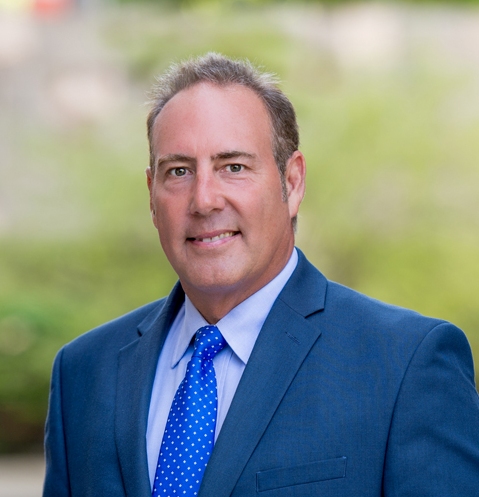
(R, C, IP) Senate District
Archive: Last Bill Status - In Senate Committee Codes Committee
Actions
2009-S1465 (ACTIVE) - Details
- Current Committee:
- Senate Codes
- Law Section:
- Criminal Procedure Law
- Laws Affected:
- Amd §440.50, CP L; amd §259-i, Exec L
- Versions Introduced in 2011-2012 Legislative Session:
-
S733
2009-S1465 (ACTIVE) - Summary
Requires that the district attorney inform the victim of a crime of such victim's right to personally or by representative appear, where the crime victim is deceased or is mentally or physically incapacitated, and be heard at the defendant's parole hearing; establishes qualifications to be a crime victim's representative.
2009-S1465 (ACTIVE) - Sponsor Memo
                                 BILL NUMBER:  S1465

 TITLE OF BILL :
An act to amend the criminal procedure law and the executive law, in
relation to appearance of a victim at parole hearings


 PURPOSE :
To provide the victim of a crime the opportunity to personally appear
and give oral testimony at parole board hearings for the person
convicted of the crime.

 SUMMARY OF PROVISIONS :
Amends Criminal Procedure Law § 440.50 and the Executive Law §
259-i(2) to include the right of the victim of a crime to appear and
be heard at parole hearings.

 EXISTING LAW :
Present law allows the person guilty of the crime to appear at the
parole board hearing and for the victim either to submit a written
statement or to meet before the parole hearing with a member of the
panel. This bill would allow the victim or victim's representatives to
appear and be heard at the parole hearing itself.

 JUSTIFICATION :
The victim of a crime deserves a voice in our criminal justice system
2009-S1465 (ACTIVE) - Bill Text download pdf
                    S T A T E   O F   N E W   Y O R K
________________________________________________________________________

                                  1465

                       2009-2010 Regular Sessions

                            I N  S E N A T E

                            February 2, 2009
                               ___________

Introduced  by  Sen.  ROBACH -- read twice and ordered printed, and when
  printed to be committed to the Committee on Codes

AN ACT to amend the criminal procedure law and  the  executive  law,  in
  relation to appearance of a victim at parole hearings

  THE  PEOPLE OF THE STATE OF NEW YORK, REPRESENTED IN SENATE AND ASSEM-
BLY, DO ENACT AS FOLLOWS:

  Section 1. Subdivision 1 of section 440.50 of the  criminal  procedure
law,  as  amended by chapter 186 of the laws of 2005, is amended to read
as follows:
  1. Upon the request of a victim of a crime, or in  any  event  in  all
cases  in which the final disposition includes a conviction of a violent
felony offense as defined in section 70.02 of the penal law or a  felony
defined  in  article  one  hundred twenty-five of such law, the district
attorney shall, within sixty days of the final disposition of the  case,
inform  the  victim  by  letter of such final disposition. If such final
disposition results in the commitment of the defendant to the custody of
the department of correctional services for an  indeterminate  sentence,
the  notice provided to the crime victim shall also inform the victim of
his or her right to (I) submit  a  written,  audiotaped,  or  videotaped
victim  impact  statement  to  the  state  division of parole or to meet
personally with a member of the state board of  parole  at  a  time  and
place  separate  from the personal interview between a member or members
of the board and the inmate and make such a statement, subject to proce-
dures and limitations contained in rules of the board, [both]  AND  (II)
APPEAR AND BE HEARD AT THE PAROLE HEARING pursuant to subdivision two of
section  two hundred fifty-nine-i of the executive law. The right of the
victim under this subdivision to submit a written victim  impact  state-
ment  or  to  meet personally with a member of the state board of parole
applies to each personal interview between a member or  members  of  the
board and the inmate.

 EXPLANATION--Matter in ITALICS (underscored) is new; matter in brackets
                      [ ] is old law to be omitted.
                                                           LBD04962-01-9
Comments
Open Legislation is a forum for New York State legislation. All comments are subject to review and community moderation is encouraged.
Comments deemed off-topic, commercial, campaign-related, self-promotional; or that contain profanity, hate or toxic speech; or that link to sites outside of the nysenate.gov domain are not permitted, and will not be published. Attempts to intimidate and silence contributors or deliberately deceive the public, including excessive or extraneous posting/posts, or coordinated activity, are prohibited and may result in the temporary or permanent banning of the user. Comment moderation is generally performed Monday through Friday. By contributing or voting you agree to the Terms of Participation and verify you are over 13.
Create an account. An account allows you to sign petitions with a single click, officially support or oppose key legislation, and follow issues, committees, and bills that matter to you. When you create an account, you agree to this platform's terms of participation.