| Date of Action |
Assembly Actions -
Lowercase Senate Actions - UPPERCASE |
|---|---|
| Jan 06, 2010 |
referred to transportation |
| Jan 07, 2009 |
referred to transportation |
Senate Bill S43
2009-2010 Legislative Session
Sponsored By
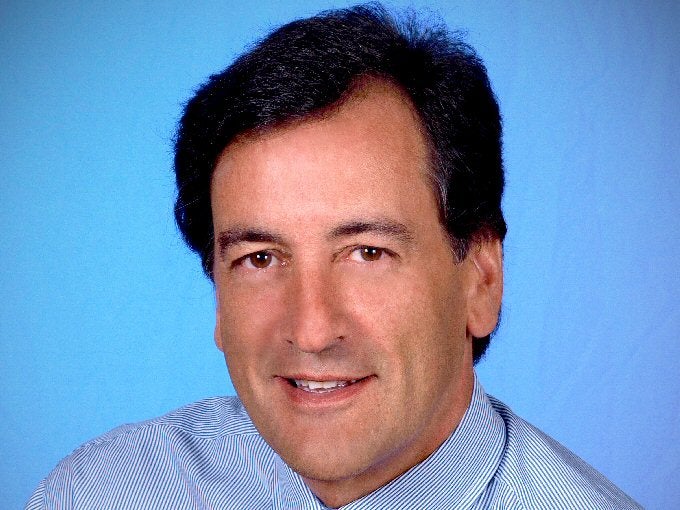
(R) Senate District
Archive: Last Bill Status - In Senate Committee Transportation Committee
Actions
2009-S43 (ACTIVE) - Details
- Current Committee:
- Senate Transportation
- Law Section:
- Vehicle and Traffic Law
- Laws Affected:
- Add §397-c, V & T L
2009-S43 (ACTIVE) - Sponsor Memo
                                 BILL NUMBER:  S43

 TITLE OF BILL :
An act to amend the vehicle and traffic law, in relation to enacting
the "pedestrian safety enhancement act of 2009"


 PURPOSE :
Enacts the "Pedestrian Safety Enhancement Act of 2009" which
authorizes the NYS Department of Motor Vehicles (DMV), and the
Department of Environmental Conservation (DEC), to promulgate
regulations establishing a statewide minimum sound standard for
hybrids and other inaudible motor vehicles.

 SUMMARY OF PROVISIONS :
The vehicle and traffic law is amended by adding a new section 397-c:
Minimum motor vehicle sound standards.

 JUSTIFICATION :
According to the Federal Highway Administration, a pedestrian is
killed by an automobile every 110 minutes; one is injured every 9
minutes. The Insurance Institute for Highway Safety found that most
fatalities take place at intersections with 1/3 caused by the actions
of the pedestrian and 2/3 by drivers who fail to yield to the
pedestrian, disobey traffic signals or are distracted by cell phones,
etc. In 2006, 36% of the pedestrian deaths at intersections were
2009-S43 (ACTIVE) - Bill Text download pdf
                    S T A T E   O F   N E W   Y O R K
________________________________________________________________________

                                   43

                       2009-2010 Regular Sessions

                            I N  S E N A T E

                               (PREFILED)

                             January 7, 2009
                               ___________

Introduced by Sen. FUSCHILLO -- read twice and ordered printed, and when
  printed to be committed to the Committee on Transportation

AN ACT to amend the vehicle and traffic law, in relation to enacting the
  "pedestrian safety enhancement act of 2009"

  THE  PEOPLE OF THE STATE OF NEW YORK, REPRESENTED IN SENATE AND ASSEM-
BLY, DO ENACT AS FOLLOWS:

  Section 1. This act shall be known and may be cited as the "pedestrian
safety enhancement act of 2009".
  S 2. Legislative intent. (a) The legislature hereby finds that:
  (1) Vehicles designed to provide the desirable  benefits  of  reducing
harmful  pollutants  and  operating with greater fuel efficiency include
gasoline-electric hybrid and electric-only vehicles, and in the foresee-
able future may include hydrogen fuel cell and other engine designs that
rely on fuels and technologies other than the gasoline-powered  internal
combustion engine.
  (2)  All  of  the vehicle engine designs specified in paragraph one of
this subdivision, as well as other designs not specified herein, operate
or are likely to operate with virtually no sound being produced  by  the
vehicle.
  (3) The total number of hybrid vehicles sold per year in this state is
growing dramatically, and although the present number of hybrid vehicles
constitutes  a  small  overall  percentage  of vehicles, if this rate of
growth persists, the number of hybrid vehicles will soon equal or exceed
the number of internal combustion engine vehicles in this state.
  (4) Because blind pedestrians cannot locate and evaluate traffic using
their vision, they must listen to traffic to discern its  speed,  direc-
tion,  and other attributes in order to travel safely and independently;
and other people, including pedestrians who are not  blind,  bicyclists,
runners,  and  small  children,  benefit  from multi-sensory information
available from vehicle traffic, including the sound of vehicle engines.

 EXPLANATION--Matter in ITALICS (underscored) is new; matter in brackets
                      [ ] is old law to be omitted.
Comments
Open Legislation is a forum for New York State legislation. All comments are subject to review and community moderation is encouraged.
Comments deemed off-topic, commercial, campaign-related, self-promotional; or that contain profanity, hate or toxic speech; or that link to sites outside of the nysenate.gov domain are not permitted, and will not be published. Attempts to intimidate and silence contributors or deliberately deceive the public, including excessive or extraneous posting/posts, or coordinated activity, are prohibited and may result in the temporary or permanent banning of the user. Comment moderation is generally performed Monday through Friday. By contributing or voting you agree to the Terms of Participation and verify you are over 13.
Create an account. An account allows you to sign petitions with a single click, officially support or oppose key legislation, and follow issues, committees, and bills that matter to you. When you create an account, you agree to this platform's terms of participation.