| Date of Action |
Assembly Actions -
Lowercase Senate Actions - UPPERCASE |
|---|---|
| Jan 06, 2010 |
referred to finance |
| Nov 07, 2009 |
referred to finance |
Find your Senator and share your views on important issues.
Senate Bill S6275
2009-2010 Legislative Session
Implements savings adjustments to the state fiscal plan
download bill text pdfSponsored By
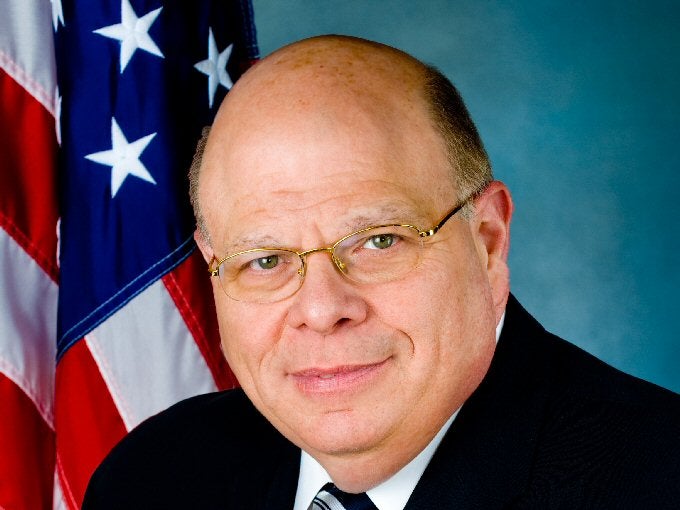
(D) Senate District
Archive: Last Bill Status - In Senate Committee Finance Committee
- Introduced
-
- In Committee Assembly
- In Committee Senate
-
- On Floor Calendar Assembly
- On Floor Calendar Senate
-
- Passed Assembly
- Passed Senate
- Delivered to Governor
- Signed By Governor
Actions
2009-S6275 (ACTIVE) - Details
- Current Committee:
- Senate Finance
- Law Section:
- Budget Bills
- Laws Affected:
- Amd §§1975 & 1977-a, Pub Auth L; amd Part PP §§2 & 12, Chap 56 of 2009; amd Civ Serv L, generally; amd §§5 & 99-c, add Art 17 §§250 - 252, St Fin L; amd §9.09, Pks & Rec L; amd Part D3 §6, Chap 62 of 2003; add §18, Chap 43 of 1922; amd §1617-a, Tax L; amd §19-0323, En Con L
2009-S6275 (ACTIVE) - Summary
Implements savings adjustments to the state fiscal plan; authorizes the commissioner of taxation and finance to administer an accounts receivable discount program with respect to certain overdue tax liabilities; relates to authorizing the battery park city authority to make contributions to the state treasury; relates to providing for the administration of certain funds and accounts related to the 2009-10 budget in relation to authorizing the state comptroller to transfer certain monies to the general fund
2009-S6275 (ACTIVE) - Sponsor Memo
                                 BILL NUMBER:  S6275

 TITLE OF BILL :

An act authorizing the commissioner of taxation and finance to
administer an accounts receivable discount program with respect to
certain overdue tax liabilities (Part A); to amend the public
authorities law, in relation to authorizing the battery park city
authority to make contributions to the state treasury (Part B); to
amend chapter 56 of the laws of 2009 relating to providing for the
administration of certain funds and accounts related to the 2009-10
budget, in relation to authorizing the state comptroller to transfer
certain monies to the general fund (Part C); to amend the civil
service law and the state finance law, in relation to allowing the New
York state employee health insurance plan to have the option to be
self insured; and to amend the parks, recreation and historic
preservation law, in relation to the health benefit plan for employees
(Part D); to amend section 1 of part D3 of chapter 62 of the laws of
2003 constituting the Tobacco Settlement Financing Corporation Act, in
relation to bonds of the corporation (Part E); to amend chapter 43 of
the laws of 1922 relating to the development of the port of New York,
in relation to authorizing a contribution to the state treasury (Part
F); to amend the tax law, in relation to the hours of operation of
video lottery gaming (Part G); to amend the environmental conservation
law, in relation to the use of ultra low sulfur diesel fuel and best
available technology by the state (Part H); to amend the state finance
law, in relation to establishing the "annual spending growth cap act"
(Part I); and creating a legislative commission on governmental
restructuring, and providing for the repeal of such provisions upon
expiration thereof (Part J)


 PURPOSE OF THIS BILL :

The purpose of this bill is to close the current fiscal year (SFY
2009-10) budget gap and to provide long term measures to address the
structural budget deficit.

 SUMMARY OF PROVISIONS :

 PART A: TAX PENALTY FORGIVENESS PROGRAM

Authorizes the Department of Taxation and Finance to institute an
accounts receivable discount program from January to March 2010. This
program would reduce the amount of interest and penalties on
outstanding tax liabilities provided the taxpayer pay the outstanding
liability in full. Outstanding liabilities eligible for this program
are those assessed prior to January 1, 2007 and are those for which an
assessment or final determination by the Tax Department has been
issued. This measure would increase State revenues by $250 million in
SFY 2009-10.

 PART B: BATTERY PARK CITY TRANSFER

Authorizes the Battery Park City Authority to transfer $200 million to
the General Fund of the state. In addition, this part would authorize
the financing of any interest rate exchange agreement termination
payments with bond proceeds.

 PART C: VARIOUS SWEEPS AND TRANSFERS

Authorizes the transfer of funds from various accounts and public
authorities of the State to the General Fund. This part will increase
General Fund receipts by approximately $348 million in SFY 2009-10 and
this part also includes an blanket authorization to sweep an
additional $300 million in State fiscal year 2009-10.
 PART D: NYSHIP OPERATING AS A SELF-INSURED PLAN

Authorizes NYSHIP to operate as a self-insured plan. This part will
increase State revenue by approximately $5 million in SFY 2009-10. It
is further estimated that this measure will save $30 million when
fully annualized.  Major elements of this proposal include:

* This would be applicable for a variety of employee health benefits.

* The State currently contracts with licensed insurance companies for
various health benefits and pays all necessary risk charges associated
with having insurance. As a result, the insurance carriers pay
specialty taxes and insurance assessments which they then pass along
to the State as charges.

* NYSHIP already functions like a self-insured plan, therefore it is
paying these excess fees and taxes for no real reason. Regardless of
the premium paid, the State pays the actual billed costs of health
benefits. As a result, insurance companies charge these high risk
fees, but in actuality incur minimal risk because of what the State is
required to pay.

* Legislation would not require the State to be self-insured, it would
simply give them the choice going forward.

* If this was passed, the State would create a more competitive
environment among the current insurers and would broaden the field of
competition allowing third party administrators to bid on contracts.

* Sources of savings will come from increased competition, maximizing
cash flow, earning higher interest on reserves, achieving full savings
from network provider discounts, reducing administrative expense
charges, eliminating state premium taxes, and eliminating insurer risk
charges.

 PART E: TOBACCO BOND REFINANCING

Increases the cap by $700 million on the amount of bonds authorized to
be issued by the Tobacco Settlement Corporation. It is estimated that
an additional $500 in net bond proceeds may be realized based on
current market conditions.

 PART F: PORT AUTHORITY TRANSFER

Authorizes the transfer of $200 million from the Port Authority of New
York and New Jersey to the State's General Fund.

 PART G: VLT EXPANDED HOURS

Authorizes an expansion of the hours of operation of video lottery
gaming as prescribed by the Division of the Lottery. This action may
result in the expansion of hours as prescribed by the Division of
Lottery. This measure may result in additional revenues to the State
of $39 million in SFY 2009-10.

 PART H: DIESEL EMISSIONS REDUCTION ACT (DERA) AMENDMENT

Exempts State vehicles, and vehicles owned by transit authorities,
from having to undergo a diesel emissions retrofit, provided that such
vehicles are within 3 years of retirement. The vehicles would be
prohibited from being on the road after retirement. Savings would
accrue to individual transit systems since large amounts of money
would not be required to retrofit vehicles within three years of
retirement.


It is anticipated that the provisions of this legislation would save
transit systems approximately $36 million in the current fiscal year.
While there are no estimates for the savings to some of the smaller
transit systems, the savings to the larger systems are described
below:

* Metropolitan Transportation Authority (MTA): $30,000,000
* Capital District Transportation Authority (CDTA): $1,750,000
* Central New York Regional Transportation Authority (CNYRTA):
$300,000
* Rochester Genesee Regional Transportation Authority (RGRTA):
$2,900,000
* Niagara Frontier Transportation Authority (NFTA): $850,000

 PART I: STATE SPENDING CAP

This legislation will cap the growth of state spending and tie it to
the rate of inflation.

Section one of this part establishes the short title for the "annual
spending growth cap act."

Section two of this part would amend the State Finance Law ("SFL") to
add a new Article 17, establishing a state spending cap.

* New SFL § 250 sets definitions for article 17.

* New SFL § 251 establishes a spending cap, which limits the growth of
state operating funds spending to no more than the average rate of
inflation of the four previous calendar years. In addition, the
section requires the governor to certify that the executive budget is
consistent with the cap and the comptroller will provide, within five
days of action by the Legislature upon the budget, a determination as
to whether the state budget as enacted exceeds the annual spending
growth cap. Finally, the section provides that if the Comptroller
finds that the state budget as enacted exceeds the annual spending
growth cap, the Governor and Legislature must take corrective action,
such as a veto, reducing state agency spending within the control of
the Executive or enacting amendments to achieve spending reductions,
to ensure that funding is limited to the amount of the annual spending
cap.

* New SFL § 252 provides that upon a finding of an emergency by the
Governor, he or she may declare an emergency by executive order.
Based upon such declaration, the Governor may submit and the
Legislature may authorize a budget containing a percentage increase in
state operating fund spending over the prior fiscal year that exceeds
the annual spending growth cap.

Section 3 would make the act effective immediately.

In 2010-11, it is expected that the cap would limit state Operating
Funds spending to no greater than $81.9 billion, which reflects an
increase of $1.987 billion or 2.49 percent from the prior year. This
capped spending level would be $3.903 billion below the most recent
current law estimates of state Operating Funds spending for 2010-11
($85.861 billion, an increase of $5.891 billion or 7.4%) projected in
the Division of the Budget's Mid-Year financial plan.

 PART J: COMMISSION ON GOVERNMENTAL RESTRUCTURING

Establishes a Legislative Commission on Governmental Restructuring to
investigate and provide recommendations on how best to restructure the
State government to achieve savings for the taxpayers of the State of
New York.

Section one states the legislative intent and purpose for establishing
the commission. It also outlines areas of inquiry.

Section two establishes the twelve member commission and how it is
comprised. This section also outlines the powers of the commission,
and the expectations placed on the commission in terms of deadlines
and reports.

Section three states the effective date of this part.

Consolidation and restructuring of State agencies, offices, bureaus,
etc. are areas in which large savings targets may be able to be
achieved. With the State in difficult financial times, it is important
to investigate these areas to identify where and how such savings
could be achieved. The commission will conduct this investigation and
return its findings to the Legislature in an expedient manner.

The commission is not compensated, only necessary and actual expenses
will be funded by the State.

 EXISTING LAW :

Part A amends the Tax Law, Part B amends the Public Authorities Law,
Part C amends Chapter 56 of the Laws of 2009, Part D amends the Civil
Service Law and Finance Law, Part E amends Section one Part D3 of
Chapter 62 of the Laws of 2003, Part F amends Chapter 43 of the Laws
of 1922, Part G amends the Tax Law, Part H amends the Environmental
Conservation law, Part I amends the State Finance Law, and Part J does
not amend existing law.

 JUSTIFICATION :

State government spending has grown substantially in recent years
especially in good economic times. Such growth has forced the State to
take drastic actions to stabilize its finances when revenues decline
dramatically during periods of economic difficulty. To end this
pattern of boom and bust cycle budgeting, and impose greater fiscal
discipline on state government, this legislation would enact a strict
cap limiting the growth of State operating Funds spending.  This
legislation also creates a joint legislative commission to explore and
report findings on regarding how the State delivers services. Other
parts of the bill provide necessary gap closing measures for the
current fiscal year.

 LEGISLATIVE HISTORY :

New Bill.

 FISCAL IMPLICATIONS :

This bill through savings, revenue, and other measures provides a net
gain to the General Fund of approximately $1.878 billion in SFY
2009-10.

This bill also directly supports local transit systems around the
state through mandate relief.

 EFFECTIVE DATE :
This act shall take effect immediately.
2009-S6275 (ACTIVE) - Bill Text download pdf
                    S T A T E   O F   N E W   Y O R K
________________________________________________________________________

                                  6275

                       2009-2010 Regular Sessions

                            I N  S E N A T E

                            November 7, 2009
                               ___________

Introduced  by  Sen.  KRUGER -- read twice and ordered printed, and when
  printed to be committed to the Committee on Finance

AN ACT authorizing the commissioner of taxation and finance to  adminis-
  ter  an  accounts  receivable discount program with respect to certain
  overdue tax liabilities (Part A); to amend the public authorities law,
  in relation to authorizing the battery park  city  authority  to  make
  contributions  to  the state treasury (Part B); to amend chapter 56 of
  the laws of 2009 relating  to  providing  for  the  administration  of
  certain  funds and accounts related to the 2009-10 budget, in relation
  to authorizing the state comptroller to transfer certain monies to the
  general fund (Part C); to amend the civil service law  and  the  state
  finance  law,  in  relation  to  allowing  the New York state employee
  health insurance plan to have the option to be self  insured;  and  to
  amend the parks, recreation and historic preservation law, in relation
  to  the health benefit plan for employees (Part D); to amend section 1
  of part D3 of chapter 62 of the laws of 2003 constituting the  Tobacco
  Settlement  Financing  Corporation  Act,  in  relation to bonds of the
  corporation (Part E); to amend chapter 43 of the laws of 1922 relating
  to the development of the port of New York, in relation to authorizing
  a contribution to the state treasury (Part F); to amend the  tax  law,
  in  relation  to  the hours of operation of video lottery gaming (Part
  G); to amend the environmental conservation law, in  relation  to  the
  use  of  ultra low sulfur diesel fuel and best available technology by
  the state (Part H); to amend the state finance  law,  in  relation  to
  establishing the "annual spending growth cap act" (Part I); and creat-
  ing  a  legislative  commission  on  governmental  restructuring,  and
  providing for the repeal of such provisions  upon  expiration  thereof
  (Part J)

  THE  PEOPLE OF THE STATE OF NEW YORK, REPRESENTED IN SENATE AND ASSEM-
BLY, DO ENACT AS FOLLOWS:

 EXPLANATION--Matter in ITALICS (underscored) is new; matter in brackets
                      [ ] is old law to be omitted.
                                                           LBD15038-02-9

S. 6275                             2
  Section 1. This act enacts into law major  components  of  legislation
which are necessary to implement the state fiscal plan for the 2009-2010
state  fiscal  year.  Each  component  is wholly contained within a Part
identified as Parts A through J. The effective date for each  particular
provision contained within such Part is set forth in the last section of
such Part. Any provision in any section contained within a Part, includ-
ing the effective date of the Part, which makes a reference to a section
"of  this  act", when used in connection with that particular component,
shall be deemed to mean and refer to the corresponding  section  of  the
Part  in  which  it  is  found. Section three of this act sets forth the
general effective date of this act.

                                 PART A

  Section 1. (a) Notwithstanding the provisions of any other law to  the
contrary,  there  is  hereby established an accounts receivable discount
program as described in this section, to be administered by the  commis-
sioner  of  taxation  and  finance,  and  to be effective for the period
prescribed by such commissioner, for all eligible taxpayers as described
in this section owing any tax, fee, or  surcharge  imposed  or  formerly
imposed  by,  or  authorized under, the tax law, and administered by the
commissioner of taxation and finance.
  (b) For purposes of  the  accounts  receivable  discount  program,  an
eligible  taxpayer  is an individual, partnership, estate, trust, corpo-
ration, limited liability company, joint stock  company,  or  any  other
company,  trustee,  receiver,  assignee,  referee, society, association,
business or any other person as described in the tax law, who  or  which
has a tax liability with regard to one or more taxes, fees or surcharges
that  meet the conditions described in this section. However, a taxpayer
who or that has been convicted of crime under the tax law or  the  penal
law,  and who or that is subject to a court order to pay a tax liability
as a result of that conviction, is not eligible to participate  in  this
program.
  (c)  For  purposes  of  the  accounts  receivable discount program, an
eligible tax liability is one that has become fixed and final,  and  for
which  an  assessment  or  final  determination  was issued on or before
December 31, 2006. An  eligible  tax  liability  shall  not  include  an
assessment  or  final  determination that includes any of the following:
(1) any fraud penalty imposed under the tax law; (2) a  penalty  imposed
under  section  11  of  part  N of chapter 61 of the laws of 2005; (3) a
penalty imposed under subsection (e), (g), (p), (p-1),  (r),  (x),  (y),
(z),  (aa)  or  (bb)  of  section  685  of the tax law; or (4) a penalty
imposed under subsection (f), (k), (k-1), (l), (p), (q), (r), (s) or (t)
of section 1085 of the tax law.
  (d) The amount due under the accounts receivable discount program  for
an eligible tax liability for which an assessment or final determination
was  issued  after  December 31, 2003 and on or before December 31, 2006
must include the underlying tax  liability  and  fifty  percent  of  the
accrued  interest and penalty (including the additional rate of interest
prescribed under section 1145 of  the  tax  law,  referred  to  in  this
section as "interest penalty"). The amount due under this program for an
eligible  tax  liability  for which an assessment or final determination
was issued on or before December 31, 2003 must  include  the  underlying
tax  liability  and  twenty  percent of the accrued interest and penalty
(including interest penalty).

S. 6275                             3

  (e) The commissioner  of  taxation  and  finance  shall  identify  the
assessments  and  final determinations with tax liabilities eligible for
the accounts receivable discount  program  described  in  this  section,
compute  the  total  amount  of tax, interest, and penalty due under the
accounts  receivable  discount  program on each such assessment or final
determination, and notify eligible taxpayers of  the  amount  due  under
this  program  for  each  such  assessment  or  final determination. The
discount of a percentage of  interest  and  penalty  described  in  this
section  will  not be granted to any taxpayer for any such assessment or
final determination unless the taxpayer pays  in  full  the  amount  due
under  this  program  for  that  assessment or final determination on or
before the date prescribed by the commissioner.
  (f) Under the accounts receivable discount program,  payment  will  be
made by eligible taxpayers with eligible tax liabilities in the form and
manner  prescribed  by  the  commissioner of taxation and finance.  Upon
payment in full by the date prescribed by the commissioner  of  taxation
and  finance  of  the  amount due under the accounts receivable discount
program for an eligible tax liability, the taxpayer's liability for that
assessment or final determination will be deemed to  be  paid  in  full.
Failure  to  pay  the  full  amount  due  under this program by the date
prescribed by the commissioner of taxation and finance  will  disqualify
an  eligible  tax  liability from receiving the discount of interest and
penalty described in this section.
  (g) No refund will be granted or credit allowed with  respect  to  any
penalty  or interest paid prior to the time the taxpayer participates in
the accounts receivable discount program.
  (h) No refund will be granted or credit allowed with  respect  to  any
tax  liability, including any applicable interest or penalty, paid under
the accounts receivable discount program.
  (i) If an eligible taxpayer has entered into  an  installment  payment
agreement  that  applies  to an eligible tax liability, the taxpayer may
participate in the accounts receivable discount program with respect  to
that  liability,  if the taxpayer pays the amount due under the accounts
receivable discount program in  full  by  the  date  prescribed  by  the
commissioner of taxation and finance.
  (j)  On  or  before  March  31, 2009, the commissioner of taxation and
finance shall submit a report to the chairman of the assembly  ways  and
means  committee,  the  ranking minority member of the assembly ways and
means committee, the chairman of the senate finance committee, the rank-
ing minority member of the senate finance committee and the director  of
the  division  of  the budget regarding the accounts receivable discount
program established pursuant to this act. The report shall  contain  the
following  information  as  of the report cutoff date: (i) the number of
cases by tax area in which the program was available; (ii) the amount of
tax and interest and penalty due by tax area; (iii) the amount of penal-
ty and interest penalty waived in all cases by tax area; (iv) the  gross
revenue collected under each tax and the year or other applicable period
for  or  during which the liability was incurred; (v) an estimate of the
amount of revenue received during the period of the accounts  receivable
discount  program  provided  for  herein which would have otherwise been
received during another period; and (vi) an estimate of the net  revenue
generated from the accounts receivable discount program.
  S 2. This act shall take effect immediately.

                                 PART B

S. 6275                             4

  Section  1.  Subdivision  2  of section 1975 of the public authorities
law, as added by section 1 of part AA of chapter 59 of the laws of 2009,
is amended to read as follows:
  2. Notwithstanding any provision of law to the contrary, the authority
is  hereby authorized to contribute [twenty] TWO HUNDRED million dollars
to the state treasury to the credit of the general fund.
  S 2. Subdivision 1 of section 1977-a of the public authorities law  is
amended by adding a new paragraph (f) to read as follows:
  (F)  FINANCING TERMINATION COSTS OF INTEREST RATE EXCHANGE AGREEMENTS.
IN ADDITION TO THE AUTHORIZATIONS CONTAINED ELSEWHERE IN  THIS  SUBDIVI-
SION  THE  AUTHORITY  MAY BORROW MONEY BY ISSUING BONDS OR NOTES FOR THE
PURPOSE OF PAYING COSTS OF TERMINATING ANY INTEREST RATE EXCHANGE AGREE-
MENTS ENTERED INTO BY THE AUTHORITY PLUS A PRINCIPAL AMOUNT OF BONDS  OR
NOTES  ISSUED (I) TO FUND ANY RELATED DEBT SERVICE RESERVE FUND, (II) TO
PROVIDE CAPITALIZED INTEREST, AND (III) TO PROVIDE FOR  FEES  AND  OTHER
CHARGES  AND  EXPENSES INCLUDING ANY UNDERWRITERS' DISCOUNTS, RELATED TO
THE ISSUANCE OF SUCH BONDS OR NOTES, ALL AS DETERMINED BY THE AUTHORITY,
EXCLUDING BONDS AND NOTES ISSUED TO REFUND OUTSTANDING BONDS  AND  NOTES
ISSUED PURSUANT TO THIS SECTION.
  S 3. This act shall take effect immediately.

                                 PART C

  Section  1.  Section  2  of  part PP of chapter 56 of the laws of 2009
entitled "Labor",  relating  to  providing  for  the  administration  of
certain  funds and accounts related to the 2009-10 budget, is amended by
adding a new subdivision 5 to read as follows:
  5. $40,000,000 FROM THE GENERAL  MISCELLANEOUS  SPECIAL  REVENUE  FUND
(339) DISABILITY BENEFITS FUND (B7) TO THE GENERAL FUND.
  S  2. Section 12 of part PP of chapter 56 of the laws of 2009 relating
to providing for  the  administration  of  certain  funds  and  accounts
related to the 2009-10 budget, is amended to read as follows:
  S  12. Notwithstanding any law to the contrary, and in accordance with
section 4 of the state finance law, the comptroller is hereby authorized
and directed to transfer, at the request of the director of the  budget,
up  to  [$200] $500 million from the unencumbered balance of any special
revenue fund or account, or combination of funds and  accounts,  to  the
general  fund.  The  amounts  transferred pursuant to this authorization
shall be in addition to any other transfers expressly authorized in  the
2009-10  budget. Transfers from federal funds, debt service funds, capi-
tal projects funds, or the community projects  fund  are  not  permitted
pursuant  to this authorization. The director of the budget shall notify
both houses of the legislature in writing prior to initiating  transfers
pursuant to this authorization.
  S  3. Notwithstanding any provision of law to the contrary, the dormi-
tory authority of the state of New York is authorized and directed, upon
the request of the director of the budget, to  transfer  $26,000,000  to
the general fund on or before March 31, 2010.
  S 4. Notwithstanding any law to the contrary, the insurance department
shall  finance  the  annual expenses related to its activities and oper-
ations through assessments upon those  entities  required  to  pay  such
assessments  pursuant  to  section  332  of the insurance law. For state
fiscal year 2009-10, the total value of the annual  assessment  will  be
equal  to the total value of the department's enacted appropriations. In
such instances where the total value of the annual  industry  assessment
exceeds actual annual expenses of the department's operations and activ-

S. 6275                             5

ities,  in accordance with section 4 of the state finance law, the comp-
troller is hereby authorized and directed to transfer, at the request of
the director of the budget,  up  to  $3,025,000  from  the  unencumbered
balance  of the special revenue fund (339), insurance department account
(B6) to the general fund on or before March 31, 2010.
  S 5. Notwithstanding any provision of law, rule or regulation  to  the
contrary,  the  New York State energy research and development authority
is authorized and directed to make a contribution to the state  treasury
to  the  credit  of  the  general fund in the amount of $90,000,000 from
proceeds collected by the authority from the auction or sale  of  carbon
dioxide emission allowances allocated by the department of environmental
conservation  under  the Regional Greenhouse Gas Initiative on or before
March 31, 2010.
If, in any fiscal year, such moneys retained by the authority  from  the
auction  or  sale of carbon dioxide emission allowances allocated by the
department of environmental conservation under the  Regional  Greenhouse
Gas  Initiative  are deemed insufficient by the director of the division
of the budget to meet actual and anticipated  disbursements,  the  comp-
troller  shall  at  the direction of the director of the division of the
budget, transfer from the general fund to  the  New  York  State  energy
research  and  development  authority  moneys  sufficient  to  meet such
disbursements. Such transfers shall be made only upon  certification  of
need  by the director of the division of the budget, with copies of such
certification filed with the chairperson of the senate  finance  commit-
tee,  the  chairperson  of the assembly ways and means committee and the
state comptroller. The aggregate amount of all transfers to the New York
State  energy  research  and  development  authority  shall  not  exceed
$90,000,000 in total.
  S  6.  Notwithstanding any other provision of the law to the contrary,
and in accordance with section 4 of the state  finance  law,  the  comp-
troller is hereby authorized to transfer upon request of the director of
the  budget,  $29,000,000  on  or  before  March 31, 2010, from the city
university special revenue fund  (377),  city  university  stabilization
account (A1), to the general fund.
  S  7.  Notwithstanding any other provision of law to the contrary, and
in accordance with section 4 of the state finance law,  the  comptroller
is  hereby  authorized  to  transfer upon request of the director of the
budget, $160,000,000 from the Employee Health Insurance  Fund  (152)  to
the general fund.
  S  8. This act shall take effect immediately; provided that the amend-
ments to sections 2 and 12 of part PP of chapter 56 of the laws of  2009
made  by sections one and two of this act shall not affect the repeal of
such sections and shall be deemed repealed therewith.

                                 PART D

  Section 1. The section heading and subdivision 1 of section 160 of the
civil service law, as amended by chapter 329 of the laws  of  1960,  are
amended to read as follows:
  Regulations  governing  the  health [insurance] BENEFIT plan; advisory
committee.  1. The president, subject to the provisions of this article,
is hereby empowered to establish regulations relating to:
  (1) the eligibility of (a) active and (b) retired employees to partic-
ipate in the health [insurance] BENEFIT plan authorized by this article,

S. 6275                             6

  (2) the terms and conditions of the insurance AND/OR PLAN  ADMINISTRA-
TOR  contract  or  contracts, as applied to (a) active employees and (b)
retired employees, and
  (3)  the purchase of such insurance AND/OR PLAN ADMINISTRATOR contract
or contracts and the administration of such health  [insurance]  BENEFIT
plan.
  The  president shall adopt such further regulations as may be required
for the effective administration of this article, including the right to
require advance payments of any portion of the  amount  required  to  be
paid  by  any participating employer as its share in connection with the
operation of the health [insurance] BENEFIT plan hereunder.
  S 2. Subdivisions 1 and 3 of section 161 of the civil service law,  as
amended  by  chapter  329  of  the  laws of 1960, are amended to read as
follows:
  1. The president is hereby authorized  and  directed  to  establish  a
health  [insurance]  BENEFIT  plan  for state officers and employees and
their dependents and officers and employees of  the  state  colleges  of
agriculture,  home  economics, industrial labor relations and veterinary
medicine, the state agricultural experiment station at Geneva,  and  any
other  institution or agency under the management and control of Cornell
university as the representative of the board of trustees of  the  state
university  of  New  York,  and  the state college of ceramics under the
management and control of Alfred university as the representative of the
board of trustees of the state university of New York and  their  depen-
dents which, subject to the conditions and limitations contained in this
article, and in the regulations of the president, will provide for group
hospitalization,  surgical  and  medical insurance against the financial
costs of hospitalization, surgery, medical treatment and care,  and  may
include,  among  other  things  prescribed  drugs, medicines, prosthetic
appliances, hospital in-patient and  out-patient  service  benefits  and
medical expense indemnity benefits.
  3. The health [insurance] BENEFIT plan shall be designed by the presi-
dent  (1)  to  provide  a  reasonable relationship between the hospital,
surgical and medical benefits to be included, and the expected  distrib-
ution  of  expenses  of  each  such  type  to be incurred by the covered
employees and dependents, and (2) to include reasonable controls,  which
may  include deductible and coinsurance provisions applicable to some or
all of the benefits, to reduce unnecessary utilization  of  the  various
hospital,  surgical  and  medical services to be provided and to provide
reasonable assurance of stability in future years of the plan,  and  (3)
to  provide  benefits on a non-discriminatory basis to the extent possi-
ble, to active members throughout the state, wherever located.
  S 3. The section heading and subdivisions 1 and 2 of  section  162  of
the  civil service law, the section heading and subdivision 2 as amended
by chapter 329 of the laws of 1960 and subdivision 1 as amended by chap-
ter 805 of the laws of 1984, are amended to read as follows:
  Contract for health [insurance] BENEFITS.  1. The president is  hereby
authorized  and  directed to purchase a contract or contracts to provide
the benefits under the plan of health  [insurance]  benefits  determined
upon in accordance with the provisions of this article. Such contract or
contracts  shall  be purchased from one or more corporations licensed to
transact accident and health insurance business in this state or subject
to article forty-three of the insurance law.  ALTERNATIVELY, THE  PRESI-
DENT MAY PROVIDE HEALTH BENEFITS DIRECTLY TO PLAN PARTICIPANTS, IN WHICH
CASE  THE  PRESIDENT  IS  HEREBY  AUTHORIZED  TO  PURCHASE A CONTRACT OR
CONTRACTS WITH ONE OR MORE FIRMS QUALIFIED TO ADMINISTER,  ON  NEW  YORK

S. 6275                             7

STATE  HEALTH BENEFIT PLAN'S BEHALF, THE PLAN OF BENEFITS REQUIRED UNDER
THIS ARTICLE. ANY HEALTH INSURANCE COVERAGE MANDATED BY  LAW  APPLICABLE
TO  CONTRACTS FOR HEALTH INSURANCE ENTERED INTO UNDER THIS SECTION SHALL
ALSO  APPLY  TO  THE PROVISION OF ANY BENEFITS PURSUANT TO THIS SUBDIVI-
SION. All of the benefits to be  provided  under  this  article  may  be
included  in one or more similar contracts, or the benefits may be clas-
sified into different types with each type included under  one  or  more
similar contracts issued by the same or different companies.
  2.  A  reasonable  time before entering into any insurance contract OR
CONTRACT WITH AN ADMINISTRATOR OR ADMINISTRATORS hereunder,  the  presi-
dent  shall invite proposals from such qualified insurers OR ADMINISTRA-
TORS as in his OR HER opinion would desire to accept  any  part  of  the
insurance  coverage  OR ADMINISTRATIVE SERVICES authorized by this arti-
cle.
  S 4. Subdivisions 1, 2, 5, 7 and 8 of section 163 of the civil service
law, subdivisions 1 and 5 as amended by chapter 329 of the laws of 1960,
subdivision 2 as amended by chapter 617 of the laws of 1967, subdivision
7 as amended by chapter 198 of the laws of 1966  and  subdivision  8  as
added  by  chapter  394  of  the  laws  of  1984, are amended to read as
follows:
  1. All persons in the service of the state, whether elected, appointed
or employed, who elect to participate in such health [insurance] BENEFIT
plan shall be eligible to participate therein, provided,  however,  that
the president may adopt such regulations as he OR SHE may deem appropri-
ate excluding temporary, part time or intermittent employment.
  2.  The  contract  or  contracts  shall provide for health [insurance]
BENEFITS for retired employees of the state and of the state colleges of
agriculture, home economics, industrial labor relations  and  veterinary
medicine,  the  state agricultural experiment station at Geneva, and any
other institution or agency under the management and control of  Cornell
university  as  the representative of the board of trustees of the state
university of New York, and the state  college  of  ceramics  under  the
management and control of Alfred university as the representative of the
board of trustees of the state university of New York, and their spouses
and  dependent  children as defined by the regulations of the president,
on such terms as the president may deem appropriate, and  the  president
may  authorize  the  inclusion  in the plan of the employees and retired
employees of public authorities,  public  benefit  corporations,  school
districts,  special  districts,  district corporations, municipal corpo-
rations excluding active  employees  and  retired  employees  of  cities
having  a  population  of  one million or more inhabitants whose compen-
sation is or was before retirement paid out of  the  city  treasury,  or
other  appropriate  agencies, subdivisions or quasi-public organizations
of the state and their spouses and dependent children as defined by  the
regulations  of the president. Any such corporation, district, agency or
organization electing to participate in the plan shall  be  required  to
pay  its  proportionate  share  of the expenses of administration of the
plan in such amounts and at such times as determined and  fixed  by  the
president.    All  amounts  payable  for such expenses of administration
shall be paid to the commissioner of taxation and finance and  shall  be
applied  to  the  reimbursement  of  funds  previously advanced for such
purposes.  Neither the state nor any other participant in the plan shall
be charged with the particular experience attributable to the  employees
of  the participant, and all dividends or retroactive rate credits shall
be distributed pro-rata based upon  the  number  of  employees  of  such
participant covered by the plan.

S. 6275                             8

  5.  The  chief fiscal officer of any such participating employer shall
be authorized to deduct from the wages or salary paid to  its  employees
who  are  participants  in such health [insurance] BENEFIT plan the sums
required to be paid by them under such  plan.  Each  such  participating
employer  is  authorized  to appropriate such sums as are required to be
paid by it as its share in connection with the operation of such plan.
  7. For purposes of eligibility for participation in the health [insur-
ance] BENEFIT plan no person shall be deemed to be a  state  officer  or
employee  or  to  be  in  the  service of the state unless his salary or
compensation is paid directly by the  state,  and  no  person  shall  be
deemed to be a retired officer or employee of the state unless his sala-
ry or compensation immediately preceding his retirement was paid direct-
ly  by  the  state;  provided,  however,  that  all  active  and retired
justices, judges, officers and employees of the  supreme  court,  surro-
gate's court, county court, family court, civil court of the city of New
York,  criminal  court of the city of New York and district court in any
county, officers and employees of the office of probation for the courts
of New York city shall be  eligible  for  participation  in  the  health
[insurance]  BENEFIT  plan  whether  or  not  their salaries are paid or
before retirement were paid directly by the state.
  8. Notwithstanding any other law, rule or regulation to the  contrary,
where the state and an employee organization representing state officers
and employees who are in positions which are in the collective negotiat-
ing  unit established by chapter four hundred three of the laws of nine-
teen hundred eighty-three enter into a collectively negotiated agreement
pursuant to article fourteen of this chapter providing that officers and
employees who hold positions in such unit on or after April first, nine-
teen hundred eighty-four and who immediately upon termination from  such
position  are  eligible  to receive a retirement benefit from either the
New York state or New York city retirement systems shall continue to  be
eligible  to  participate  in  the  employee benefit fund established by
section two hundred six-a of the state finance law,  such  officers  and
employees  upon  retirement shall continue to participate in and receive
the benefits of such fund as provided in  such  collectively  negotiated
agreement  and  shall  not  be eligible to receive and shall not receive
from the statewide health [insurance] BENEFIT plan established  pursuant
to  this  article coverage for benefits covered by such employee benefit
fund.
  S 4-a. Section 163-a of the civil service law, as added by chapter 302
of the laws of 1985, is amended to read as follows:
  S 163-a. Health insurance adjustment. 1.  For  the  purposes  of  this
section,  the  term "supplementary plan" shall mean a health [insurance]
BENEFIT plan which provides an adjustment to the deductible or  co-insu-
rance  liability  or  to  the  benefits provided by the statewide health
[insurance] BENEFIT plan  purchased  pursuant  to  section  one  hundred
sixty-two of this article.
  2.  The  president  may require the insurer of a supplementary plan to
the statewide health [insurance] BENEFIT plan, provided as a result of a
collectively negotiated agreement pursuant to article fourteen  of  this
chapter,  to  make  a comparable supplementary plan available to partic-
ipating employers as of the implementation date of the state  employees'
supplementary  plan.  The comparable supplementary plan shall be experi-
ence rated as to those participating employers  electing  it,  with  the
costs thereof allocated equitably among them.
  3.  Every participating employer which, on or before July first, nine-
teen hundred eighty-five, entered into a collectively negotiated  agree-

S. 6275                             9

ment  pursuant  to article fourteen of this chapter with employee organ-
izations representing its employees  to  provide  the  statewide  health
[insurance]  BENEFIT  plan  shall  provide such comparable supplementary
plan  on  the  date established by the president until the expiration of
such negotiated agreement.
  S 5. Section 165 of the civil service law, as amended by  chapter  810
of the laws of 1964, subdivision 2 as amended by chapter 608 of the laws
of 1977, is amended to read as follows:
  S 165. Termination  of  active employment.   1. The health [insurance]
BENEFIT coverage of any employee and his  OR  HER  dependents,  if  any,
shall  cease  upon  the  discontinuance  of his OR HER term of office or
employment, subject to regulations which may be prescribed by the presi-
dent for extension of coverage  and  for  conversion  to  an  individual
contract  providing for such of the benefits provided under this article
as may be provided under such individual contracts, under terms approved
by the president, the total cost of any such contract to be borne by the
employee.
  2. In the event of death of an employee having coverage at the time of
death for himself OR HERSELF and his OR HER dependents,  and  where  the
circumstances of death are such that beneficiaries or dependents of such
deceased employee are entitled to an accidental death benefit payable by
a retirement system or pension plan administered by the state or a civil
division  thereof  on  account  of  death  resulting  from  an  accident
sustained in the performance of his OR HER duties or to  death  benefits
provided  for under the [workmen's] WORKERS' compensation law, the unre-
married spouse of such employee covered at the time of his OR HER  death
and  his  OR HER covered dependents, for so long as they would otherwise
qualify as dependents eligible for coverage under the regulations of the
president, shall be eligible to continue full coverage under the  health
[insurance]  BENEFIT  plan  upon  payment at intervals determined by the
president of the full cost of such coverage; provided, however, that the
state shall pay and any participating employer may elect to pay the full
cost of such coverage, except that in the case of those enrolled  in  an
optional  benefit  plan, the employer shall contribute not more than the
same dollar amount which would be paid if such  unremarried  spouse  and
dependents were enrolled in the basic statewide health [insurance] BENE-
FIT  plan. The president shall adopt such regulations as may be required
to carry out the provisions of this subdivision which shall include, but
need not be limited to, provisions for filing application for  continued
coverage,  including reasonable time limits therefor, and provisions for
continued coverage of spouse and dependents pending determination of  an
application  for  accidental  death benefits from a retirement system or
pension plan administered by the state or a civil  division  thereof  or
pending  determination  of  a  claim for death benefits under the [work-
men's] WORKERS' compensation law.
  S 6. Section 165-a of the civil service law, as amended by chapter 467
of the laws of 1991, the closing paragraph as added by  chapter  105  of
the laws of 2005, is amended to read as follows:
  S 165-a. Continuation  of  state  health [insurance] BENEFIT plans for
survivors of employees of the state and/or of a political subdivision or
of a public authority. Notwithstanding any other provision of law to the
contrary, the president shall permit  the  unremarried  spouse  and  the
dependents,  otherwise  qualified  as  eligible for coverage under regu-
lations of the president, of a person who was an employee of  the  state
and/or  of  a political subdivision thereof or of a public authority for
not less than ten years, provided however,  that  the  ten-year  service

S. 6275                            10

requirement shall not apply to such employees on active military duty in
connection  with  the  Persian  Gulf conflict who die on or after August
second, nineteen hundred ninety while in the Persian Gulf combat zone or
while performing such military duties, who had been a participant in any
of  the  state  health  [insurance] BENEFIT plans, to continue under the
coverage which such deceased employee had  in  effect  at  the  time  of
death,  upon the payment at intervals determined by the president of the
full cost of such coverage,  provided,  however,  that  the  unremarried
spouse  of  an  active  employee of the State who died on or after April
first, nineteen hundred seventy-five and before  April  first,  nineteen
hundred  seventy-nine who timely elected to continue dependent coverage,
or such unremarried spouse who timely elected individual coverage  shall
continue  to pay at intervals determined by the president one-quarter of
the full cost of dependent coverage and  provided  further,  that,  with
regard to employees of the State, where and to the extent that an agree-
ment  pursuant to article fourteen of this chapter so provides, or where
the director of employee relations, with respect  to  employees  of  the
State  who  are  not included within a negotiating unit so recognized or
certified pursuant to article fourteen of this chapter whom the director
of employee relations determines should be  declared  eligible  for  the
continuation  of  health  [insurance] BENEFIT plans for the survivors of
such employees of the  State,  the  president  shall  adopt  regulations
providing  for  the  continuation  of such health [insurance] BENEFIT OR
BENEFITS by the unremarried spouse of an active employee  of  the  State
who  died  on  or  after  April first, nineteen hundred seventy-nine who
elects to continue dependent coverage, or such  unremarried  spouse  who
elects  individual  coverage, and upon such election shall pay at inter-
vals determined by the president one-quarter of the full cost of depend-
ent coverage and, provided further with respect to enrolled employees of
a political subdivision or public authority in a negotiating unit recog-
nized or certified pursuant to article fourteen of this  chapter,  where
an  agreement  negotiated pursuant to said article so provides, and with
respect to enrolled employees  of  a  political  subdivision  or  public
authority not included within a negotiating unit so recognized or certi-
fied,  at  the  discretion  of  the appropriate political subdivision or
public authority, the unremarried spouse of an active  employee  of  the
political  subdivision  or  of the public authority who died on or after
April first,  nineteen  hundred  seventy-five,  may  elect  to  continue
dependent  coverage  or  such  unremarried  spouse  may elect individual
coverage and upon such election shall pay at intervals determined by the
president one-quarter of the full cost of dependent coverage.
  The president shall adopt such regulations as may be required to carry
out the provisions of this subdivision which shall include, but need not
be limited to, provisions for filing application for continued coverage.
  Notwithstanding any law to the contrary, the survivors of any employee
subject to this section shall be  entitled  to  the  health  [insurance]
benefits  granted  pursuant to this section, provided that such employee
died while on active duty other than for training purposes, pursuant  to
Title  10 of the United States Code, with the armed forces of the United
States, and such member died on such active duty on or after the  effec-
tive  date of [the] chapter ONE HUNDRED FIVE of the laws of two thousand
five [which added this paragraph] as a result of  injuries,  disease  or
other medical condition sustained or contracted in such active duty with
the armed forces of the United States.
  S  7.  Paragraph  (a)  of subdivision 1 and subdivisions 2, 4 and 5 of
section 167 of the civil service law, paragraph (a) of subdivision 1  as

S. 6275                            11

amended  by chapter 582 of the laws of 1988, subdivision 2 as amended by
chapter 534 of the laws of 1998, subdivision 4 as amended by chapter 407
of the laws of 1970 and subdivision 5 as amended by chapter 617  of  the
laws of 1967, are amended to read as follows:
  (a)  The full cost of premium or subscription charges for the coverage
of retired state employees who are enrolled in  the  statewide  and  the
supplementary  health  [insurance] BENEFIT plans established pursuant to
this article and who retired prior to January  first,  nineteen  hundred
eighty-three  shall  be  paid  by  the state. Nine-tenths of the cost of
premium or subscription charges for the coverage of state employees  and
retired  state  employees  retiring  on or after January first, nineteen
hundred eighty-three who are enrolled in the statewide and supplementary
health [insurance] BENEFIT plans shall be paid by  the  state.    Three-
quarters of the cost of premium or subscription charges for the coverage
of  dependents of such state employees and retired state employees shall
be paid by the state. Except as provided in paragraph (b) of this subdi-
vision, the state shall contribute toward the  premium  or  subscription
charges for the coverage of each state employee or retired state employ-
ee who is enrolled in an optional benefit plan and for the dependents of
such  state  employee  or  retired state employee the same dollar amount
which would be paid by the state for the premium or subscription charges
for the coverage of such state employee or retired  state  employee  and
his  or  her  dependents if he or she were enrolled in the statewide and
the supplementary health [insurance] BENEFIT plans, but not in excess of
the premium or subscription charges  for  the  coverage  of  such  state
employee  or retired state employee and his or her dependents under such
optional benefit plan. For purposes of this  subdivision,  employees  of
the  state  colleges  of  agriculture,  home economics, industrial labor
relations, and veterinary medicine, the  state  agricultural  experiment
station at Geneva, and any other institution or agency under the manage-
ment  and  control  of  Cornell  university as the representative of the
board of trustees of the state university of New York, and employees  of
the state college of ceramics under the management and control of Alfred
university  as  the representative of the board of trustees of the state
university of New York, shall be deemed  to  be  state  employees  whose
salaries or compensation are paid directly by the state.
  2.  Each participating employer shall be required to pay not less than
fifty percentum of the cost of premium or subscription charges  for  the
coverage  of its employees and retired employees who are enrolled in the
statewide only or the  statewide  and  comparable  supplementary  health
[insurance]  BENEFIT  plans  established  pursuant to this article. Such
employer shall be required to pay not less than thirty-five percentum of
the cost of premium or subscription charges for the coverage  of  depen-
dents  of  such  employees  and  retired  employees. Such employer shall
contribute toward the premium or subscription charges for  the  coverage
of  each  employee  or  retired  employee who is enrolled in an optional
benefit plan and for the dependents of such employee or retired employee
the same dollar amount which would be paid  by  such  employer  for  the
premium  or  subscription  charges  for the coverage of such employee or
retired employee and his or her dependents if he or she were enrolled in
the statewide health [insurance] BENEFIT plan, but not in excess of  the
premium  or  subscription  charges  for the coverage of such employee or
retired employee and his or her dependents under such  optional  benefit
plan.  Such employer shall not be required to pay the cost of premium or
subscription  charges  for  the coverage of unpaid elected officials, or
unpaid board  members  of  a  public  authority,  or  their  dependents,

S. 6275                            12

provided,  however  that  no  unpaid  board member of a public authority
shall be eligible to participate in such [insurance] BENEFIT plan  until
he  or  she has served in such position for at least six months. Subject
to  such  regulations  as the president may prescribe, any participating
employer may elect to pay higher rates of contribution for the  coverage
of employees, retired employees and their dependents; provided, however,
that if a participating employer elects to pay a higher or lower rate of
contribution  for  its  retired  employees or their dependents, or both,
than that paid by the state for its retired employees  or  their  depen-
dents,  or both, amounts withheld from the retirement allowances of such
retired employees for their share of premium or subscription charges, if
any, shall, if the president so requires, be paid to such  participating
employer which shall pay into the health insurance fund the full cost of
premium or subscription charges for the coverage of such retired employ-
ees  and  their  dependents.  Such  election  shall  be exercised by the
adoption of a resolution by its governing body which, if required by law
to be approved by  any  other  body  or  officer,  shall  have  been  so
approved.
  4.  Upon  the  retirement,  on  or  after July first, nineteen hundred
sixty-five, of a state employee whose salary  or  compensation  is  paid
directly  by  the  state,  who  is subject to a plan established by law,
rule, regulation, written order or written policy which provides for the
regular earning and accumulation of sick leave, and who is  eligible  to
continue  coverage  under  the  health  [insurance]  BENEFIT  plan after
retirement, the department [of civil service] shall determine, based  on
the  employee's  age at the time of retirement, the actuarial equivalent
in monthly installments  for  the  remaining  life  expectancy  of  such
retired  employee, of the dollar value of the earned and accumulated but
unused sick leave standing to his OR HER credit at the time  of  retire-
ment,  without interest. Such dollar value shall be based on the employ-
ee's salary at the time of retirement. In addition to  regular  employer
contributions,  contributions in the amount of such monthly installments
shall be paid from the state's appropriation  to  the  health  insurance
fund  and applied towards the charges for health [insurance] BENEFITS on
account of such retired employee and  his  OR  HER  dependents,  to  the
extent  necessary  to  pay  such  charges. The remaining amount, if any,
necessary to pay such charges  shall  be  contributed  by  such  retired
employee.  On or after October first, nineteen hundred seventy when such
dollar value of such sick leave amounts to less than one hundred dollars
for a particular retired employee, in lieu of contributions which  would
otherwise  be  required  from such retired employee, additional contrib-
utions shall be paid for the state's appropriation to the health  insur-
ance  fund  and applied towards the charges for health [insurance] BENE-
FITS on account of such retired employee and his OR HER dependents until
the sum of such additional contributions equals  such  dollar  value  of
such  sick  leave.  The  remaining amount, if any, necessary to pay such
charges shall be contributed by such retired employee. For  purposes  of
this  subdivision,  employees of the state colleges of agriculture, home
economics, industrial labor  relations,  and  veterinary  medicine,  the
state  agricultural experiment station at Geneva, and any other institu-
tion or agency under the management and control of Cornell university as
the representative of the board of trustees of the state  university  of
New  York,  and  employees  of  the  state college of ceramics under the
management and control of Alfred university as the representative of the
board of trustees of the state university of New York, shall  be  deemed

S. 6275                            13

to be state employees whose salaries or compensation is paid directly by
the state.
  5.  Subject  to  such  regulations as the president may prescribe, any
participating  employer  may  elect  to  make  additional  contributions
towards  charges  for  health [insurance] BENEFIT coverage on account of
its retired employees and their dependents, based on the dollar value of
their sick leave accumulated but unused at the time of retirement.  Such
election  shall  apply  to employees in the service of the participating
employer who retire on or after the effective date of such election, who
are subject to a plan established  by  law,  rule,  regulation,  written
order or written policy which provides for the regular earning and accu-
mulation  of sick leave, and who are eligible to continue coverage under
the health [insurance] BENEFIT plan after retirement. The  participating
employer  shall  certify to the department [of civil service] the dollar
value of earned and accumulated but unused sick leave  standing  to  the
credit  of  an employee at the time of his OR HER retirement. Additional
contributions shall be paid by such participating employer  and  applied
towards  charges  for  health  [insurance]  BENEFITS  on  account of its
retired employees and their dependents in the same manner as provided in
subdivision four of this section with respect to retired state employees
and their dependents.
  S 8. Section 167-a of the civil service law, as added by  chapter  602
of the laws of 1966, is amended to read as follows:
  S 167-a. Reimbursement  for  medicare  premium charges. Upon exclusion
from the coverage of the health [insurance] BENEFIT plan of supplementa-
ry medical insurance benefits for which an active or retired employee or
a dependent covered by the health [insurance] BENEFIT plan is  or  would
be  eligible  under the federal old-age, survivors and disability insur-
ance program, an amount equal to the premium charge for such  supplemen-
tary  medical insurance benefits for such active or retired employee and
his OR HER dependents, if any, shall be paid monthly or at other  inter-
vals  to such active or retired employee from the health insurance fund.
Where appropriate, such amount may be deducted from contributions  paya-
ble  by  the  employee  or retired employee; or where appropriate in the
case of a retired employee receiving a retirement allowance, such amount
may be included with  payments  of  his  OR  HER  retirement  allowance.
Employer contributions to the health insurance fund shall be adjusted as
necessary to provide for such payments.
  S  9.  Section 168 of the civil service law, as amended by chapter 329
of the laws of 1960, subdivisions 1 and 2 as amended by chapter  585  of
the laws of 1968 and subdivision 3 as amended by chapter 198 of the laws
of 1966, is amended to read as follows:
  S 168. Assessment  of certain costs.  1. If the salary or compensation
of any officers and employees of the state is paid  from  a  special  or
administrative  fund or funds, other than the state purposes fund or the
local assistance fund of the general fund of the state  or  the  capital
construction  fund  or  an  income  fund  of the state university or the
mental hygiene services fund, such fund or funds shall be  charged,  and
there  shall be paid therefrom as [hereinafter] provided IN THIS SECTION
the employer's share of the premium for the coverage  of  such  officers
and  employees under the health [insurance] BENEFIT plan. If the amounts
appropriated or allocable from such special or  administrative  fund  or
funds  are  insufficient for such purpose, the director of the budget is
hereby authorized to allocate such additional sums  from  such  fund  or
funds  as may be necessary therefor; provided, however, that no transfer
shall be made between two or more of such funds. Such amounts  shall  be

S. 6275                            14

paid,  at  such  times  as  shall  be  required by the president, to the
commissioner of taxation and finance and shall be credited to the health
insurance fund to pay, or reimburse the health insurance  fund  for  the
payment  of,  the  employer's  share of the premium for coverage of such
officers and employees under the health [insurance] BENEFIT plan.
  2. If the salary or compensation of any officers and employees of  the
state  is  payable from a special or administrative fund or funds, other
than the state purposes fund or the local assistance fund of the general
fund of the state or the capital construction fund or an income fund  of
the  state  university  or  the  mental hygiene services fund, a propor-
tionate share of the expenses of administration of  the  health  [insur-
ance]  BENEFIT plan, on account of coverage of such officers and employ-
ees,  shall  be  payable  from  such  fund  or  funds.  If  the  amounts
appropriated  or  allocable  from such special or administrative fund or
funds are insufficient for such purpose, the director of the  budget  is
hereby  authorized  to  allocate  such additional sums from such [funds]
FUND or funds as may be necessary therefor; provided, however,  that  no
transfer  shall  be  made between two or more of such funds. The propor-
tionate share of the expenses of administration of  the  health  [insur-
ance]  BENEFIT  plan  chargeable  pursuant  to  this  subdivision to any
special or administrative fund shall be determined by the president  and
shall be payable at such times as may be fixed by him OR HER.  Such sums
shall  be  payable to the commissioner of taxation and finance and shall
be applied to the reimbursement of funds  previously  advanced  for  the
expenses of administration of the health [insurance] BENEFIT plan.
  3. (a) If the salary or compensation of any justices, judges, officers
and  employees  of  the  supreme court, surrogate's court, county court,
family court, civil court of the city of New York, criminal court of the
city of New York and district court in any county, officers and  employ-
ees  of  the  office of probation for the courts of New York city is not
paid in whole or in part from the treasury of the  state,  but  is  paid
directly  from  the  treasury  of  a civil division, such civil division
shall be required to pay the employer's share of the premium charges for
the coverage of such justices, judges, officers and employees under  the
state health [insurance] BENEFIT plan. The appropriate fiscal officer of
such  civil  division shall deduct from the salary or wages paid to such
justices, judges, officers and employees the sums required to be paid by
them under such plan. Such deductions and the  corresponding  employer's
share of premium charges shall be paid, at such times as required by the
president,  to  the  commissioner  of  taxation and finance and shall be
credited to the health insurance fund.
  (b) If the salary or compensation of  any  retired  justices,  judges,
officers  and  employees of the supreme court, surrogate's court, county
court, family court, civil court of the city of New York, criminal court
of the city of New York and district court in any county,  officers  and
employees  of  the  office  of probation for the courts of New York city
prior to retirement was not paid in whole or in part from  the  treasury
of  the  state  but was paid directly from the treasury of a civil divi-
sion, such civil division shall be required to pay the employer's  share
of  the premium charges for the coverage of such retired justices, judg-
es, officers and employees under the state  health  [insurance]  BENEFIT
plan.  If  such  retired  justices,  judges,  officers and employees are
receiving retirement allowances from a pension  or  retirement  plan  or
system  administered  by such civil division, the amounts required to be
paid by such retired justices, judges, officers and employees  as  their
share  of premium charges shall be deducted from their retirement allow-

S. 6275                            15

ances. Such deductions and the employer's share of premium charges shall
be paid, at such times as required by the president, to the commissioner
of taxation and finance and shall be credited to  the  health  insurance
fund.
  (c) Any civil division required by this subdivision to pay the employ-
er's  share of the premium charges for the coverage of active or retired
justices, judges, officers and employees of the  supreme  court,  surro-
gate's court, county court, family court, civil court of the city of New
York,  criminal  court of the city of New York and district court in any
county, officers and employees of the office of probation for the courts
of New York city shall also be assessed and required to  pay  a  propor-
tionate  share  of  the expenses of administration of the health [insur-
ance] BENEFIT plan in such amounts and at such times  as  determined  by
the  president.  Such sums shall be payable to the commissioner of taxa-
tion and finance and shall be applied  to  the  reimbursement  of  funds
previously  advanced  for  the  expenses of administration of the health
[insurance] BENEFIT plan.
  S 10. Subdivisions 1 and 3 of section 161-a of the civil service  law,
subdivision 1 as amended by chapter 302 of the laws of 1985 and subdivi-
sion  3 as added by chapter 307 of the laws of 1979, are amended to read
as follows:
  1. Where, and to the extent that, an agreement between the  state  and
an  employee  organization  entered into pursuant to article fourteen of
this chapter provides for health [insurance]  benefits,  the  president,
after  receipt  of  written  directions  from  the  director of employee
relations, shall implement the provisions of such  agreement  consistent
with  the  terms  thereof  and to the extent necessary shall adopt regu-
lations providing for the benefits to be thereunder provided. The presi-
dent, with the approval of the director of the budget, may  extend  such
benefits,  in  whole  or  in  part,  to  employees  not  subject  to the
provisions of such agreement.
  3. There is hereby created a council on employee health  insurance  to
supervise  the administration of changes to the health [insurance] BENE-
FIT plan negotiated in collective negotiations and to provide continuing
policy direction to  insurance  plans  administered  by  the  state  the
provisions of any other law to the contrary notwithstanding. The council
shall  consist  of  the president [of the civil service commission], the
director of the division of the budget, and  the  director  of  employee
relations.
  S  11.  Paragraph  (a)  of  subdivision  1  of section 11 of the civil
service law, as amended by chapter 299 of the laws of 1968,  is  amended
to read as follows:
  (a)  The  term  "expenses  of  administration" means the total cost of
administration of the department [of civil service], excluding costs  of
providing  services to municipalities and costs of administration of the
health [insurance] BENEFIT plan, and excluding costs of special programs
or activities of the department as may be determined by  the  president,
subject  to  approval  of the director of the budget, which do not serve
generally all state departments and agencies under the  jurisdiction  of
the department;
  S  12.  Section 158 of the civil service law, as added by chapter 1047
of the laws of 1973, subdivision 1 as amended by section 4 of part C  of
chapter 56 of the laws of 2006, is amended to read as follows:
  S 158. Group  term  life  insurance plan and group accident and health
[insurance] BENEFIT plan. 1. The president, subject to the provisions of
this section, is hereby empowered to establish regulations relating  to,

S. 6275                            16

and  to  enter into and administer contracts providing for, a group term
life insurance plan, and a group accident and health [insurance] BENEFIT
plan on behalf of legislators, employees of the legislature hired on  an
annual basis, judges and justices of the unified court system, and state
employees  and  retired employees who, for the purposes of article four-
teen of this chapter, have been for a period of time prescribed  by  the
regulations  and,  except for such retirees, continue to be in positions
designated as managerial or confidential positions.  The  president  may
authorize  the  inclusion  in  the  plan  of  such employees and retired
employees of other governments or public employers as defined in  subdi-
vision [seven] SIX of section two hundred one of this chapter. The pres-
ident  may  adopt  whatever  other regulations which may be necessary to
fulfill the intentions of this section. No regulation shall be  adopted,
repealed  or  amended,  and  no  other action taken with respect to such
employees affecting the amount of, or eligibility for, benefits or rates
of contribution under this section without the approval of the  director
of employee relations.
  The full costs of any insurance program or programs established pursu-
ant  to this subdivision, excluding administrative costs, shall be borne
by insureds and retirees. Any interest earned by the moneys in the  life
insurance  fund shall be added to such fund, become a part of such fund,
be used for the purpose of such fund, and be  available  without  fiscal
year limitation.
  2.  The  regulations of the president authorized by this section shall
provide that the entire cost of premiums  or  subscription  charges  for
coverage  under  the  insurance plans established pursuant to such regu-
lations shall be borne by the employees  electing  such  coverage.  Such
regulations  may  provide  for  the  allocation  of  any  administrative
expenses, other than those of the insurer, among employers or  employees
or retired employees participating in such coverage.
  S  13. Subdivision 1 of section 174 of the civil service law, as added
by chapter 585 of the laws of 1998, is amended to read as follows:
  1. All persons who, as of the effective date of this article,  are  or
shall  become  eligible  to  participate in the state health [insurance]
BENEFIT plan established under article eleven of this chapter, shall  be
eligible to participate in the long term care insurance plan established
under  this  article.  The president shall adopt regulations prescribing
the conditions under which an eligible individual may elect  to  partic-
ipate in the long term care insurance plan.
  S  14.  The article heading of article 11 of the civil service law, as
added by chapter 461 of the laws of 1956 and as  renumbered  by  chapter
790 of the laws of 1958, is amended to read as follows:
  HEALTH [INSURANCE] BENEFITS FOR STATE AND RETIRED STATE EMPLOYEES
  S 15. Subparagraph (i) of paragraph f of subdivision 2 of section 5 of
the  state finance law, as added by section 1 of part E of chapter 56 of
the laws of 2000, is amended to read as follows:
  (i) in the unclassified service of the state and, notwithstanding  any
other  provision  of law to the contrary, shall be designated managerial
and, as such, eligible for  benefits  provided  by  subdivision  two  of
section  eleven  and  subdivision  (a) of section twelve of chapter four
hundred sixty of the laws of nineteen hundred  eighty-two,  as  amended;
section  one  hundred  fifty-eight of the civil service law; eligible to
participate in the state deferred compensation plan, the New York  state
and  local  employees' retirement system; the health [insurance] BENEFIT
plan for state employees; and subject to coverage under sections  seven-
teen and eighteen of the public officers law, or

S. 6275                            17

  S  16.  Subdivisions 1 and 3 of section 99-c of the state finance law,
as added by chapter 55 of the laws of  1977,  are  amended  to  read  as
follows:
  1. In the event a county, city, town, village or school district which
has  elected  to  receive  distribution or distributions from the health
insurance reserve receipts fund, pursuant to an agreement  between  such
municipality  or  school district and the state and which has elected to
terminate its contractual agreement for health [insurance] BENEFITS with
the New York state department of civil service, or if called upon by the
New York state department of civil service, pursuant to such  agreement,
to  return such distribution within the time period and under the condi-
tions specified in such agreement, shall be in default of its obligation
to repay such distribution, the allotment, apportionment, and payment of
local assistance aid, education aid or other state  aid  as  appropriate
and as determined by the comptroller shall be withheld by the state upon
the following terms and conditions.
  3. Notwithstanding any inconsistent provisions of law, the comptroller
shall  establish  a  fund,  to  be  called  the health insurance reserve
receipts fund, to receive transfers of funds from the  health  insurance
carriers of the New York state employee health [insurance] BENEFIT plan,
pursuant  to  contractual  agreements  between such carriers and the New
York state department of civil service and/or from the health  insurance
fund.  Moneys  returned  by  the  municipalities and school districts or
withheld from state  aid  by  the  comptroller  pursuant  to  provisions
governing  termination  of the contractual agreements shall be deposited
in this fund. Disbursements from the health insurance  reserve  receipts
fund  shall be for the purpose of returning to participating governments
and school districts the appropriate share of moneys  remitted  by  such
health  insurance  carriers  and/or  for the purpose of remitting to the
carriers any moneys due them as a result of termination of  the  state's
contract  with  the  carriers  or  termination of agreements between the
state and municipalities and school districts and/or for the purpose  of
transferring funds to the health insurance fund. Disbursements from such
fund  shall  be  made  pursuant  to  the procedures for authorization of
expenditures contained in article [XI] ELEVEN of the civil  service  law
upon  the  issuance  of a certificate of approval of availability by the
director of the budget and subject to audit and  warrant  of  the  comp-
troller.
  S  17.  Subdivision  2  of  section  9.09 of the parks, recreation and
historic preservation law is amended to read as follows:
  2. For the purposes of eligibility  for  participation  in  the  state
health  [insurance]  BENEFIT  plan  under  article  eleven  of the civil
service law and for survivor's benefits for  active  and  retired  state
employees  [as  provided  by  sections  one  hundred  fifty-four and one
hundred fifty-five of the civil service law], employees of  the  commis-
sion, to the extent to which the compensation paid for their services is
derived  from  funds  appropriated  by this state, shall be deemed to be
employees of this state and qualified for such participation  and  bene-
fits.  For the purpose of determining their rights under the [workmen's]
WORKERS' compensation law of this state,  employees  of  the  commission
employed  wholly or partly in this state shall be deemed to be employees
of this state provided, however, that the amount  of  any  payment  made
under  such  compensation  law to an employee of the commission employed
only partly in this state shall be only in such proportion as the amount
of his OR HER salary paid by the state of New York shall bear to his  OR
HER total salary.

S. 6275                            18

  S 18. This act shall take effect immediately.

                                 PART E

  Section 1. Paragraph (i) of subdivision 1 of section 6 of section 1 of
part  D3  of  chapter  62  of  the laws of 2003 constituting the tobacco
settlement financing corporation act is amended to read as follows:
  (i) The corporation shall have power and  is  hereby  authorized  from
time  to  time  to  issue its bonds in an aggregate principal amount not
exceeding   four   billion,   [two]   NINE   hundred   million   dollars
[($4,200,000,000)]  ($4,900,000,000)  plus  the  amount of any financing
costs, to provide sufficient funds for achieving its corporate  purpose,
consisting  of  the  purchase  of  all or a portion of the state's share
pursuant to section four of this act and the payment  or  provision  for
financing  costs.    The  foregoing  limitation shall not apply to bonds
issued to refund bonds.  Provided, however, that no bonds may be  issued
pursuant  to  the authority and power granted by this section, except an
issue of bonds in an amount not to exceed seven hundred million  dollars
($700,000,000)  plus the amount of any applicable financing costs, until
the state comptroller shall determine that legislative  passage  of  the
budget has occurred for the current state fiscal year in accordance with
the  provisions  of  subdivision  3 of section 5 of the legislative law.
Provided, further, no bonds, other than refunding bonds, shall be issued
pursuant to such authority and power on or after [July 1, 2004] APRIL 1,
2011.
  S 2. This act shall take effect immediately.

                                 PART F

  Section 1. Chapter 43 of the laws of 1922 relating to the  development
of the port of New York is amended by adding a new section 18 to read as
follows:
  S  18.  NOTWITHSTANDING ANY PROVISION OF LAW TO THE CONTRARY, THE PORT
AUTHORITY IS HEREBY AUTHORIZED TO CONTRIBUTE TWO HUNDRED MILLION DOLLARS
TO THE STATE TREASURY TO THE CREDIT OF THE GENERAL FUND.
  S 2. This act shall take effect upon the enactment  into  law  by  the
state  of  New  Jersey of legislation having an identical effect; but if
the state of New Jersey shall have  already  enacted  such  legislation,
then  this act shall take effect immediately and provided that the state
of New Jersey shall notify the legislative bill drafting the  commission
upon  the  occurrence of the enactment of the provisions provided for in
this act in order that the commission may maintain an accurate and time-
ly effective data base of the official text of the laws of the state  of
New York in furtherance of effecting the provisions of section 44 of the
legislative law and section 70-b of the public officers law.

                                 PART G

  Section  1. Subdivision b of section 1617-a of the tax law, as amended
by section 2 of part Z3 of chapter 62 of the laws of 2003, is amended to
read as follows:
  b. [Video] THE HOURS OF OPERATION OF VIDEO lottery gaming  shall  only
be  permitted [for no more than sixteen consecutive hours per day and on
no day shall such operation be conducted past 2:00 a.m] AS PRESCRIBED BY
THE DIVISION OF THE LOTTERY.

S. 6275                            19

  S 2. This act shall take effect immediately; provided that the  amend-
ments  to subdivision b of section 1617-a of the tax law made by section
one of this act shall not affect the repeal of such section and shall be
deemed repealed therewith.

                                 PART H

  Section  1.  Section 19-0323 of the environmental conservation law, as
added by chapter 629 of the laws of 2006, is amended to read as follows:
S 19-0323. Use of ultra low sulfur diesel fuel and best available  tech-
             nology by the state.
  1. As used in this section, the terms:
  a.  "Ultra  low  sulfur  diesel  fuel" means diesel fuel having sulfur
content of 0.0015 per cent of sulfur or less.
  b. "Heavy duty vehicle" or "vehicle" means any on and off-road vehicle
powered by diesel fuel and having a gross vehicle weight of greater than
8,500 pounds, except that those vehicles defined in section 101  of  the
vehicle  and traffic law, paragraph 2 of schedule E and paragraph (a) of
schedule F of subdivision 7 of section 401 of  such  law,  and  vehicles
specified  in  subdivision  13 of section 401 of such law, and farm type
tractors and all terrain type vehicles used exclusively for agricultural
or mowing purposes, or for snow  plowing,  other  than  for  hire,  farm
equipment,  including  self-propelled machines used exclusively in grow-
ing, harvesting or handling farm produce, and self-propelled caterpillar
or crawler-type equipment while being operated on the contract site, and
timber harvesting equipment such as harvesters, wood chippers,  forward-
ers,  log  skidders, and other processing equipment used exclusively off
highway for timber harvesting and logging purposes, shall not be  deemed
heavy  duty  vehicles for purposes of this section.  This term shall not
include vehicles that are specially equipped for emergency  response  by
the  department, office of emergency management, sheriff's office of the
department of finance, police department or fire department.
  c. "Best available retrofit technology" means technology, verified  by
the United States environmental protection agency for reducing the emis-
sion  of pollutants that achieves reductions in particulate matter emis-
sions at the highest classification level for  diesel  emission  control
strategies  that is applicable to the particular engine and application.
Such technology shall also, at a reasonable cost, achieve  the  greatest
reduction  in  emissions  of  nitrogen oxides at such particulate matter
reduction level and shall in no event result in a net  increase  in  the
emissions of either particulate matter or nitrogen oxides.
  d.  "Reasonable cost" means that such technology does not cost greater
than 30 percent more than other technology applicable to the  particular
engine  and  application that falls within the same classification level
for diesel emission control strategies, as set forth in paragraph  c  of
this  subdivision,  when  considering  the cost of the strategies, them-
selves, and the cost of installation.
  E. "USEFUL LIFE" MEANS THE PERIOD OF  PROBABLE  USEFULNESS  FOR  WHICH
INDEBTEDNESS  WAS  INCURRED  FOR  A VEHICLE AS ESTABLISHED IN APPLICABLE
STATE FINANCE LAW OR LOCAL FINANCE LAW,  REFLECTED  IN  THE  PERIOD  FOR
WHICH INDEBTEDNESS WAS INCURRED BY THE OWNER OF THE VEHICLE.
  2. Any diesel powered heavy duty vehicle that is owned by, operated by
or  on  behalf  of,  or  leased by a state agency and state and regional
public authority shall be powered by ultra low sulfur diesel fuel.
  3. Any diesel powered heavy duty vehicle that is owned by, operated by
or on behalf of, or leased by a state  agency  and  state  and  regional

S. 6275                            20

public  authority with more than half of its governing body appointed by
the governor shall utilize the best available  retrofit  technology  for
reducing  the  emission of pollutants. The commissioner shall promulgate
regulations for the implementation of this subdivision specifying proce-
dures for compliance according to the following schedule:
  a. Not less than 33% of the vehicles covered by this subdivision shall
have best available retrofit technology on or before December 31, 2008.
  b. Not less than 66% of the vehicles covered by this subdivision shall
have  best available retrofit technology on or before December 31, 2009;
PROVIDED THAT SUCH VEHICLES ARE NOT WITHIN THREE YEARS  OF  THE  END  OF
THEIR  USEFUL  LIFE  AND SHALL CEASE TO BE OPERATED UPON THE END OF SUCH
USEFUL LIFE.
  c. [All] THE REMAINDER OF vehicles covered by this  subdivision  shall
have  best available retrofit technology on or before December 31, 2010;
PROVIDED THAT SUCH VEHICLES ARE NOT WITHIN THREE YEARS  OF  THE  END  OF
THEIR  USEFUL  LIFE  AND SHALL CEASE TO BE OPERATED UPON THE END OF SUCH
USEFUL LIFE. PROVIDED FURTHER THAT ALL VEHICLES COVERED BY THIS SUBDIVI-
SION SHALL HAVE BEST AVAILABLE RETROFIT TECHNOLOGY ON OR BEFORE DECEMBER
31, 2012.
  This subdivision shall not apply to any vehicle subject to a lease  or
public  works  contract  entered  into or renewed prior to the effective
date of this section.
  4. In addition to other provisions for regulations  in  this  section,
the commissioner shall promulgate regulations as necessary and appropri-
ate to carry out the provisions of this act including but not limited to
provision  for waivers upon written finding by the commissioner that (a)
best available retrofit technology for reducing the emissions of  pollu-
tants  as required by subdivision 3 of this section is not available for
a particular vehicle or class of vehicles and (b) that ultra low  sulfur
diesel fuel is not available.
  5. This section shall not apply where federal law or funding precludes
the state from imposing the requirements of this section.
  6. On or before January 1, 2008 and every year thereafter, the commis-
sioner  shall report to the governor and legislature on the use of ultra
low sulfur diesel fuel and the use of the best available retrofit  tech-
nology as required under this section. The information contained in this
report  shall  include, but not be limited to, for each state agency and
public authority covered by this section: (a) the total number of diesel
fuel-powered motor vehicles owned or operated by such agency and author-
ity; (b) the number of such motor vehicles that were  powered  by  ultra
low  sulfur  diesel  fuel;  (c)  the total number of diesel fuel-powered
motor vehicles owned or operated by such agency and authority  having  a
gross vehicle weight rating of more than 8,500 pounds; (d) the number of
such  motor vehicles that utilized the best available retrofit technolo-
gy, including a breakdown by motor vehicle model, engine  year  and  the
type  of  technology used for each vehicle; (e) the number of such motor
vehicles that are equipped with an engine certified  to  the  applicable
2007 United States environmental protection agency standard for particu-
late matter as set forth in section 86.007-11 of title 40 of the code of
federal  regulations  or  to  any subsequent United States environmental
protection agency standard for particulate matter that is  at  least  as
stringent; and (f) all waivers, findings, and renewals of such findings,
which,  for each waiver, shall include, but not be limited to, the quan-
tity of diesel fuel needed to power diesel fuel-powered  motor  vehicles
owned  or  operated  by  such agency and authority; specific information
concerning the availability of ultra low sulfur diesel fuel.

S. 6275                            21

  7. The department shall, to the extent  practicable,  coordinate  with
regions  which  have  proposed or adopted heavy duty emission inspection
programs to promote regional consistency in such programs.
  S 2. This act shall take effect immediately.

                                 PART I

  Section  1.  This  act  shall be known and may be cited as the "annual
spending growth cap act".
  S 2. The state finance law is amended by adding a new  article  17  to
read as follows:
                               ARTICLE 17
                     ANNUAL SPENDING GROWTH CAP ACT

SECTION 250. DEFINITIONS.
        251. ESTABLISHMENT OF ANNUAL SPENDING GROWTH CAP.
        252. PROVISIONS REGARDING DECLARATION OF EMERGENCY.
  S 250. DEFINITIONS. AS USED IN THIS ARTICLE, THE FOLLOWING TERMS SHALL
HAVE THE FOLLOWING MEANINGS, UNLESS OTHERWISE SPECIFIED:
  1.  "ANNUAL SPENDING GROWTH CAP" SHALL MEAN A PERCENTAGE DETERMINED BY
ADDING THE INFLATION RATES FROM EACH OF THE FOUR  CALENDAR  YEARS  IMME-
DIATELY PRIOR TO THE COMMENCEMENT OF A GIVEN FISCAL YEAR AND THEN DIVID-
ING THAT SUM BY FOUR.
  2. "STATE OPERATING FUNDS SPENDING" SHALL MEAN ANNUAL DISBURSEMENTS OF
ALL GOVERNMENTAL FUND TYPES INCLUDED IN THE CASH-BASIS FINANCIAL PLAN OF
THE  STATE,  EXCLUDING  DISBURSEMENTS  FROM  FEDERAL  FUNDS  AND CAPITAL
PROJECT FUNDS.
  3. "INFLATION RATE" SHALL MEAN THE PERCENTAGE  CHANGE  IN  THE  TWELVE
MONTH  AVERAGE  OF  THE  CONSUMER PRICE INDEX FOR ALL URBAN CONSUMERS AS
PUBLISHED BY THE UNITED STATES DEPARTMENT  OF  LABOR,  BUREAU  OF  LABOR
STATISTICS OR ANY SUCCESSOR AGENCY FOR A GIVEN CALENDAR YEAR COMPARED TO
THE PRIOR CALENDAR YEAR.
  4.  "EXECUTIVE BUDGET" SHALL MEAN THE BUDGET SUBMITTED ANNUALLY BY THE
GOVERNOR PURSUANT TO SECTION ONE OF ARTICLE VII OF THE  STATE  CONSTITU-
TION.
  5.  "STATE  BUDGET AS ENACTED" SHALL MEAN THE BUDGET ACTED UPON BY THE
LEGISLATURE IN A GIVEN FISCAL YEAR, AS SUBJECT TO SECTION FOUR OF  ARTI-
CLE VII OF THE STATE CONSTITUTION AND SECTION SEVEN OF ARTICLE IV OF THE
STATE CONSTITUTION.
  6.  "EMERGENCY" SHALL MEAN AN EXTRAORDINARY, UNFORESEEN, OR UNEXPECTED
OCCURRENCE, OR COMBINATION OF CIRCUMSTANCES, INCLUDING BUT  NOT  LIMITED
TO A NATURAL DISASTER, INVASION, TERRORIST ATTACK, OR ECONOMIC CALAMITY.
  S 251. ESTABLISHMENT OF ANNUAL SPENDING GROWTH CAP. 1. THERE IS HEREBY
ESTABLISHED AN ANNUAL SPENDING GROWTH CAP.
  2.  THE  GOVERNOR  SHALL NOT SUBMIT, AND THE LEGISLATURE SHALL NOT ACT
UPON, A BUDGET THAT CONTAINS A PERCENTAGE INCREASE OVER THE PRIOR FISCAL
YEAR IN STATE OPERATING FUNDS SPENDING WHICH EXCEEDS THE ANNUAL SPENDING
GROWTH CAP.
  3. THE GOVERNOR SHALL CERTIFY IN WRITING THAT  STATE  OPERATING  FUNDS
SPENDING  IN  THE  EXECUTIVE  BUDGET DOES NOT EXCEED THE ANNUAL SPENDING
GROWTH CAP. IF FINAL INFLATION RATE DATA FOR THE PRIOR CALENDAR YEAR  IS
NOT  YET AVAILABLE AT THE TIME THE GOVERNOR SUBMITS HIS OR HER EXECUTIVE
BUDGET, HE OR SHE SHALL FURNISH A  REASONABLE  ESTIMATE  OF  SUCH  PRIOR
CALENDAR YEAR INFLATION RATE.
  4.  THE  COMPTROLLER  SHALL PROVIDE, WITHIN FIVE DAYS OF ACTION BY THE
LEGISLATURE UPON THE BUDGET, A DETERMINATION AS  TO  WHETHER  THE  STATE

S. 6275                            22

OPERATING  FUNDS  SPENDING  AS  SET FORTH IN THE STATE BUDGET AS ENACTED
EXCEEDS THE ANNUAL SPENDING GROWTH CAP.
  5. IF THE COMPTROLLER FINDS THAT STATE OPERATING FUNDS SPENDING AS SET
FORTH  IN THE STATE BUDGET AS ENACTED EXCEEDS THE ANNUAL SPENDING GROWTH
CAP, THE GOVERNOR AND THE STATE LEGISLATURE SHALL TAKE CORRECTIVE ACTION
TO ENSURE THAT FUNDING IS LIMITED TO THE AMOUNT OF THE  ANNUAL  SPENDING
CAP.
  S  252. PROVISIONS REGARDING DECLARATION OF EMERGENCY. 1. UPON A FIND-
ING OF AN EMERGENCY BY THE GOVERNOR, HE OR SHE MAY DECLARE AN  EMERGENCY
BY  AN EXECUTIVE ORDER WHICH SHALL SET FORTH THE REASONS FOR SUCH DECLA-
RATION.
  2. BASED UPON SUCH DECLARATION,  THE  GOVERNOR  MAY  SUBMIT,  AND  THE
LEGISLATURE MAY AUTHORIZE A BUDGET CONTAINING A PERCENTAGE INCREASE OVER
THE PRIOR FISCAL YEAR IN STATE OPERATING FUNDS SPENDING THAT EXCEEDS THE
ANNUAL SPENDING GROWTH CAP.
  S 3. This act shall take effect immediately.

                                 PART J

  Section  1.  The  legislature finds and declares that in order for the
state to address its financial deficit, the structure  and  organization
of  current governmental agencies must be reviewed. A careful assessment
and analysis of the state's current governmental structure could  reveal
areas  in which savings for the taxpayers of the state of New York could
be achieved. Such savings will allow the state to position itself for  a
faster and more complete recovery from the current economic downturn. In
addressing  the  aforementioned  matter,  the issues under review should
include, but not be limited to:
  (1) Economies of scale;
  (2) Efficient use of resources;
  (3) Combination and consolidation within functional areas;
  (4) Combination and consolidation within geographical areas; and
  (5) Review of best practices.
  S 2. (a) A legislative commission  on  governmental  restructuring  is
hereby  created  to conduct the examination and analysis as described in
section one of this act, and recommend the best  course  of  action  for
reorganizing the government of the state.
  (b)  The  commission  shall  consist  of twelve members, each shall be
appointed for a term of one hundred  eighty  days,  consisting  of  four
members appointed by the temporary president of the senate, four members
appointed  by  the speaker of the assembly, two members appointed by the
minority leader of the senate, and two members appointed by the minority
leader of the assembly.
  (c) The commission may meet within and without the state,  shall  hold
public  hearings, and shall have all the powers of a legislative commit-
tee pursuant to the legislative law.
  (d) The members of the commission shall receive  no  compensation  for
their services, but shall be allowed their actual and necessary expenses
incurred in the performance of their duties pursuant to this act.
  (e)  To  the maximum extent feasible, the commission shall be entitled
to request and receive and shall  utilize  and  be  provided  with  such
facilities,  resources,  and  data  of  any court, department, division,
office, board, bureau, commission, or agency of the state or  any  poli-
tical subdivision thereof as it may reasonably request to properly carry
out its powers and duties pursuant to this act.

S. 6275                            23

  (f) The appointing authorities shall appoint the members of the legis-
lative  commission  on  governmental  restructuring on or before fifteen
days after this act shall have  become  law  and  the  commission  shall
convene its first meeting on or before fifteen days thereafter.
  (g) The commission shall issue a report to the governor, the temporary
president of the senate, the speaker of the assembly, the minority lead-
er  of  the senate, and the minority leader of the assembly of its find-
ings, conclusions, and recommendations on or before December 31, 2009.
  S 3. This act shall take effect immediately and shall  expire  and  be
deemed repealed March 31, 2010.
  S 2. Severability clause. If any clause, sentence, paragraph, subdivi-
sion,  section  or  part  of  this act shall be adjudged by any court of
competent jurisdiction to be invalid, such judgment  shall  not  affect,
impair,  or  invalidate  the remainder thereof, but shall be confined in
its operation to the clause, sentence, paragraph,  subdivision,  section
or part thereof directly involved in the controversy in which such judg-
ment shall have been rendered. It is hereby declared to be the intent of
the  legislature  that  this  act  would  have been enacted even if such
invalid provisions had not been included herein.
  S 3. This act shall take effect immediately  provided,  however,  that
the  applicable effective date of Parts A through J of this act shall be
as specifically set forth in the last section of such Parts.
Comments
Open Legislation is a forum for New York State legislation. All comments are subject to review and community moderation is encouraged.
Comments deemed off-topic, commercial, campaign-related, self-promotional; or that contain profanity, hate or toxic speech; or that link to sites outside of the nysenate.gov domain are not permitted, and will not be published. Attempts to intimidate and silence contributors or deliberately deceive the public, including excessive or extraneous posting/posts, or coordinated activity, are prohibited and may result in the temporary or permanent banning of the user. Comment moderation is generally performed Monday through Friday. By contributing or voting you agree to the Terms of Participation and verify you are over 13.
Create an account. An account allows you to sign petitions with a single click, officially support or oppose key legislation, and follow issues, committees, and bills that matter to you. When you create an account, you agree to this platform's terms of participation.