| Date of Action |
Assembly Actions -
Lowercase Senate Actions - UPPERCASE |
|---|---|
| Jan 04, 2012 |
referred to health |
| Jun 16, 2011 |
referred to rules |
Senate Bill S5785
2011-2012 Legislative Session
Sponsored By
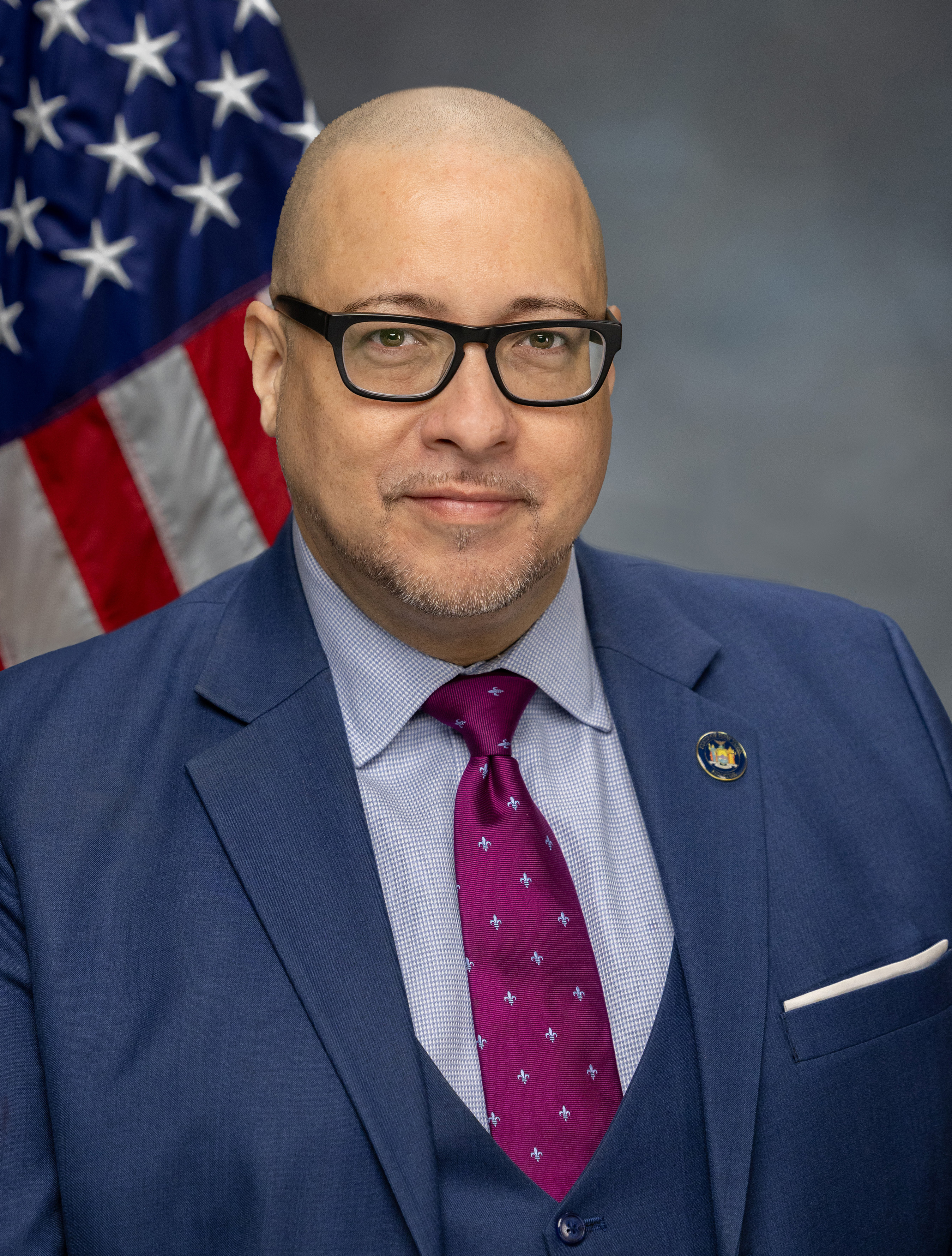
(D, WF) 33rd Senate District
Archive: Last Bill Status - In Senate Committee Health Committee
Actions
2011-S5785 (ACTIVE) - Details
- Current Committee:
- Senate Health
- Law Section:
- Public Health Law
- Laws Affected:
- Add §2805-u, amd §2807-k, Pub Health L; amd §364-j, Soc Serv L
2011-S5785 (ACTIVE) - Sponsor Memo
                                BILL NUMBER:S5785

TITLE OF BILL:
An act
to amend the public health law and the social services law, in relation
to providing quality out-patient specialty care for patients of academic
medical centers regardless of source of payment or insurance type and
improving access to specialty care for medical assistance recipients

PURPOSE:
The purpose of the bill is to ensure that all patients receive quality
medical care, regardless of source of payment or insurance type in
New York's private teaching hospitals.

SUMMARY OF PROVISIONS:
Section 2 creates a new sub-section in the public health law that
prohibits general hospitals from referring, steering or otherwise
directing patients to private physicians' practices, including
faculty practice corporations, that are not licensed by the
Department of Health, unless the general hospital does not accept the
patient's insurance. This section also requires that outpatient
specialty care be provided by integrated teams of medical
professionals, consisting of both attending physicians and resident
doctors receiving on-site supervision from faculty physicians.
This section will not apply to the New York City Health and Hospitals
Corporation.
2011-S5785 (ACTIVE) - Bill Text download pdf
                    S T A T E   O F   N E W   Y O R K
________________________________________________________________________

                                  5785

                       2011-2012 Regular Sessions

                            I N  S E N A T E

                              June 16, 2011
                               ___________

Introduced  by  Sen.  RIVERA -- read twice and ordered printed, and when
  printed to be committed to the Committee on Rules

AN ACT to amend the public health law and the social  services  law,  in
  relation  to providing quality out-patient specialty care for patients
  of academic medical centers regardless of source of payment or  insur-
  ance  type  and improving access to specialty care for medical assist-
  ance recipients

  THE PEOPLE OF THE STATE OF NEW YORK, REPRESENTED IN SENATE AND  ASSEM-
BLY, DO ENACT AS FOLLOWS:

  Section 1. Legislative intent. The legislature hereby finds that:
  a.  Private  academic  medical  centers operate a two-tiered system of
out-patient specialty care in which patients are sorted into the medical
centers' faculty practices or clinics depending  upon  their  source  of
payment  or  insurance  status. Within this two-tiered system of out-pa-
tient specialty care, privately insured patients are treated at  faculty
practices  while  Medicaid  and  uninsured  patients  are treated at the
hospital-based clinics, even if both types of patients are seeking  care
for the same problem.
  b.  Once  separated  into  different systems of care, the Medicaid and
uninsured patients are not given access to the same services as private-
ly insured patients. For example, privately insured patients are able to
see highly experienced faculty physicians to whom they have  twenty-four
hour access, resulting in continuity of care and good care coordination.
Medicaid  or uninsured patients, by contrast, only have access to rotat-
ing student doctors, who are less able to provide the continuity of care
or care coordination that is so critical for patients  who  suffer  from
chronic  or  serious  medical  conditions.  Furthermore,  these  student
doctors often lack adequate supervision from attending  physicians,  who
are  not  required  by  the academic medical centers to spend sufficient
time supervising residents and caring for patients in  the  clinics.  In
cases  of emergency, Medicaid and uninsured patients only have access to

 EXPLANATION--Matter in ITALICS (underscored) is new; matter in brackets
                      [ ] is old law to be omitted.
                                                           LBD13158-01-1
Comments
Open Legislation is a forum for New York State legislation. All comments are subject to review and community moderation is encouraged.
Comments deemed off-topic, commercial, campaign-related, self-promotional; or that contain profanity, hate or toxic speech; or that link to sites outside of the nysenate.gov domain are not permitted, and will not be published. Attempts to intimidate and silence contributors or deliberately deceive the public, including excessive or extraneous posting/posts, or coordinated activity, are prohibited and may result in the temporary or permanent banning of the user. Comment moderation is generally performed Monday through Friday. By contributing or voting you agree to the Terms of Participation and verify you are over 13.
Create an account. An account allows you to sign petitions with a single click, officially support or oppose key legislation, and follow issues, committees, and bills that matter to you. When you create an account, you agree to this platform's terms of participation.