| Date of Action |
Assembly Actions -
Lowercase Senate Actions - UPPERCASE |
|---|---|
| Jun 06, 2012 |
print number 7086a |
| Jun 06, 2012 |
amend (t) and recommit to environmental conservation |
| Apr 27, 2012 |
referred to environmental conservation |
Senate Bill S7086A
2011-2012 Legislative Session
Sponsored By
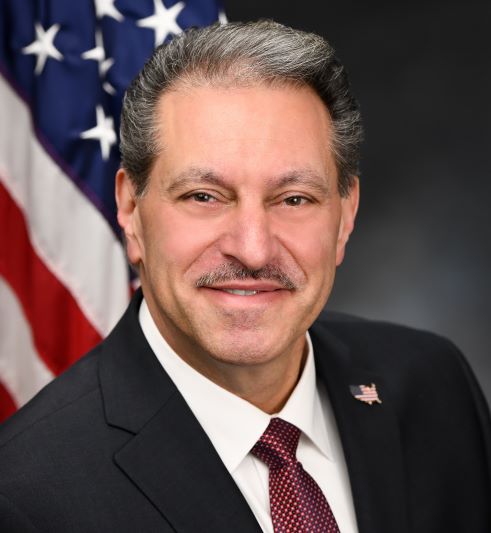
(D) 15th Senate District
Archive: Last Bill Status - In Senate Committee Environmental Conservation Committee
Actions
Bill Amendments
2011-S7086 - Details
- See Assembly Version of this Bill:
- A9871
- Current Committee:
- Senate Environmental Conservation
- Law Section:
- Environmental Conservation Law
- Laws Affected:
- Amd §15-0505, En Con L
- Versions Introduced in 2013-2014 Legislative Session:
-
S3392, A2074
2011-S7086 - Sponsor Memo
                                BILL NUMBER:S7086

TITLE OF BILL:
An act to amend the environmental conservation law, in relation to
prohibiting the department of environmental conservation from issuing a
permit or entering into a memorandum of understanding authorizing the
placement of certain dredged material for the purpose of filling borrow
pits in Jamaica Bay

PURPOSE:
This bill seeks to prohibit the use of certain materials for the
purposes of filling pits in the Jamaica Bay.

SUMMARY OF PROVISIONS:
Section 1: Outlines in detail the specific process of dredging and
explains what the three categories of sediment.  are as defined by the
United States EPA. This act would prohibit the NYS DEC from authorizing
the US Army Corps of Engineers or any other organization from using
materials from categories 2 and 3.

Section 2: Will amend Chapter 233 of 1979 subdivision 1 of section
15-0505 and add subdivision 3-a to prohibit local public corporations or
interstate authority from excavating or placing fill below the mean high
water level in any of the navigable waters of the state, this section
then goes on to define exactly what will constitute as acceptable "fill"
or dredged material. This subdivision also prohibits the NYS DEC from
2011-S7086 - Bill Text download pdf
                    S T A T E   O F   N E W   Y O R K
________________________________________________________________________

                                  7086

                            I N  S E N A T E

                             April 27, 2012
                               ___________

Introduced  by  Sen. ADDABBO -- read twice and ordered printed, and when
  printed to be committed to the Committee on Environmental Conservation

AN ACT to amend the  environmental  conservation  law,  in  relation  to
  prohibiting  the department of environmental conservation from issuing
  a permit or entering into a memorandum  of  understanding  authorizing
  the  placement  of certain dredged material for the purpose of filling
  borrow pits in Jamaica Bay

  THE PEOPLE OF THE STATE OF NEW YORK, REPRESENTED IN SENATE AND  ASSEM-
BLY, DO ENACT AS FOLLOWS:

  Section  1.  Legislative intent. Due to the increase in vessel size in
recent years, New York State waterways such as channels, berthing  areas
and  harbors  are  being excavated to maintain sufficient depth for safe
and efficient vessel operation. This process is called "dredging" and is
done by the US Army Corps of Engineers.
  Dredged material is naturally accumulated sediment. Under the US  Army
Corps  of  Engineers,  Dredged  Material Management Plan (DMMP), dredged
material is not sewage sludge, nor has it been  historically  character-
ized as hazardous, toxic or radioactive waste under the Federal Resource
Conservation  and  Recovery  Act  (RCRA) standards. In fact, any dredged
material characterized as hazardous would not be managed under the DMMP,
but regulated by the appropriate responsible agencies and disposed of at
a properly permitted hazardous waste facility. According to  the  United
States  environmental  protection  agency region 2, however, much of the
dredged material does  contain  some  contaminants  at  varying  concen-
trations,  as  does  much  of  the sediment throughout the harbor. These
contaminants enter the waterways of the harbor from a number of  differ-
ent  sources,  many of which originate outside the harbor including many
upland sources. The harbor  complex  itself  is  densely  populated  and
certain  areas  of  the  harbor  complex are heavily industrialized. The
system receives inputs of contaminants from a variety of sources includ-
ing municipal sewage treatment plants, industrial  discharges,  combined
sewer  outfalls, storm runoff and landfill discharge. There are specific
sites which are also suspected  of  being  significant  contributors  to
sediment  contamination in the NY/NJ Harbor System including The Diamond

 EXPLANATION--Matter in ITALICS (underscored) is new; matter in brackets
                      [ ] is old law to be omitted.
2011-S7086A (ACTIVE) - Details
- See Assembly Version of this Bill:
- A9871
- Current Committee:
- Senate Environmental Conservation
- Law Section:
- Environmental Conservation Law
- Laws Affected:
- Amd §15-0505, En Con L
- Versions Introduced in 2013-2014 Legislative Session:
-
S3392, A2074
2011-S7086A (ACTIVE) - Sponsor Memo
                                BILL NUMBER:S7086A

TITLE OF BILL:
An act
to amend the environmental conservation law, in relation to
the
filling of
borrow
pits in Jamaica Bay

PURPOSE:
This bill seeks to prohibit the use of certain materials for
the purposes of filling pits in the Jamaica Bay.

SUMMARY OF PROVISIONS:
Section 1: outlines in detail the specific process
of dredging and explains what the three categories of sediment.
are as defined by the United States EPA. This act would prohibit the
NYS DEC from authorizing the us Army corps of Engineers or any other
organization from using materials from categories 2 and 3.
Section 2: Will amend Chapter 233 of 1979 subdivision 1 of
section 15-0505
and add subdivision 3-a to prohibit local public corporations or
interstate authority from excavating or placing fill below the mean
high water level in any of the navigable waters of the state, this
section then goes on to define exactly what will constitute as
2011-S7086A (ACTIVE) - Bill Text download pdf
                    S T A T E   O F   N E W   Y O R K
________________________________________________________________________

                                 7086--A

                            I N  S E N A T E

                             April 27, 2012
                               ___________

Introduced  by  Sen. ADDABBO -- read twice and ordered printed, and when
  printed to be committed to the Committee on Environmental Conservation
  -- committee discharged, bill amended, ordered  reprinted  as  amended
  and recommitted to said committee

AN  ACT  to amend the environmental conservation law, in relation to the
  filling of borrow pits in Jamaica Bay

  THE PEOPLE OF THE STATE OF NEW YORK, REPRESENTED IN SENATE AND  ASSEM-
BLY, DO ENACT AS FOLLOWS:

  Section  1.  Legislative intent. Due to the increase in vessel size in
recent years, New York State waterways such as channels, berthing  areas
and  harbors are being excavated in a process known as dredging to main-
tain sufficient depth for safe and efficient vessel operation.
  Dredged material  is  naturally  accumulated  sediment,  much  of  the
dredged  material  does  contain  some  contaminants  at varying concen-
trations.
  Jamaica Bay was dredged to supply soil for a  number  of  construction
projects.  This  process  created  borrow pits in the bay.  These borrow
pits have been identified as an attractive alternative for the disposing
of dredge material.
  S 2. Subdivision 1 of section 15-0505 of the  environmental  conserva-
tion  law, as amended by chapter 233 of the laws of 1979, is amended and
a new subdivision 3-a is added to read as follows:
  1. No person, local public corporation or interstate  authority  shall
excavate  or  place  fill  below the mean high water level in any of the
navigable waters of the state, or in marshes, estuaries,  tidal  marshes
and  wetlands that are adjacent to and contiguous at any point to any of
the navigable waters of the state and that are inundated  at  mean  high
water  level  or tide, without a permit issued pursuant to subdivision 3
of this section. For the purposes of this section, fill  shall  include,
but  shall  not  be  limited to, earth, clay, silt, sand, gravel, stone,
rock, shale, concrete (whole  or  fragmentary),  ashes,  cinders,  slag,
metal,  DREDGED  MATERIAL  or  any other similar material whether or not
enclosed or contained by (1) crib work of wood, timber,  logs,  concrete
or  metal,  (2) bulkheads and cofferdams of timber sheeting, bracing and

 EXPLANATION--Matter in ITALICS (underscored) is new; matter in brackets
                      [ ] is old law to be omitted.
Comments
Open Legislation is a forum for New York State legislation. All comments are subject to review and community moderation is encouraged.
Comments deemed off-topic, commercial, campaign-related, self-promotional; or that contain profanity, hate or toxic speech; or that link to sites outside of the nysenate.gov domain are not permitted, and will not be published. Attempts to intimidate and silence contributors or deliberately deceive the public, including excessive or extraneous posting/posts, or coordinated activity, are prohibited and may result in the temporary or permanent banning of the user. Comment moderation is generally performed Monday through Friday. By contributing or voting you agree to the Terms of Participation and verify you are over 13.
Create an account. An account allows you to sign petitions with a single click, officially support or oppose key legislation, and follow issues, committees, and bills that matter to you. When you create an account, you agree to this platform's terms of participation.