| Date of Action |
Assembly Actions -
Lowercase Senate Actions - UPPERCASE |
|---|---|
| May 12, 2022 |
referred to agriculture |
Senate Bill S9169
2021-2022 Legislative Session
Sponsored By
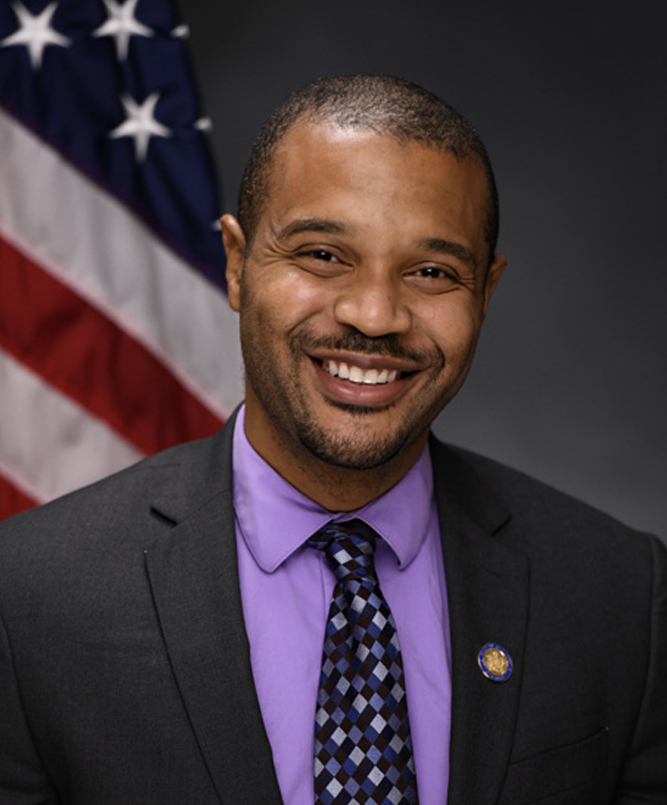
(D, WF) 25th Senate District
Archive: Last Bill Status - In Senate Committee Agriculture Committee
Actions
2021-S9169 (ACTIVE) - Details
- Current Committee:
- Senate Agriculture
- Law Section:
- Agriculture and Markets Law
- Laws Affected:
- Add §§323-a & 323-b, Ag & Mkts L
2021-S9169 (ACTIVE) - Sponsor Memo
BILL NUMBER: S9169

SPONSOR: BRISPORT

TITLE OF BILL:

An act to amend the agriculture and markets law, in relation to the
directing the commissioner of agriculture and markets to reform certain
grant programs to promote opportunities for multi-generational farming
families and for beginning farmers


SUMMARY OF PROVISIONS:

Section one sets forth the legislative findings.

Section two amends the agriculture and markets law by adding two new
sections 323-a and 323-b, to prioritize beginner farmers and specialty
crop production, including fruit, vegetable, legume, fungi, and grain
production, in connection with the dairy farmland protection initiative
grant program.


JUSTIFICATION:
2021-S9169 (ACTIVE) - Bill Text download pdf
                     S T A T E   O F   N E W   Y O R K
 ________________________________________________________________________

                                   9169

                             I N  S E N A T E

                               May 12, 2022
                                ___________

 Introduced  by Sen. BRISPORT -- read twice and ordered printed, and when
   printed to be committed to the Committee on Agriculture

 AN ACT to amend the agriculture and markets  law,  in  relation  to  the
   directing  the  commissioner  of  agriculture  and  markets  to reform
   certain grant programs to promote opportunities for multi-generational
   farming families and for beginning farmers

   THE PEOPLE OF THE STATE OF NEW YORK, REPRESENTED IN SENATE AND  ASSEM-
 BLY, DO ENACT AS FOLLOWS:

   Section 1. Legislative findings. The legislature declares:
   a.  New York faces pressing needs to preserve and protect agricultural
 working lands, while also helping at-risk farmers maintain their liveli-
 hood.
   b. New York dairy farmers  face  an  uncertain  future.  According  to
 statistics  from  the United States Department of Agriculture's National
 Agricultural Statistics Service ("USDANASS"), two-thirds of  New  York's
 dairy  farms  have shut down since 1987, even as other forms of agricul-
 ture have grown. In 1987, New York was home to 13,840  dairy  farms.  In
 2012,  that  number  had dropped down to 5,427. The most recent New York
 State Department of Agriculture and Markets  data  from  2019  indicates
 that  New  York is now home to just 3,843 dairy farms. This represents a
 loss of 9,997 dairy farms over the past 32 years.
   c. The decline in small and mid-sized dairy farms is not unique to New
 York. Across the country, industry consolidation has changed dairy farm-
 ing. Nationally, since 1987, the median dairy herd  size  has  increased
 from 80 cows to 1,300 cows.
   d.  The threat posed by industry consolidation has been clear for more
 than a decade.  According to a March 2010 report from the New York State
 Office of the State Comptroller, the dairy industry has been in "crisis"
 because the "decline of small  family  farms  in  the  state  negatively
 impacts  the  local economies in which these farms are located, and also
 changes the rural character and quantity of open space  in  upstate  New
 York".
   e.  Current New York state policy deepens consolidation and inequality
 among dairy  farmers.  The  Dairy  Farmland  Protection  Initiative  has

  EXPLANATION--Matter in ITALICS (underscored) is new; matter in brackets
                       [ ] is old law to be omitted.
Comments
Open Legislation is a forum for New York State legislation. All comments are subject to review and community moderation is encouraged.
Comments deemed off-topic, commercial, campaign-related, self-promotional; or that contain profanity, hate or toxic speech; or that link to sites outside of the nysenate.gov domain are not permitted, and will not be published. Attempts to intimidate and silence contributors or deliberately deceive the public, including excessive or extraneous posting/posts, or coordinated activity, are prohibited and may result in the temporary or permanent banning of the user. Comment moderation is generally performed Monday through Friday. By contributing or voting you agree to the Terms of Participation and verify you are over 13.
Create an account. An account allows you to sign petitions with a single click, officially support or oppose key legislation, and follow issues, committees, and bills that matter to you. When you create an account, you agree to this platform's terms of participation.