| Date of Action |
Assembly Actions -
Lowercase Senate Actions - UPPERCASE |
|---|---|
| May 04, 2026 |
referred to health |
Senate Bill S10174
2025-2026 Legislative Session
Sponsored By
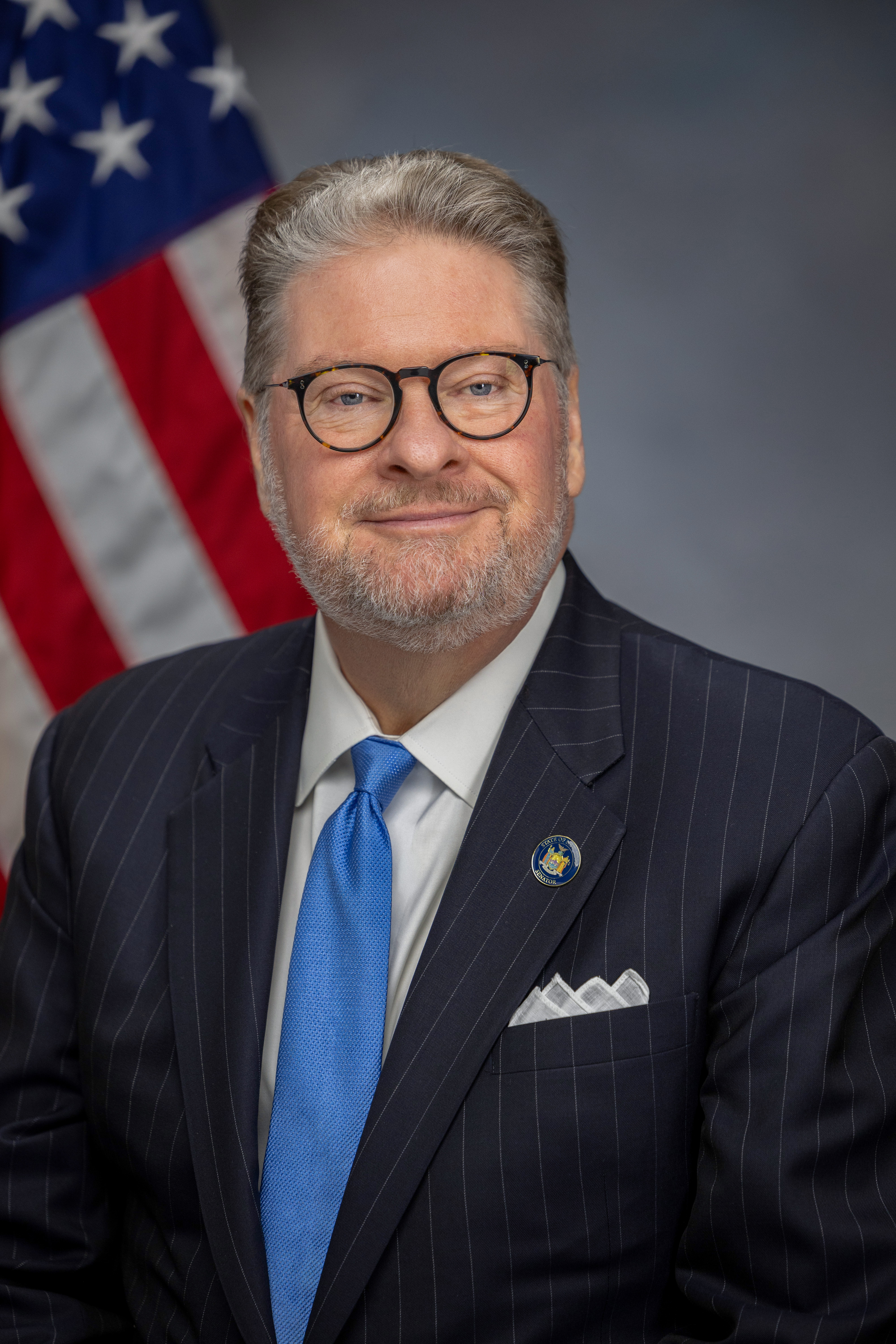
(D, WF) 40th Senate District
Current Bill Status - In Senate Committee Health Committee
Actions
2025-S10174 (ACTIVE) - Details
- Current Committee:
- Senate Health
- Law Section:
- Public Health
2025-S10174 (ACTIVE) - Sponsor Memo
BILL NUMBER: S10174

SPONSOR: HARCKHAM

TITLE OF BILL:

An act to establish a time-limited blue ribbon panel on co-occurring
disorders to develop a statewide framework for the integration of mental
health and substance use services


PURPOSE OR GENERAL IDEA OF BILL:

To establish a time-limited, cross-agency Blue Ribbon Panel to develop a
comprehensive, enforceable statewide framework for the integration of
prevention, identification, treatment, and recovery related to co-occur-
ring disorders (COD).


SUMMARY OF SPECIFIC PROVISIONS:

Section 1 states legislative findings and intent showing the need for a
coordinated, cross-system approach to align policy, funding, service
delivery, and curriculum, and that a time-limited, outcome-driven panel
is required to establish such a framework.
2025-S10174 (ACTIVE) - Bill Text download pdf
                     S T A T E   O F   N E W   Y O R K
 ________________________________________________________________________

                                   10174

                             I N  S E N A T E

                                May 4, 2026
                                ___________

 Introduced  by Sen. HARCKHAM -- read twice and ordered printed, and when
   printed to be committed to the Committee on Health

 AN ACT to establish a time-limited blue  ribbon  panel  on  co-occurring
   disorders  to  develop  a  statewide  framework for the integration of
   mental health and substance use services

   THE PEOPLE OF THE STATE OF NEW YORK, REPRESENTED IN SENATE AND  ASSEM-
 BLY, DO ENACT AS FOLLOWS:

   Section  1. Legislative findings and intent. 1. The legislature hereby
 finds that a significant portion of individuals served within  New  York
 state  systems present with co-occurring disorders (COD), defined as the
 coexistence of a mental health condition and a substance  use  disorder,
 as reflected in available state and federal data and reporting.
   2.  The  legislature  further  finds that the New York state office of
 mental health (OMH), the New York state office of addiction services and
 supports (OASAS), the New York state department of health (DOH), and the
 New York state education department (NYSED) operate within systems  that
 remain  structurally  separate in policy, funding, and service delivery,
 including but  not  limited  to  differences  in  eligibility  criteria,
 licensing  and  regulatory  requirements,  reimbursement structures, and
 program oversight.
   3. The legislature further finds that such separation results in frag-
 mented access to care, disruptions in treatment continuity,  and  incon-
 sistent  outcomes across populations and settings, including barriers to
 entry into services, limitations of concurrent or integrated  treatment,
 and gaps in care transitions across providers and systems.
   4.  The  legislature  further  finds that, despite substantial invest-
 ments, there is insufficient alignment across OMH, OASAS, DOH, and NYSED
 to ensure integrated, person-centered care related to COD.
   5. The legislature further finds that there is no single,  enforceable
 statewide framework governing prevention, identification, treatment, and
 recovery related to COD.
   6. The legislature therefore declares that a coordinated, cross-system
 approach  is  necessary  to align policy, funding, service delivery, and

  EXPLANATION--Matter in ITALICS (underscored) is new; matter in brackets
                       [ ] is old law to be omitted.
                                                            LBD15698-01-6
Comments
Open Legislation is a forum for New York State legislation. All comments are subject to review and community moderation is encouraged.
Comments deemed off-topic, commercial, campaign-related, self-promotional; or that contain profanity, hate or toxic speech; or that link to sites outside of the nysenate.gov domain are not permitted, and will not be published. Attempts to intimidate and silence contributors or deliberately deceive the public, including excessive or extraneous posting/posts, or coordinated activity, are prohibited and may result in the temporary or permanent banning of the user. Comment moderation is generally performed Monday through Friday. By contributing or voting you agree to the Terms of Participation and verify you are over 13.
Create an account. An account allows you to sign petitions with a single click, officially support or oppose key legislation, and follow issues, committees, and bills that matter to you. When you create an account, you agree to this platform's terms of participation.