| Date of Action |
Assembly Actions -
Lowercase Senate Actions - UPPERCASE |
|---|---|
| Apr 23, 2026 |
print number 8633a |
| Apr 23, 2026 |
amend (t) and recommit to children and families |
| Jan 07, 2026 |
referred to children and families |
| Dec 29, 2025 |
referred to rules |
Senate Bill S8633A
2025-2026 Legislative Session
Sponsored By
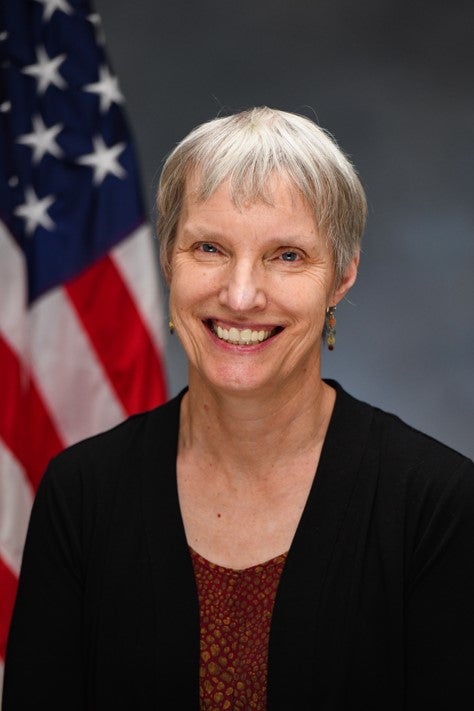
(D, WF) 48th Senate District
Current Bill Status - In Senate Committee Children And Families Committee
Actions
Bill Amendments
co-Sponsors

(D, WF) 40th Senate District

(D, WF) 37th Senate District

(D, WF) 13th Senate District
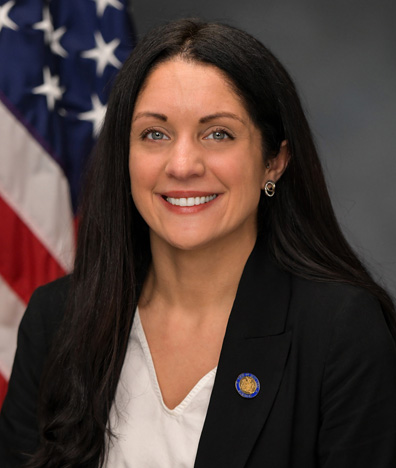
(D) 23rd Senate District
2025-S8633 - Details
- See Assembly Version of this Bill:
- A9551
- Current Committee:
- Senate Children And Families
- Law Section:
- Family Court Act
- Laws Affected:
- Amd §§812 & 154-c, add §819, Fam Ct Act; amd §§530.11 & 1.20 CP L; add §39-c, Judy L; add §256, amd §240, Dom Rel L
2025-S8633 - Summary
Relates to coercive control; provides that the family court and the criminal courts shall have concurrent jurisdiction over acts which constitute coercive control; provides that courts may issue orders of protection upon a finding of coercive control; directs the office of court administration, in consultation with the office for the prevention of domestic violence and certain organizations, to develop and administer training for judges and court clerks on coercive control.
2025-S8633 - Sponsor Memo
BILL NUMBER: S8633

SPONSOR: MAY

TITLE OF BILL:

An act to amend the family court act, the criminal procedure law, the
judiciary law, the general obligations law and the domestic relations
law, in relation to coercive control


PURPOSE OR GENERAL IDEA OF BILL:

This bill recognizes and addresses coercive control, a pattern of
abusive behavior used to dominate, intimidate, or subordinate another
person and that undermines a person's autonomy, safety, and liberty,
even where no single incident rises to the level of a traditional crimi-
nal offense. It provides courts with clear authority to name and respond
to such patterns, strengthens protections for survivors and children,
and creates a civil remedy to address the real economic and personal
harm caused by coercive control.


SUMMARY OF PROVISIONS:
2025-S8633 - Bill Text download pdf
                     S T A T E   O F   N E W   Y O R K
 ________________________________________________________________________

                                   8633

                        2025-2026 Regular Sessions

                             I N  S E N A T E

                             December 29, 2025
                                ___________

 Introduced  by  Sen.  MAY  --  read  twice and ordered printed, and when
   printed to be committed to the Committee on Rules

 AN ACT to amend the family court act, the criminal  procedure  law,  the
   judiciary  law, the general obligations law and the domestic relations
   law, in relation to coercive control

   THE PEOPLE OF THE STATE OF NEW YORK, REPRESENTED IN SENATE AND  ASSEM-
 BLY, DO ENACT AS FOLLOWS:

   Section  1.  The  opening paragraph of subdivision 1 of section 812 of
 the family court act, as amended by chapter 541 of the laws of 2024,  is
 amended to read as follows:
   The  family court and the criminal courts shall have concurrent juris-
 diction over any proceeding concerning acts which would constitute COER-
 CIVE CONTROL AS DEFINED BY SECTION EIGHT HUNDRED NINETEEN OF  THIS  ACT,
 disorderly conduct, unlawful dissemination or publication of an intimate
 image,  harassment in the first degree, harassment in the second degree,
 aggravated harassment in the second degree, sexual misconduct,  forcible
 touching,  sexual  abuse in the third degree, sexual abuse in the second
 degree as set forth in subdivision one of section 130.60  of  the  penal
 law, stalking in the first degree, stalking in the second degree, stalk-
 ing  in  the  third  degree,  stalking  in  the  fourth degree, criminal
 mischief, menacing in the second degree, menacing in the  third  degree,
 reckless endangerment, criminal obstruction of breathing or blood circu-
 lation,  strangulation  in the second degree, strangulation in the first
 degree, assault in the second degree, assault in the  third  degree,  an
 attempted assault, identity theft in the first degree, identity theft in
 the  second degree, identity theft in the third degree, grand larceny in
 the fourth degree, grand larceny in the third degree,  coercion  in  the
 second  degree  or coercion in the third degree as set forth in subdivi-
 sions one, two and three of section 135.60  of  the  penal  law  between
 spouses  or  former  spouses,  or  between  parent  and child or between
 members of the same family or household except that  if  the  respondent

  EXPLANATION--Matter in ITALICS (underscored) is new; matter in brackets
                       [ ] is old law to be omitted.
                                                            LBD13778-03-5
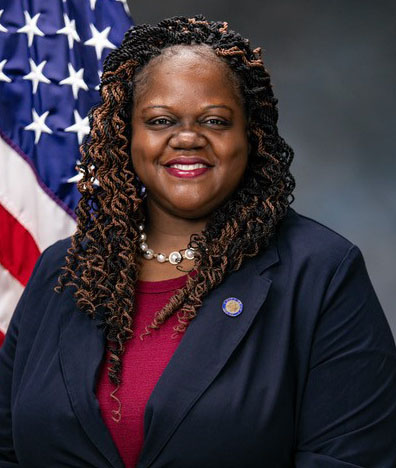
co-Sponsors

(D) 30th Senate District
(D, WF) 40th Senate District

(D) 27th Senate District
(D, WF) 37th Senate District
2025-S8633A (ACTIVE) - Details
- See Assembly Version of this Bill:
- A9551
- Current Committee:
- Senate Children And Families
- Law Section:
- Family Court Act
- Laws Affected:
- Amd §§812 & 154-c, add §819, Fam Ct Act; amd §§530.11 & 1.20 CP L; add §39-c, Judy L; add §256, amd §240, Dom Rel L
2025-S8633A (ACTIVE) - Summary
Relates to coercive control; provides that the family court and the criminal courts shall have concurrent jurisdiction over acts which constitute coercive control; provides that courts may issue orders of protection upon a finding of coercive control; directs the office of court administration, in consultation with the office for the prevention of domestic violence and certain organizations, to develop and administer training for judges and court clerks on coercive control.
2025-S8633A (ACTIVE) - Sponsor Memo
BILL NUMBER: S8633A

SPONSOR: MAY

TITLE OF BILL:

An act to amend the family court act, the criminal procedure law, the
judiciary law and the domestic relations law, in relation to coercive
control


PURPOSE OR GENERAL IDEA OF BILL:

This bill recognizes and addresses coercive control, a pattern of
abusive behavior that undermines a person's autonomy, safety, and liber-
ty, even where no single incident rises to the level of a traditional
criminal offense. It provides courts with clear authority to identify
and respond to such patterns and strengthens protections for survivors
and children.


SUMMARY OF PROVISIONS:

The bill establishes a single, uniform definition of coercive control in
the Family Court Act and incorporates that definition across related
2025-S8633A (ACTIVE) - Bill Text download pdf
                     S T A T E   O F   N E W   Y O R K
 ________________________________________________________________________

                                  8633--A

                        2025-2026 Regular Sessions

                             I N  S E N A T E

                             December 29, 2025
                                ___________

 Introduced  by  Sens.  MAY, HARCKHAM, MAYER, RAMOS, SCARCELLA-SPANTON --
   read twice and ordered printed, and when printed to  be  committed  to
   the Committee on Rules -- recommitted to the Committee on Children and
   Families  in  accordance  with  Senate  Rule  6,  sec.  8 -- committee
   discharged, bill amended, ordered reprinted as amended and recommitted
   to said committee

 AN ACT to amend the family court act, the criminal  procedure  law,  the
   judiciary  law and the domestic relations law, in relation to coercive
   control

   THE PEOPLE OF THE STATE OF NEW YORK, REPRESENTED IN SENATE AND  ASSEM-
 BLY, DO ENACT AS FOLLOWS:

   Section  1.  The  opening paragraph of subdivision 1 of section 812 of
 the family court act, as amended by chapter 541 of the laws of 2024,  is
 amended to read as follows:
   The  family court and the criminal courts shall have concurrent juris-
 diction over any proceeding concerning acts which would constitute COER-
 CIVE CONTROL AS DEFINED BY SECTION EIGHT HUNDRED NINETEEN OF THIS  PART,
 disorderly conduct, unlawful dissemination or publication of an intimate
 image,  harassment in the first degree, harassment in the second degree,
 aggravated harassment in the second degree, sexual misconduct,  forcible
 touching,  sexual  abuse in the third degree, sexual abuse in the second
 degree as set forth in subdivision one of section 130.60  of  the  penal
 law, stalking in the first degree, stalking in the second degree, stalk-
 ing  in  the  third  degree,  stalking  in  the  fourth degree, criminal
 mischief, menacing in the second degree, menacing in the  third  degree,
 reckless endangerment, criminal obstruction of breathing or blood circu-
 lation,  strangulation  in the second degree, strangulation in the first
 degree, assault in the second degree, assault in the  third  degree,  an
 attempted assault, identity theft in the first degree, identity theft in
 the  second degree, identity theft in the third degree, grand larceny in
 the fourth degree, grand larceny in the third degree,  coercion  in  the

  EXPLANATION--Matter in ITALICS (underscored) is new; matter in brackets
                       [ ] is old law to be omitted.
                                                            LBD13778-04-6
Comments
Open Legislation is a forum for New York State legislation. All comments are subject to review and community moderation is encouraged.
Comments deemed off-topic, commercial, campaign-related, self-promotional; or that contain profanity, hate or toxic speech; or that link to sites outside of the nysenate.gov domain are not permitted, and will not be published. Attempts to intimidate and silence contributors or deliberately deceive the public, including excessive or extraneous posting/posts, or coordinated activity, are prohibited and may result in the temporary or permanent banning of the user. Comment moderation is generally performed Monday through Friday. By contributing or voting you agree to the Terms of Participation and verify you are over 13.
Create an account. An account allows you to sign petitions with a single click, officially support or oppose key legislation, and follow issues, committees, and bills that matter to you. When you create an account, you agree to this platform's terms of participation.