‘Affordability should come first’: Leaders rip PSC over Con Ed rate hikes
Originally published in
Halston Media Group
on
.
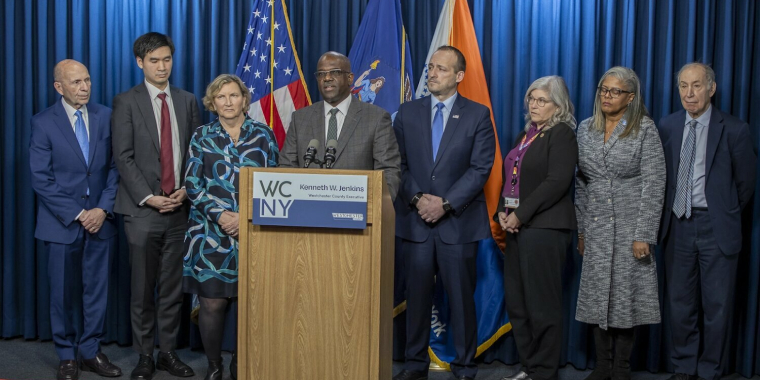
WESTCHESTER, N.Y. — Lawmakers and others around the lower Hudson Valley are expressing deep disappointment with the New York State Public Service Commission over its approval of gas and electricity rate hikes for Con Edison.
The seven-member commission’s unanimous Thursday, Jan. 22, decision followed months of vigorous pushback by local elected officials on behalf of constituents who were already struggling to keep the lights and heat on.
Last year, a “Joint Proposal” was hammered out between the Westchester Municipal Consortium—which consisted of 40 local governments—Con Ed, PSC staff, and other parties.
Although it contained increases that were substantially less than the utility had originally requested, the agreement did not go down well with the Westchester County Board of Legislators, which condemned the regulatory agency’s decision.
“For more than a year, this board has amplified the voices of residents facing an affordability crisis, yet the PSC has sided with corporate interests over the families, seniors, and small businesses who are already struggling. This decision forces too many of our neighbors to choose between heating their homes and paying for groceries or medication, a choice no one should have to make,” the board said in an official statement.
County Legislator Erika Pierce of Katonah (D–District 2) noted that “thousands” of ratepayers had shared concerns about their ability to pay Con Ed bills and said the Board of Legislators believes the “PSC should not have found the proposed rate increase just and reasonable.”
“While we certainly acknowledge this proposal is an improvement over the original, we felt we were all required to do better. We stood together as a Westchester County delegation, including our state representatives, with that commitment to ratepayers in mind,” she said Friday.
A BOL public input session held in Mount Kisco in August elicited angry, fearful, and frustrated comments aimed at Con Ed, while one in October—this time targeting New York State Electric & Gas’s proposed rate hikes—drew a large crowd at Heritage Hills in Somers.
(The PSC has not yet ruled on NYSE&G’s request.)
Pierce said she and her board colleagues would continue to fight on behalf of constituents who are NYSE&G ratepayers.
She also said she was looking forward to working with state partners on “state-level legislative solutions for a system that is clearly not working on behalf of ratepayers.”
Halston Media also reached out to BOL Chair Vedat Gashi of Yorktown for comment.
RATEPAYERS COME FIRST
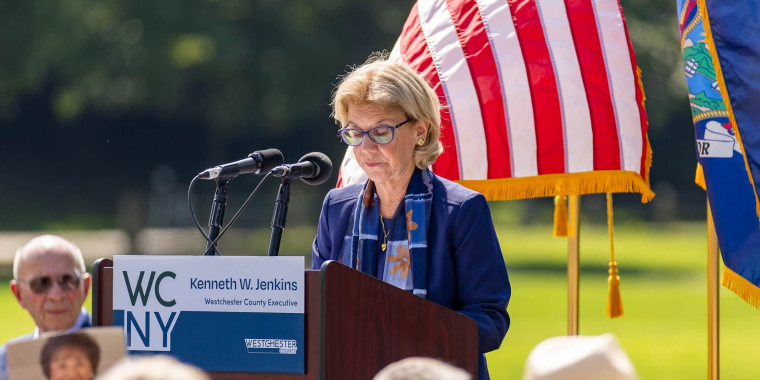
Westchester County Executive Ken Jenkins said the rate hikes will worsen the current “affordability crisis” facing Westchester communities by forcing residents to “make impossible choices between paying rent, buying groceries, or keeping the lights on.”
“In some cases, even when they choose to keep the lights off, they are still hit with tremendous bills. How is this fair?” he asked.
“Affordability should come first, and I will continue to stand with local and state leaders to push for solutions that protect ratepayers, not guaranteed profits for shareholders,” Jenkins said.
AARP New York State Director Beth Finkel issued the following statement:
“Addressing the high cost of energy is critical to making New York State a more affordable place to live. The approved Con Edison rate increase, while an improvement over the original proposal, will still significantly impact households living on fixed incomes, particularly older adults,” she said, adding that AARP “firmly believes the state must reform the way utility rates are structured.”
Con Edison terminated service to more than 190,410 households in 2025. In December alone, more than 414,000 households in Con Edison’s service territory were 60 days or more behind on their utility bills, owing more than $871 million, Finkel noted.
The higher rates take effect this month.
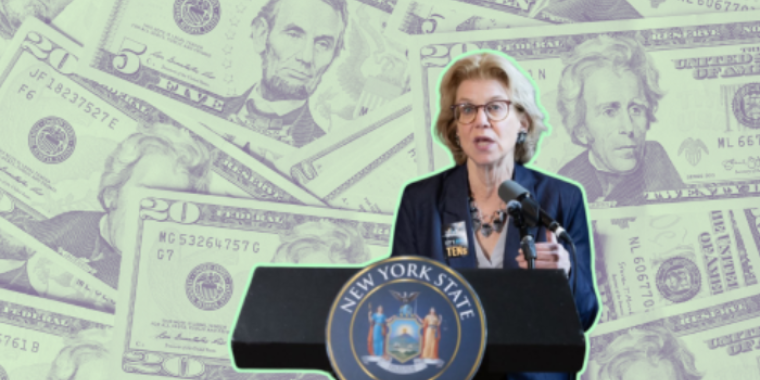
Electric bills will rise by 10.4 percent and gas bills by 15.8 percent, cumulatively over the three-year period, according to state Assemblyman Matt Slater (R–94th District) of Yorktown.
Con Edison, the state’s largest electric and gas utility, has more than 3.6 million electric customers and 1.1 million natural gas customers in Westchester and New York City.
State Sen. Pete Harckham (D–District 40) of South Salem called the rate increases “excessive” and the PSC’s approval “unacceptable.”
“This moment demands a clear focus on protecting customers rather than rewarding corporations,” he said in a brief statement.
A joint statement was issued by Democratic state Assembly members Chris Burdick (District 93), Dana Levenberg, and MaryJane Shimsky; state Sens. Shelley Mayer, Robert Jackson, and Nathalia Fernandez; and New York City Councilman Harvey Epstein.
Accusing the PSC of failing “to uphold its duty to protect ratepayers and act in the public interest,” they said “the consequences of this decision are devastatingly real—not just ‘emotional’ or ‘political,’ as a commissioner suggested during their commentary.”
“People will be forced to choose between heat and healthcare. Seniors will skip medications. Families will cut back on necessities just to pay the bills,” they said, calling the rate hikes “unfair” and “unjust.”
The lawmakers also slammed the rate-setting process as “dense, opaque, and inscrutable.”
“Its complexity leaves the public in the dark—it is a process heavily skewed in favor of the utility and its shareholders,” they said.
“We are deeply disappointed by this decision. It reflects a profound failure of responsibility. We will continue to fight alongside our colleagues in the Legislature and the governor, using every legislative tool available to protect New Yorkers and hold both utilities and regulators accountable. The public deserves better, and we will not stop demanding it,” the lawmakers said.
Slater said he was disappointed “but not surprised” by the decision.
“Our community is already stretched thin, and now they’re being told to pay even more just to keep their homes warm and the lights on,” he said.
“The governor keeps talking about fixing the affordability crisis, but her own Public Service Commission is approving these massive increases,” Slater said of Gov. Kathy Hochul. “You can’t claim to be fighting for working families while signing off on policies that drive up the cost of basic necessities.”
Somers Town Supervisor Robert Scorrano, a Republican, also reacted to the PSC decision.
“Albany’s one-size-fits-all energy mandates are contributing to higher costs, and working families are the ones paying the price. Another Con Edison rate increase is the wrong move at the wrong time. Residents are already paying more for everything, and utilities should be finding ways to operate more efficiently—not passing the bill on to customers who have no alternative,” he said.
PSC EXPLAINS
The PSC defended its decision, noting that the “Joint Proposal” was either signed or not opposed by 17 parties involved in the negotiations and that it had “dramatically” reduced Con Edison’s requested increase by nearly 87 percent.
According to PSC Chair Rory M. Christian, the approved rates meet “the legal requirement that the company continue to provide safe and adequate service at just and reasonable rates.”
Calling the plan “forward-looking,” Christian said it “benefits customers and includes provisions that further important state and commission objectives, while keeping customer affordability first and foremost in mind.”
Last year, Con Edison defended the increases by saying they would be used to “continue to fortify the grid against severe weather, support the state’s clean energy goals, enable our workforce to maintain the grid, and respond swiftly to customer needs.”
The PSC noted that Gov. Kathy Hochul had “made it clear the original proposal was too high.”
At the governor’s direction, the Department of Public Service “scrutinized Con Edison’s rate case to prioritize affordability,” the PSC said, adding that it was its “responsibility to find the right balance between ensuring system reliability and minimizing costs to ratepayers.”
The approved rates are “limited to approximately the rate of inflation” and advance “safety, reliability, and climate goals.”
In addition to capital investments needed to “maintain safety and reliability,” such as replacing “leak-prone” pipes, the PSC cited property taxes and increases in operations and maintenance expenses as the “main rate drivers in the first year of the electric and gas rate plans.”
The increases will also ensure, the PSC said, “a return on equity (9.40 percent) that reflects market conditions and allows the company to obtain funding for capital investments at reasonable rates.”
That return, the PSC found, “is a reasonable outcome given the current economic environment and is lower than rates set for other utilities in the United States and New York State.”