New York State Senate Majority Delivers Relief for Ratepayers and Holds Utility Companies Accountable in the SFY 2026-27 Budget
June 18, 2026
-
ISSUE:
- FY 2027
Last week, the New York State Senate Majority, in partnership with the New York State Assembly and Governor Kathy Hochul, enacted the FY 2026-2027 State Budget, delivering direct relief to New Yorkers facing rising utility and energy costs while advancing major reforms to hold utility companies accountable and protect consumers.
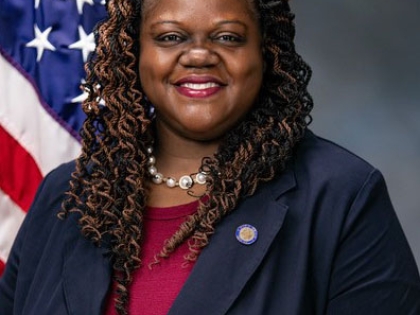
“My office receives thousands of phone calls and emails regarding ridiculously high utility bills,” said Senator Lea Webb. “This budget continues our efforts to tackle oversight and accountability of utility companies throughout the state and the Public Service Commission, while continuing investments in programs to assist constituents with high costs and improved services.. While this budget made some key policy changes and funding supports, we have more work to do in improving our access to utilities.”
The budget includes significant reforms to the utility rate-setting process to help reduce energy costs for families and prevent unnecessary rate hikes. These reforms require increased scrutiny of utility executive compensation, rates of return, and costs passed on to ratepayers, while also requiring utilities to return excess revenues to consumers more quickly. It also establishes a blue-ribbon commission to study the causes of rising utility costs and develop recommendations for legislative and regulatory reforms to improve affordability statewide.
The enacted budget also makes major investments in energy affordability and efficiency programs to help New Yorkers lower utility bills over the long term. This includes $150 million for EmPower Plus to help low and moderate-income households make energy-efficient home upgrades, $40 million for the Weatherization Program, $2 million for the Green Affordable Pre-Electrification Program Fund, and $2.75 million for the Public Utility Law Project (PULP), which advocates on behalf of residential utility consumers and helps protect low-income New Yorkers from unfair utility practices.
The SFY 2026-27 Budget includes $1 billion in Protecting Our Wallets Energy Rebates (POWER), providing a one-time energy rebate check of up to $200 for eligible households to help offset rising utility and energy costs and provide immediate financial relief for working families. The State Tax Department will determine eligibility automatically based on filing status and income: rebates of $200 for married filers earning up to $150,000, $150 for married filers earning between $150,000 and $300,000, and $100 for single filers and heads of household earning up to $150,000.
The enacted budget further strengthens oversight of utility companies by requiring budget-constrained proposals that limit rate increases to the rate of inflation, except in limited circumstances involving safety, reliability, or critical infrastructure needs. Additionally, utility companies will no longer be allowed to pass lobbying, political, or public relations expenses onto ratepayers. To improve transparency and fairness, the budget reforms the utility rate case process by giving the Department of Public Service additional time to review proposed rate increases and ensuring utilities do not automatically receive proposed increases if the Public Service Commission rejects a rate plan. The New York State Senate Democratic Majority remains committed to lowering costs for working families, strengthening consumer protections, and ensuring utility companies are held accountable to the people they serve.
The looming cloud over utility bills, of course, is Artificial Intelligence and proposed data centers that use the same amount of energy as a small city. Although these centers create temporary jobs, the dangers they pose to our environment and utility costs are permanent. Because of these threats, the Senate passed a year-long moratorium on building new data centers (S10642/A11560). This pause will benefit municipalities because when we take time to do the research, hear from the community about their needs and priorities, and figure out how these massive data centers will impact our communities.
###
Newsroom
Go to NewsroomSenator Lea Webb Statement on the Cornell Jane Doe Case
September 28, 2026
Senator Lea Webb Presents Blues on the Bridge with a NYS Empire Award
September 21, 2026
Webinar with Webb: Immigration "Know Your Rights"
September 10, 2026