Hinchey and Lupardo Lead Push to Modernize Farm to School Program in Final State Budget
March 30, 2026
-
COMMITTEE:
- Agriculture
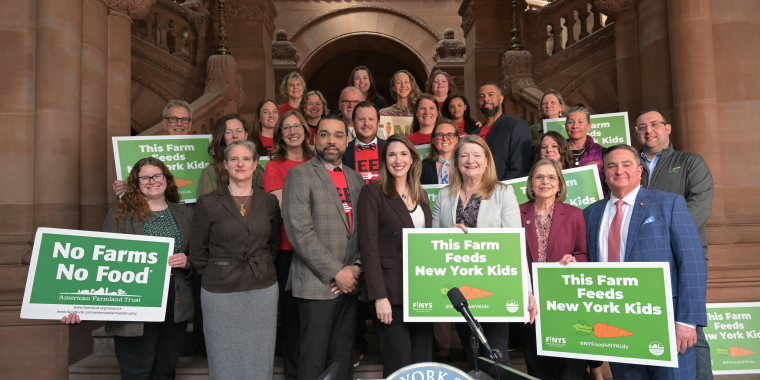
Lawmakers, Farmers, and Advocates Unite to Update Farm to School Program, Making it Easier for Schools to Participate and Bring Healthier New York-Grown Food to Students Across the State
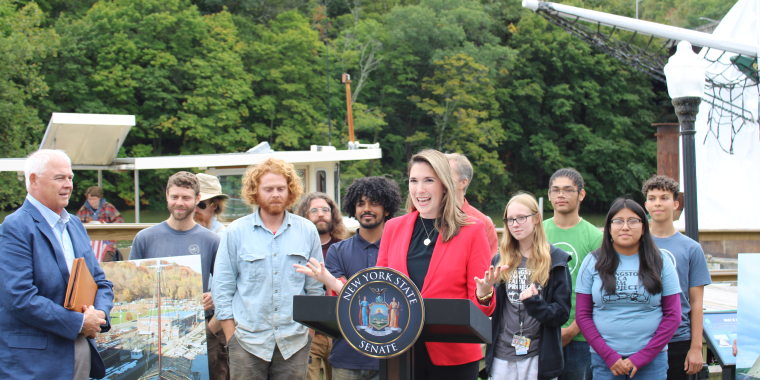
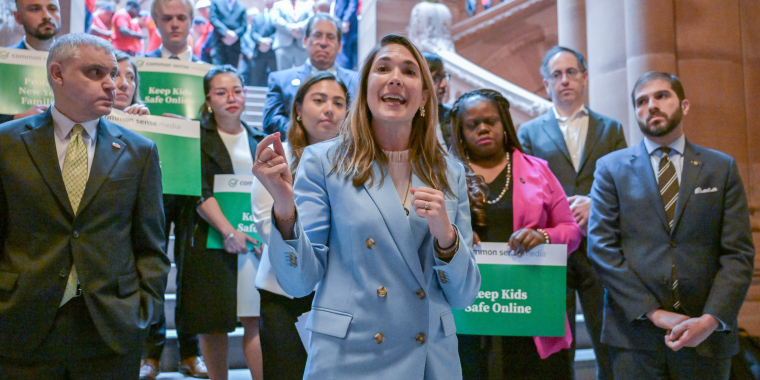
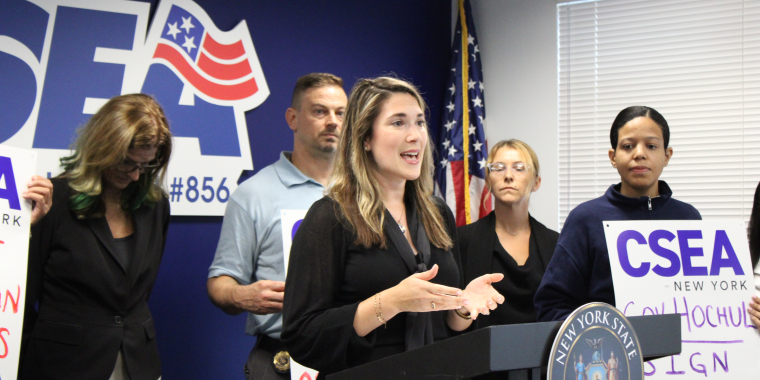
ALBANY, NY – Today, New York State Legislative Agriculture Chairs, Senator Michelle Hinchey and Assemblymember Donna Lupardo, were joined by a coalition of lawmakers, farmers, and food system advocates, calling for the full inclusion of their proposal to modernize New York’s Farm to School program in the final 2026 State Budget. Requiring no new state funding, the proposal helps more schools access existing Farm to School funds to incorporate more nutritious, New York-grown food into school meals, benefiting both students and farmers.
A recent State Comptroller audit found that New York’s Farm to School program is widely underused due to administrative barriers for schools, including a restriction that limits participation to lunch purchases only. In the 2024-25 school year, just 73 out of nearly 800 School Food Authorities outside New York City participated in the program. Both the Senate and Assembly one-house plans include partial program updates, but lawmakers and advocates are fighting for complete adoption of the plan’s four key improvements: expanding calculation of eligibility to be based on all school meals, higher per-meal reimbursement for schools, tiered incentives for schools sourcing over 30% of food from New York farmers, and a Hold Harmless provision giving schools currently in the program a 3-year grace period to meet new purchasing thresholds.
A recent State Comptroller audit found that New York’s Farm to School program is widely underused due to administrative barriers for schools, including a restriction that limits participation to lunch purchases only. In the 2024-25 school year, just 73 out of nearly 800 School Food Authorities outside New York City participated in the program. Both the Senate and Assembly one-house plans include partial program updates, but lawmakers and advocates are fighting for complete adoption of the plan’s four key improvements: expanding calculation of eligibility to be based on all school meals, higher per-meal reimbursement for schools, tiered incentives for schools sourcing over 30% of food from New York farmers, and a Hold Harmless provision giving schools currently in the program a 3-year grace period to meet new purchasing thresholds.
The coalition calling for the Farm to School improvement package on Monday included representatives from New York State United Teachers (NYSUT), the New York School Nutrition Association, American Farmland Trust, Adirondack Food System Network, New York Farm Bureau, New York State Apple Growers Association, and Catskill Agrarian Alliance.
Senator Michelle Hinchey, Chair of the Senate Agriculture Committee, said, “New York’s Farm to School program should be accessible to every school district, and we’re fighting to make sure the final budget includes our proposal to cut the red tape that’s keeping too many schools from participating. Our Farm to School legislation makes key updates that schools across the state have been asking for, so they can tap into existing funding to serve students the nutritious, New York-grown meals they deserve and give farmers new business. We have an incredible coalition of farmers, teachers, school administrators, nutrition staff, and food distributors standing with us in this bipartisan effort, and we're pushing to get our Farm to School modernization bill across the finish line this year.”
Assemblymember Donna Lupardo, Chair of the Assembly Agriculture Committee, said, “New York's Farm-to-School program makes healthy, locally-sourced food available to schools while supporting NY farmers. Unfortunately, burdensome administrative requirements and low reimbursement rates have led to fewer schools participating. It’s time for the program to be modernized so that more students can enjoy nutritious New York products during breakfast, lunch and snack time. Our goal is for this to be addressed in this year’s state budget.”
“New York State schools need all the tools at their disposal to facilitate purchasing, preparing, and serving locally sourced agricultural products,” said Senator Roxanne J. Persaud, Chair of the Senate Committee on Social Services. “The farm-to-school model is critical for ensuring that students are eating locally sourced and healthy food while making it worthwhile and rewarding for schools to invest in stronger nutrition programs. With nearly 2.5 million K-12 students eating meals at school, we need to move the needle toward the day when all (if not most) of those meals are sourced in New York State.”
Senator April N.M. Baskin, Chair of the Senate Committee on Small Business, said, "We should be making it easier for schools to nourish their students with New York-produced food, not putting up additional administrative barriers. I thank Senator Michelle Hinchey and Assemblymember Donna Lupardo for their leadership in pushing for these needed updates. By expanding access, increasing reimbursements, and giving schools time to transition, we can support local agriculture, create jobs, and feed our children.”
Senator Lea Webb said, “Farms and education are some of our most important anchors for community and economic development. I am proud to represent a rural district, where farmers work every day to provide food to our communities and throughout the state. Having a Farm to School program means that our children are getting fresh, healthy food that comes from close to home and helps to sustain our local farms. This program is essential to ensuring that access to healthy, nutritious meals is never a barrier for our students.”
Senator Lea Webb said, “Farms and education are some of our most important anchors for community and economic development. I am proud to represent a rural district, where farmers work every day to provide food to our communities and throughout the state. Having a Farm to School program means that our children are getting fresh, healthy food that comes from close to home and helps to sustain our local farms. This program is essential to ensuring that access to healthy, nutritious meals is never a barrier for our students.”
Senator Jessica Ramos said, “New York’s Farm to School program should be working for our schools, our students, and our farmers, but unnecessary barriers are still keeping too many districts from participating. By modernizing the program, we can expand access to fresh, locally grown food while strengthening New York’s agricultural economy.”
Senator George Borrello, Ranking Member of the Senate Agriculture Committee, said, “Farm to School should be strengthening local agriculture and helping schools serve healthy, New York-grown food, not creating hurdles that push districts out of the program. The current budget expands Farm to School without fixing the rules, and that puts both schools and farmers at risk. Without commonsense modernizations and a hold-harmless provision, districts could lose eligibility, and farmers could lose dependable markets. We need to get this right by including the full Farm to School modernization in the final budget, so the program works as intended for everyone.”
Assemblymember Jessica González-Rojas, said, “New York’s Farm to School program should be a win-win for our students and for the farmers who feed our communities, but right now too many schools are shut out because of unnecessary administrative barriers. By modernizing this program, we can make it easier for schools to serve fresh, New York-grown food in every meal while strengthening local agriculture across our state. These common sense updates cost the state nothing, but they will help more schools participate, improve nutrition for our students, and ensure that more of our public dollars support New York farmers.”
Assemblymember Karen McMahon said, “The Farm-to-School Program has strengthened the relationship between schools and local farms across New York State while also improving student health through the provision of high-quality, nutritious food. Reforms are needed, however, to overcome administrative burdens and increase participation in the program. Specific changes would include adding breakfast and snack foods to the qualifying purchases, raising the reimbursement rate, creating tiered reimbursement incentives for schools that go beyond the 30% threshold, and implementing a three-year Hold Harmless provision to protect schools already participating in the program. We look forward to enacting these changes in the final budget to allow fuller participation in the program, thereby enhancing the benefits to local agriculture and student nutrition across New York State.”
Assemblymember Karen McMahon said, “The Farm-to-School Program has strengthened the relationship between schools and local farms across New York State while also improving student health through the provision of high-quality, nutritious food. Reforms are needed, however, to overcome administrative burdens and increase participation in the program. Specific changes would include adding breakfast and snack foods to the qualifying purchases, raising the reimbursement rate, creating tiered reimbursement incentives for schools that go beyond the 30% threshold, and implementing a three-year Hold Harmless provision to protect schools already participating in the program. We look forward to enacting these changes in the final budget to allow fuller participation in the program, thereby enhancing the benefits to local agriculture and student nutrition across New York State.”
Assemblywoman Carrie Woerner, Member of the Assembly Agriculture Committee, said, “When children are properly fed, they do better academically. I am grateful to Senator Hinchey and Assemblywoman Lupardo for spearheading an initiative that strengthens a program that has proven to be successful, increasing its effectiveness without increasing tax dollars. I wholeheartedly support the effort to improve the Farm to School program’s efficiency, thereby maximizing the overall health of our youth and economy.”
Melinda Person, President of the New York State United Teachers (NYSUT), said, “Every educator knows a child can’t focus on learning if they’re hungry or undernourished. Farm to School is a commonsense way to change that by bringing fresh, locally grown food into our cafeterias while supporting New York farmers and local economies. NYSUT strongly supports modernizing this program so more districts can take advantage of it and more students can benefit. Our members made it clear in passing a 2024 resolution that expanding access to healthy, freshly prepared meals and food education is essential to student well-being and academic success.”
Melinda Person, President of the New York State United Teachers (NYSUT), said, “Every educator knows a child can’t focus on learning if they’re hungry or undernourished. Farm to School is a commonsense way to change that by bringing fresh, locally grown food into our cafeterias while supporting New York farmers and local economies. NYSUT strongly supports modernizing this program so more districts can take advantage of it and more students can benefit. Our members made it clear in passing a 2024 resolution that expanding access to healthy, freshly prepared meals and food education is essential to student well-being and academic success.”
Jessica Pino-Goodspeed, Deputy Director of Public Affairs at Hunger Solutions New York, said, “This budget is an opportunity to improve New York’s 30% Inventive Program so that more schools focused on expanding farm to school can tap into this important support. With meaningful modernizations, New York leaders can equip more schools with the resources needed to prioritize expanding local, fresh menu items. Combined with our state's historic investment in universal school meals, these changes can help fully unlock the potential of school meals.”
Julian Mangano, New York Policy Manager, American Farmland Trust, said, “American Farmland Trust applauds the leadership of Senator Michelle Hinchey and Assemblymember Donna Lupardo for proposing pragmatic updates to maximize the impact of farm to school across New York State. This full modernization package for the 30% Initiative does not require new state spending — it simply ensures that the dollars already appropriated each year are used as effectively as intended. By aligning the program’s structure with how schools actually purchase food, modernization strengthens participation, stabilizes school and farmer partnerships, and helps existing funds reach more New York producers to feed students with farm-fresh food.”
Katy Headwell, President of the New York School Nutrition Association, said, “This program is so important for schools to keep our connection to the community. Our partnership with local farms is central to our menus and helps us nourish students with food that reflects where we live and who we support.”
Kat Slye-Hernandez, Senior Associate Director of Public Policy at New York Farm Bureau, said, “Expanding the 30% Initiative to include breakfast and snacks without the full modernization risks unintentionally disqualifying schools that are already strong supporters of New York agriculture. As the formula changes, districts could lose eligibility despite maintaining their purchasing levels, creating instability for both schools and farmers. New York Farm Bureau wants to thank Senator Hinchey and Assemblymember Lupardo for leading the charge to ensure this program is fully modernized so that farms have increased markets and school children have access to more healthy, local, New York food.”
Maura Ackerman, Executive Director & Co‑Founder of the Syracuse‑Onondaga Food Systems Alliance, said, “Kids in Syracuse and across the state deserve food that’s fresh, local, and grown with care. Farm to School programs make that possible — and they do it by keeping public dollars circulating in our regional food economy, supporting farmers and schools at the same time. Getting the details of this expansion right is how we make sure those dollars do what they’re meant to do.”
Kat Slye-Hernandez, Senior Associate Director of Public Policy at New York Farm Bureau, said, “Expanding the 30% Initiative to include breakfast and snacks without the full modernization risks unintentionally disqualifying schools that are already strong supporters of New York agriculture. As the formula changes, districts could lose eligibility despite maintaining their purchasing levels, creating instability for both schools and farmers. New York Farm Bureau wants to thank Senator Hinchey and Assemblymember Lupardo for leading the charge to ensure this program is fully modernized so that farms have increased markets and school children have access to more healthy, local, New York food.”
Maura Ackerman, Executive Director & Co‑Founder of the Syracuse‑Onondaga Food Systems Alliance, said, “Kids in Syracuse and across the state deserve food that’s fresh, local, and grown with care. Farm to School programs make that possible — and they do it by keeping public dollars circulating in our regional food economy, supporting farmers and schools at the same time. Getting the details of this expansion right is how we make sure those dollars do what they’re meant to do.”
Newsroom
Go to Newsroom