Harckham and the Adirondack Council Host Environmental Roundtable with Lake Associations
August 10, 2026
-
ISSUE:
- Enviromental Conservation
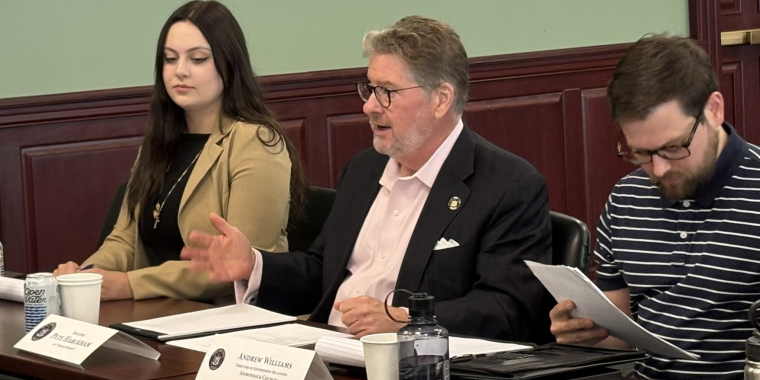
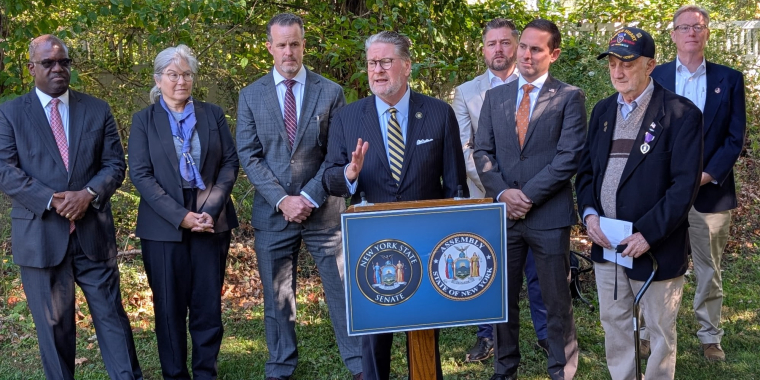
State Sen. Harckham speaking at the Environmental Roundtable.
Albany, NY – New York State Senator Pete Harckham hosted a roundtable in Albany today in partnership with the Adirondack Council for lake associations and environmental advocates to discuss the growing challenges facing lake communities across New York State.
The roundtable provided an opportunity for participants to share concerns, exchange expertise, and explore potential policy solutions.
Key topics included access to state resources, funding gaps, volunteer recruitment and retention, and legislative strategies to better support lake associations. Participants also discussed pressing environmental challenges affecting lakes statewide, including harmful algal blooms (HABs), wastewater and aging septic systems, invasive species such as water chestnuts and zebra mussels, stormwater runoff, road salt usage, and the maintenance of earthen dams.
“As climate change and continued development place new pressures on our lake associations, we must adapt our water management strategies to meet these evolving challenges,” said Senator Harckham. “Thank you to the Adirondack Council for helping bring together stakeholders to share expertise and identify practical solutions to protecting our water resources. A reliable, resilient water supply is fundamental to public health, environmental stewardship, and the long-term economic vitality of our communities.”
Many participants noted that while interest in convening such a discussion has grown in recent years, a central organizing effort had been missing until Senator Harckham, with support from the Adirondack Council, brought stakeholders together.
A recurring concern was the increasing severity of climate-driven impacts on lakes. Harmful algal blooms, in particular, have grown in size and frequency, posing risks to public health while also harming tourism and property values. Sunita Halasz of the Adirondack Council noted that addressing HABs could help resolve multiple interconnected environmental and public health challenges.
Invasive species were also highlighted as a growing burden, with lake associations reporting limited capacity to manage infestations due to declining volunteer numbers and constrained funding. Participants noted that many volunteers are aging and face physical limitations, while others struggle with technological requirements such as reporting HABs through online systems. Nancy Mueller of the New York State Federation of Lake Associations (NYSFOLA) emphasized the need for more accessible reporting tools and support systems.
Funding challenges were another major theme. Many lake associations operate in small communities with limited tax bases, making it difficult to raise sufficient resources for ongoing maintenance and restoration.
Administrative burdens associated with state grant applications were also cited as a barrier. Brendan Wiltse of the Lake George Association noted that despite being the state’s largest lake association, the organization does not apply for state grants due to the complexity of the process, and called for streamlined application systems. Senator Harckham has sponsored legislation aimed at improving access to funding for lake associations by aligning their eligibility with lake districts and municipal lakes.
Participants also pointed to opportunities for improving state grant portals and application systems to better serve smaller organizations.
Wastewater management and aging septic systems were identified as another urgent concern. Many lakeside properties rely on systems that have exceeded their useful lifespan, contributing to groundwater contamination. Senator Harckham’s 2025 legislation provides financial assistance for septic system upgrades, however, he noted that the early implementation was largely concentrated in Suffolk County due to the high number of septic systems in the region.
Joining Senator Harckham at the roundtable were representatives from: the Adirondack Council; Adirondack Lakes Association; New York State Federation of Lake Associations (NYSFOLA); Adirondack Watershed Institute; Finger Lakes Watershed Alliance; Adirondack Association of Towns and Villages; Blue Mountain Lake Association; Raquette Lake Preservation Foundation; Lake George Association; Goodnow Flow Association; The Nature Conservancy; Sierra Club; Town of Lake Pleasant; Cornell University New York State Water Resources Institute; SUNY Oneonta; Mohegan Lake Improvement District; SUNY College of Environmental Science and Forestry; Chautauqua Lake Association; SUNY Stony Brook; Friends of the Long Pond Greenbelt; Town of Putnam Valley; and the Office of the Watershed Inspector of the City of Peekskill.
Senator Harckham concluded that continued collaboration among state agencies, environmental organizations, and local lake associations will be essential to ensuring the long-term health and resilience of New York’s water resources.
Andrew Williams, Director of Government Relations at the Adirondack Council said, “Lake Associations across the Adirondacks are on the front lines of clean water issues across the region and face real challenges. They are helping the state of New York manage its precious freshwater resources, but doing so with budgets fueled by little more than donations and volunteers. The state can find better ways to support these organizations so that the Adirondack Park, and New York as a whole, have clean and safe waters now and into the future. We are grateful to the Senator for hosting this conversation.”
Dean Long, President of NYSFOLA said, "NYSFOLA extends its sincerest thanks to Senator Harckham for recognizing the urgency and magnitude of problems impacting lakes across the state. While many lake community groups were originally created for social purposes, they are now actively engaged in issues such as aquatic invasive species management, harmful algal bloom impacts, boating and dam safety, fisheries management, and watershed-wide efforts to reduce nutrient runoff. They do this with limited funding and technical support, little to no staff, and a pool of volunteers that is dwindling and aging. New York is blessed with abundant freshwater resources, and we now have a Constitutional amendment guaranteeing every person's right to clean air and water, and a healthful environment. We must reexamine the way that our water resources are managed in order to fulfill that constitutional promise.”
Jessica Ottney Mahar, New York Policy and Strategy Director for The Nature Conservancy said, “Thank you to Senator Harckham for convening today’s roundtable for lake associations. Clean water is one of New York’s most important environmental assets, and today’s convening enabled the exchange of important information to shape future policy to protect lakes and waterways across our state.”
Caitlin Ferrante, Conservation Program Manager with the Sierra Club Atlantic Chapter said, “Sierra Club is committed to the protection of our freshwater in NYS and thanks Senator Harckham for his continued leadership in protecting our communities and our environment. We are grateful for the opportunity to gather and express ideas and share policy solutions to ensure our waterways remain healthy and safe.
Brian Rahm Director, Cornell – New York State Water Resources Institute Department of Biological and Environmental Engineering said, “Lake associations, lakeside residents, and the wider watersheds in which those groups reside, face numerous challenges when trying to preserve, manage, and enjoy their water resources. It's encouraging to be a part of a discussion that ranges across so many topics, as water resource challenges are often linked to each other, and come back to the basic capacity, communication, and resource challenges that many NYS communities face.”
Ken Belfer, President of the Mohegan Lake Improvement District said, "I thank Senator Harckham for hosting this important roundtable on issues affecting New York State lakes. Most lake associations are all volunteer, and don't know where to go to get help with lake environmental problems."
Joe Scapoli, Watershed Inspector for the City of Peekskill said, “The City of Peekskill is excited to join the conversation around lake management. The protection and restoration of lakes is a mutual goal and events like this are a vital step in understanding problems, establishing relationships, sharing knowledge, and developing solutions that positively impact both recreational value and drinking water quality. Alignment between lake associations and community water systems is an essential step in protecting our shared resource for generations to come.”
Newsroom
Go to Newsroom