O’Mara, legislative colleagues highlight NY's ‘Dead Last’ economic competitiveness standing
April 22, 2026
“New Yorkers need state government to do more than just talk about how hard it is to make ends meet or how unaffordable it is to live, work, and raise a family in New York," said O'Mara.
It's time to do something about it. It's time to address the root causes of unaffordability in this state, especially high taxes, out-of-control spending, overzealous regulations and mandates, and energy policies that lack common sense, among others.
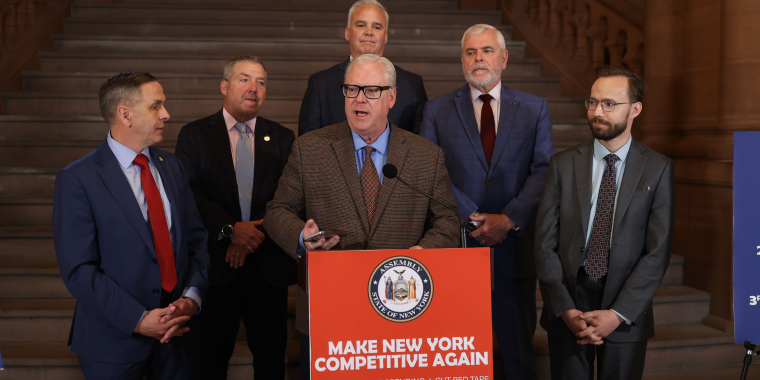
Albany, N.Y., April 22-State Senator Tom O’Mara (R,C-Big Flats) today joined members of the Senate and Assembly Republican Conferences, including Assemblyman Robert Smullen (R,C-Mohawk Valley and the Adirondacks), and economic representatives from the American Legislative Exchange Council (ALEC), to hold a press conference at the State Capitol addressing New York’s ongoing economic challenges, including its high tax burden, persistent outmigration, and long-term affordability crisis.
The lawmakers focused on the need for structural fiscal reforms to improve New York’s economic competitiveness and reverse population loss trends that have accelerated in recent years. Speakers highlighted New York’s continued ranking in the “Rich States, Poor States: ALEC-Laffer State Economic Competitiveness Index,” which places New York State 50th in economic outlook for the 11th consecutive year. The index evaluates states based on tax policy, regulatory environment and spending levels, with New York consistently ranking at the bottom of the nation.
O’Mara also noted that The Tax Foundation's most recent "Tax Competitiveness Index" also speaks volumes. According to the Foundation's latest analysis, New York State also continues to rank 50th, worst in the nation, in their index that evaluates the tax climate in all 50 states in America in five major areas: corporate taxes; individual income taxes; sales and excise taxes; property and wealth taxes; and unemployment insurance taxes. For the fifth straight year, New York comes in at the bottom.
The group also pointed to state fiscal trends, noting that government spending has increased substantially since 2020, while nearly one million residents have left New York in search of more affordable states.
O’Mara, Ranking Member on the Senate Finance Committee, said, “New Yorkers need state government to do more than just talk about how hard it is to make ends meet or how unaffordable it is to live, work, and raise a family in New York. It's time to do something about it. It's time to address the root causes of unaffordability in this state, especially high taxes, out-of-control spending, overzealous regulations and mandates, and energy policies that lack common sense, among others. The Albany majorities in charge talk about New York State's affordability crisis but their actions continue to show that they have no real interest in turning things around. Their vision for New York remains a vision built on irresponsibly spending billions upon billions of taxpayer dollars.”
Smullen said, “New York’s economic reality speaks for itself. It is tone deaf to believe we can spend our way out of an affordability crisis when that same tax-and-spend approach helped create it in the first place. It is why nearly a million residents have left since 2020, and why we consistently rank last or near the bottom in economic competitiveness reports like this one. Single-party rule has not delivered results for New Yorkers, and after decades of higher taxes and rising costs, families and businesses are paying the price.”
New York State Director of the National Federation of Independent Business (NFIB) Ashley Ranslow added, “New York’s current economic environment is unsustainable for small businesses. Small firms are shutting their doors at alarming rates, while New Yorkers and employers continue to leave for states that are more affordable and offer more job opportunities. With the nation’s top marginal income and corporate tax rates, high property taxes, soaring workers’ compensation costs and excessive tort expenses, New York has made it increasingly difficult for small businesses to survive—let alone grow. Albany must stop raising taxes, pass meaningful tort reform and slow the steady stream of legislation that makes it harder for Main Street to operate.”
Newsroom
Go to Newsroom