O’Mara on state budget: ‘Out of touch on the affordability crisis crushing New Yorkers’
May 28, 2026
-
ISSUE:
- 2026-27 State Budget
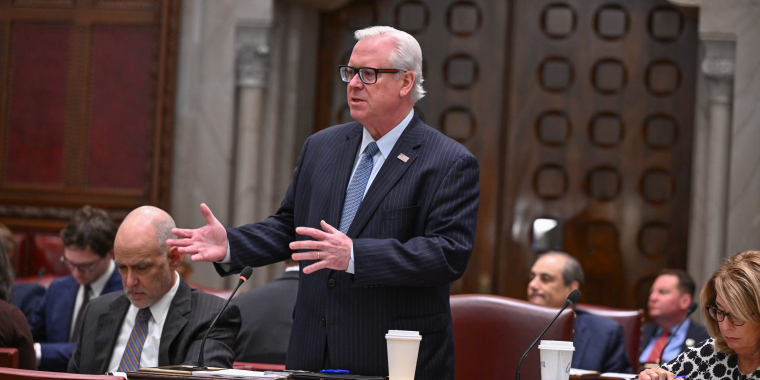
“This budget acts like New York taxpayers and families shouldn’t have a care in the world in the face of the worst affordability crisis they have ever faced," said Senator O'Mara.
New York State taxpayers today and long into the future already face trying to afford, live, and work under a bloated, wasteful, and unaffordable state government. New York is already one of the highest taxed, heavily mandated, overregulated, and least affordable states in America. This budget makes it worse.
Albany, N.Y., May 28—State Senator Tom O’Mara (R-C, Big Flats), Ranking Member on the Senate Finance Committee, today called the final 2026-2027 New York State budget being enacted by Governor Kathy Hochul and the Legislature’s Democrat majorities “out of touch with the affordability crisis crushing New York’s state and local taxpayers, and their families and communities and local economies.”
O’Mara stressed that the final budget, approved last night by the Democrat-led state Senate and Assembly, and that will be quickly signed into law by Hochul, is being enacted nearly two months late. He criticized the final plan for its continued focus on spending that is out of control, for its reliance on a broken budget adoption process, and for its failure to move New York in a stronger, more responsible direction economically, fiscally, and on public policy priorities in fundamentally key areas including energy, health care, and public safety and security.
O’Mara noted that Hochul and the Legislature’s majorities are increasing spending by at least $14 billion over last year and will adopt a $268-billion-plus fiscal plan. He said that the new budget will result in state spending under one-party control since 2018 increasing by 55%, or nearly $100 billion. It also means that New York State will face multi-billion-dollar budget deficits for years to come.
O’Mara said, “New York State taxpayers today and long into the future already face trying to afford, live, and work under a bloated, wasteful, and unaffordable state government. New York is already one of the highest taxed, heavily mandated, overregulated, and least affordable states in America. This budget makes it worse. It increases spending by at least fourteen billion dollars but fails to include a shred of meaningful tax relief, mandate relief, debt relief, or spending restraint. It fails to address key priorities in energy policy, health care, public safety, and so many other fundamentally important areas. It ignores the economic and fiscal warnings on the horizon and keeps on increasing government spending like there’s nothing to worry about tomorrow.”
O’Mara pointed to a statewide poll earlier this month from the Siena Research Institute showing that more than 70 percent of respondents believed the state’s fiscal condition is fair or poor. The survey also found 75% of respondents reporting that the cost of utilities was having a “serious impact on their financial condition.” Fifty-one percent said their bills for heating and electricity are unaffordable, with nearly 30 percent admitting that they have been forced to borrow money or take on debt to cover utility costs.
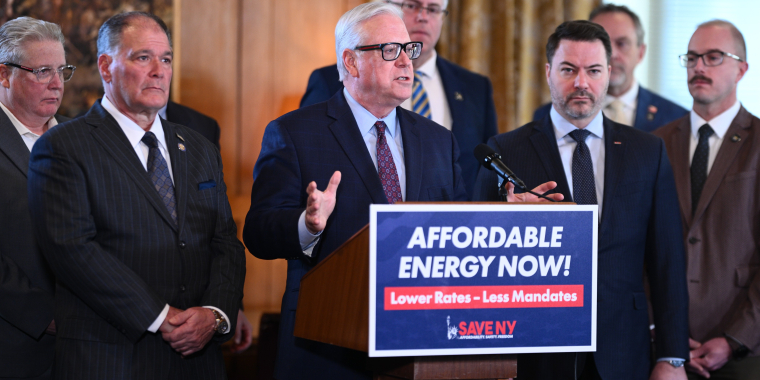
O’Mara continued, “This budget acts like New York taxpayers and families shouldn’t have a care in the world in the face of the worst affordability crisis they have ever faced. It’s a budget built on bailouts and giveaways to special interests and favored constituencies that everyday taxpayers will never be able to afford. It ignores the ratepayers who can’t afford their unrelenting utility bills and instead tries to buy off the wrath of these ratepayers by giving them back pennies in so-called ‘energy rebates’ after the state has already collected billions from these same ratepayers through surcharges on their monthly utility bills for years on end. It’s offensive to ratepayers. They shouldn’t stand for it, and I don’t believe they will.
“This budget ignores homeowners and seniors still struggling to make ends meet in a state with one of the heaviest property tax burdens in America. It refuses to take any meaningful action to rein in the nation’s highest per-capita Medicaid spending under a system that allows unchecked abuse, fraud, and waste. It acts like the need to cut taxes, eliminate unfunded mandates, restrain overregulation, reduce debt and control borrowing, make this state more economically competitive, and other commonsense fiscal and economic practices will never again be priorities in this state. In fact, in the highest-taxed state in America, Albany's majorities once again in this budget don’t hesitate to hike taxes and fees in the desperate hope that taxing more will always be the answer to spending more. It’s been a disaster for the past seven years. It’s a disaster now. It’s going to be a disaster for a generation of middle-income, hardworking New York taxpayers, families, and business owners.
“For the past seven years under one-party control, New York’s taxpayers, families, and job creators have been sending the message that this state is on the wrong track and that they can no longer afford to live, work, raise a family, or start a small business here. And for the past seven years, as the affordability crisis has increasingly worsened for most New Yorkers, Albany's majorities have said, ‘We don’t care.’”
O’Mara also strongly criticized the state’s budget adoption process that has produced a string of late state budgets and continues to allow the use of “messages of necessity” to rush through votes on final budget legislation. He said the existing process prevents individual legislators, and the public, from having adequate time to review and debate budget legislation before it’s voted on and enacted.
“It’s time to bring this state’s budget adoption process into the modern day, especially at this time when one-party control keeps on producing skyrocketing state spending plans that are increasingly chock-full of policy initiatives that should, for accountability’s sake, be given stand-alone consideration,” O’Mara said. “Fundamental checks and balances have effectively been thrown out in this state government. Governor Hochul and the Legislature's majorities go on working behind closed doors to allocate state taxpayer dollars and set in motion far-reaching public policies impacting our local citizens, communities, and economies in consequential ways.
“The state budget demands a full public airing and the appropriate time for review and debate, but that’s never what we get. It's a broken process that blindfolds the public and keeps producing bloated state budgets that taxpayers will never be able to afford.”
Newsroom
Go to Newsroom