Westchester legislators and nonprofits urge Hochul to sign legislation
June 26, 2026
-
ISSUE:
- Payments to nonprofits
Originally published in Westfair Business Journal, June 26, 2026
n an effort to urge Gov. Kathy Hochul to sign legislation that would benefit nonprofits, two Westchester state lawmakers joined with nonprofit leaders at the headquarters of Nonprofit Westchester in Elmsford on June 25 to highlight what the legislation is and why they believe it’s important. Their new legislation and the June 25 news conference come against a background of Hochul having vetoed similar legislation last year.
State Sen. Shelley Mayer and Assemblymember Amy Pauling were among the featured speakers. Their bills as approved by the state legislature during the recently-concluded session in Albany establishes new parameters regarding payments by the state to nonprofits for work the organizations have done for the state.

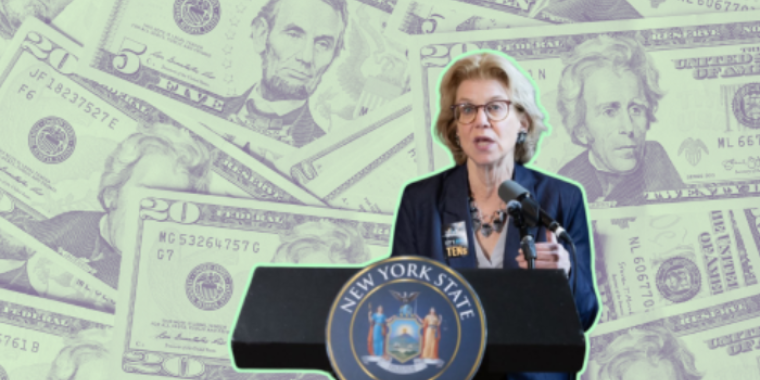
Mayer, far left, as Paulin speaks at June 25 news conference.
The legislation requires the state to provide written directives with clear invoice and payment schedules and to also provide nonprofits with information about the state’s nonprofit short-term revolving loan fund. State agencies would be required to provide a 25% advance payment of contract funds within 30 days of contract execution. The legislation also protects the state by ensuring that advance payments are only required after contracts are fully executed and providers have been vetted, and the Legislature has appropriated funding. It removes provisions related to mandatory interest payments, and accommodates restrictions related to federal funding.
Mayer said, “Too often, nonprofits that provide essential services are forced to wait months for payment – money they are owed after New York issues a contract to the nonprofit. This delay strains their ability to serve our communities, leaving our neighbors in greater need. Once signed by the governor, the reforms will create a more accountable and efficient contracting process so organizations receive funding on time and can focus on delivering housing, food assistance, mental health care, childcare, legal services, and other vital support for our community.”
According to Paulin, “Our nonprofits are diligently working to feed the hungry, provide shelter to the homeless, and assist our most vulnerable residents, all while waiting for overdue payments from New York state. This situation is unsustainable. These bills offer the fairness and predictability that nonprofits need to stay afloat and continue serving the New Yorkers who depend on them.”
Supporters of the new legislation point out that it addresses several fiscal issues raised by Hochul as objections when she vetoed what had previously been passed by the Legislature.
Jeremy Kohomban, president and CEO of The Children’s Village, which has a campus in Dobbs Ferry said, “When our partners in government delay payments, nonprofits don’t stop providing services. These bills offer practical tools to help stabilize the state’s partnership with nonprofits and ensure providers can focus on delivering results rather than managing avoidable financial uncertainty.”
The Children’s Village was reported to have had to draw nearly $860,000 from its credit line last year to compensate for delays in payments it was owed by New York City.
“Nonprofits are proud to partner with New York state to provide critical services in all communities,” said Megan Allen, CEO of the New York Council of Nonprofits. “But to continue this important work, we need relief from the decades-long state contracting challenges. We hear regularly from nonprofits around the state about the immense challenges caused by delays in state payment and inefficiencies in the state contracting system. These bills include common-sense reforms that will make a difference; we need Governor Hochul to sign them into law now.”
Jan Fisher, executive director of Nonprofit Westchester described the passage of Mayer and Paulin’s legislation as an important step toward addressing longstanding contracting challenges that have burdened nonprofits.
“As nonprofits continue to respond to growing community needs amid significant financial pressures, we urge Governor Hochul to sign this bill into law and help ensure that organizations can focus their resources on serving people – not navigating administrative barriers,” Fisher said.
A report released by the Human Services Council, New York Council of Nonprofits, New York Legal Services Coalition, Nonprofit New York, and Nonprofit Westchester found that one in three nonprofits with state contracts are owed money for services already provided to the tune of least $650 million. The report said that 65% of nonprofits are concerned about their ability to fund basic operations.
Newsroom
Go to NewsroomHundreds convene for NYSUT’s Unplugged conference
September 28, 2026
Mandating prompt decisions on unemployment claims
September 3, 2026