Senator James Sanders Jr. Convenes Rockaway Water Safety Stakeholders to Advance Lifesaving Strategies
September 19, 2026
Drowning Stakeholders 26
Senator James Sanders Jr. Convenes Rockaway Water Safety Stakeholders to Advance Lifesaving Strategies
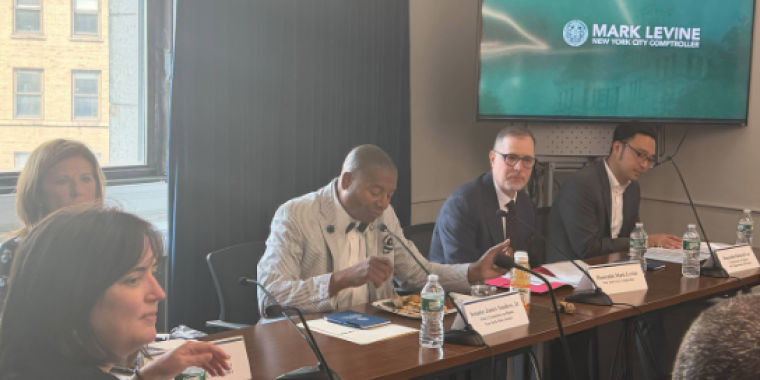
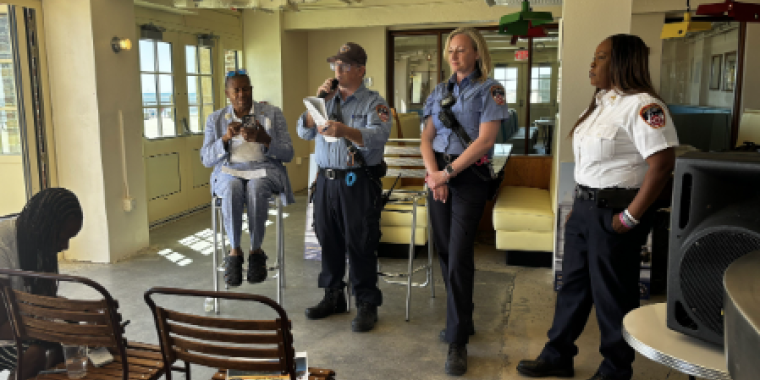
QUEENS, NY — September 14, 2026 — New York State Senator James Sanders Jr. recently convened a Stakeholders Meeting on Water Safety in the Rockaways at the Rockaway Ocean Club, bringing together government agencies, first responders, educators, water-safety advocates and community-based organizations to continue developing practical strategies to prevent drownings and improve safety along the Rockaway Peninsula.
The meeting included representatives from Senator Sanders' Office, Council Member Brooks-Powers' Office, Assemblymember Khaleel Anderson's Office, Queens Borough Office, FDNY/EMS, NYPD, NYC Parks/New York City Lifeguard Program, NYC Public Schools District 27, Community Board 14, Rockaway YMCA, Rockaway Ocean Club, Episcopal Health Services/St. John's Episcopal Hospital, Rising Tides, Swim Strong, and other community and water-safety organizations.
The meeting built upon previous conversations about the unique challenges facing a waterfront community where thousands of New Yorkers visit the beaches each summer, often without fully understanding rip currents, changing ocean conditions or the dangers of entering the water when lifeguards are not on duty.
“Rockaway is a responsibility,” Senator Sanders said. “It is our responsibility—those who live here and those who work and play here—to make sure that our neighbors do well. We have lost too many people in these waters, and we need to do everything reasonably within our power to prevent the next tragedy.”
Extending Lifeguard Coverage
One of the strongest areas of agreement was the need to continue exploring extended and staggered lifeguard hours.
Participants noted that many dangerous incidents occur before lifeguards report for duty or after they leave for the day. The group discussed whether staggered shifts could provide coverage later into the evening during peak summer periods.
Senator Sanders said the issue will continue to be pursued with city officials and members of the City Council. At the conclusion of the meeting, he identified lifeguard hours as one of the clearest areas of consensus among stakeholders. He is willing to lead with a Sign-On Letter with all the local electorates to have the hours extended to 8 PM, in support of the efforts already being pursued by Council Woman Selvena Brooks-Powers who was also in attendance.
More Swim Education — Starting With Young People
Participants also emphasized that preventing drownings requires more than emergency response. Children and adults must know how to swim and understand the ocean.
Ursula Damani of the Rockaway Ocean Club spoke about the intergenerational nature of the problem.
“If a parent doesn’t know how to swim, a child is not going to know how to swim, and it continues,” Damani said.
The Rockaway Ocean Club expressed interest in using its pool and facilities to support water-safety education and partnerships with community organizations. Pool access is one of the key issues that continues to permeate the Rockaways; so this is a welcome take away.
District 27 school representatives also discussed expanding swim education and potentially creating a stronger pathway for local students to become certified lifeguards.
Taking the Message to Young People
Another major proposal was the development of a student-led water-safety public awareness campaign.
Students could help create short videos and social-media content explaining rip currents, warning flags, the importance of swimming only when lifeguards are present, and why ocean swimming is different from swimming in a pool or lake. The Senator's office has already started discussions to see how we can collaborate on this initiative to get it out to the masses.
Participants discussed utilizing school media programs, including the media team at Scholars’ Academy, and involving students from across the district in developing messages that young people are more likely to hear and share.
Finding Out Who Is Most at Risk
Senator Sanders stressed that public education must be targeted effectively.
Many drowning victims in Rockaway have come from communities outside the peninsula. That raised an important question: Where are beachgoers coming from, and how are they getting here?
The Senator called for additional research into where drowning victims lived and whether they arrived by subway, bus, ferry or car so that future water-safety campaigns can be directed to the neighborhoods, schools, transit routes and social-media audiences where they can have the greatest impact.
Expanding Public Safety Messaging
Stakeholders discussed expanding campaigns such as “Respect the Rip” and “No Guard, No Swim” on buses, subways, ferries and social media.
The Community Board 14 representative, Felicia Johnson, also advocated for displaying rip-current and water-safety messages on screens aboard NYC Ferry vessels serving the Rockaways.
NYC lifeguard program representative Javier Rodriguez emphasized that public education is worthwhile even when every person does not respond to the message.
“We’re not going to get everyone, but the message will resonate with at least one person,” Rodriguez said. “And to me, that person is worth it.”
Technology, Drones and Emergency Response
FDNY and emergency-response representatives discussed the growing use of drones for beach safety. Drones can help monitor areas beyond normal human visibility and may be equipped with cameras and rescue flotation devices that can be deployed to swimmers in distress.
The group agreed that additional research should be conducted into whether drone operations can be expanded, including during hours when lifeguards are no longer on duty.
EMS representatives also discussed current ambulance and emergency-response capacity on the peninsula, as well as the use of specialized Gator vehicles on the boardwalk and beach. Participants called for continued advocacy for additional equipment and emergency-response resources.
Senator Sanders also reiterated the need for stronger emergency medical infrastructure in the Rockaways, including improved access to trauma care.
PA System to Be Studied Before Major Investment
Participants debated whether a permanent public-address and camera system along the Rockaway beachfront could provide repeated safety warnings.
While some participants argued that even one life saved would justify the investment, others raised concerns regarding cost, maintenance, effectiveness and potential noise impacts on nearby residents.
Rather than immediately supporting a multimillion-dollar investment, Senator Sanders called for a fact-finding visit to Atlantic City, New Jersey, where a similar system is reportedly in operation.
“As a representative of yours, I have to know that this thing works or can work,” Sanders said.
The Senator's office will explore arranging a visit involving water-safety professionals and other stakeholders to evaluate the system firsthand.
Life Jackets Remain Part of the Conversation
The use of U.S. Coast Guard-certified life jackets and flotation devices generated significant discussion.
Advocates argued that flotation devices can provide an added layer of protection, particularly for children and nonswimmers. Lifeguard officials cautioned that flotation devices can sometimes create a false sense of security and encourage inexperienced swimmers to enter dangerous waters.
Participants also raised the possibility of voluntary life-jacket loaner programs, which operate in other communities.
Senator Sanders said the issue deserves further study.
Next Steps
Following the discussion, Senator Sanders identified several areas for continued action:
- Continue advocating for extended or staggered lifeguard hours.
- Develop a student-led water-safety and social-media campaign.
- Research where drowning victims and at-risk beachgoers are coming from to better target outreach.
- Expand rip-current, “No Guard, No Swim,” and beach-safety messaging across transit and digital platforms.
- Explore longer and broader use of drone technology for beach monitoring and rescue.
- Conduct a fact-finding visit to Atlantic City to evaluate its public-address and camera system.
- Continue discussions regarding voluntary life-jacket use and loaner programs.
- Explore additional EMS equipment, beach response resources and training partnerships.
- Strengthen partnerships among schools, hospitals, first responders and community organizations to expand swim education and lifeguard recruitment.
Senator Sanders said the meeting was not intended to be the end of the conversation, but another step toward developing a comprehensive Rockaway water-safety strategy.
“There may not be one single answer to this problem,” Sanders said. “It is going to take education, lifeguards, technology, emergency response, stronger partnerships, common sense and more conversations like these. If one improvement saves one life, that is a step worth taking.”
Senator Sanders Wants to Hear From You
Residents, parents, swimmers, educators, lifeguards and community organizations are encouraged to participate in these ongoing talks.
If you have a water-safety suggestion, an idea that should be explored, or are interested in working on any of the issues discussed at the meeting, Senator Sanders wants to hear from you.
📞 Call Senator James Sanders Jr.’s Satalite Office at 718-523 3069
📧 Email: lgeorge@nysenate.gov
“Water safety is everyone's responsibility. Bring us your ideas, your experience and your solutions. Together, we can make the Rockaways safer for everyone.”
Newsroom
Go to Newsroom