Senator Salazar and Assemblymember Forrest Introduce Correctional Body Scanner Standards Act
March 18, 2026
-
ISSUE:
- Prison Reform
VIDEO HERE
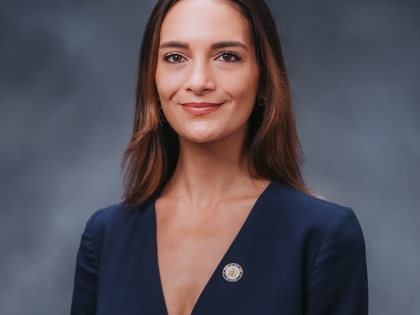
Albany, NY – Senator Julia Salazar, Chair of the Committee on Crime Victims, Crime and Correction, and Assemblymember Phara Souffrant Forrest recently introduced the Correctional Body Scanner Standards Act (S9467) to address what we know to be one of the major sources of contraband, and to ensure New Yorkers are not arbitrarily turned away from visiting loved ones in our New York State prisons.
State Senator Julia Salazar, Chair of the Committee on Crime Victims, Crime and Correction, released the following statement:
“Contact visits are incredibly important for incarcerated individuals and their loved ones, but I'm concerned by what appears to be an increasing pattern of facilities denying, and even suspending, people’s ability to visit based on arbitrary accusations of contraband. We know that a significant source of contraband is from staff, yet current policy does not require them to be screened. This bill aims to both end this practice of denying what can be life-saving visits for incarcerated people and ensure that employees are held to the same screening standards as visitors.”
Assemblymember Phara Souffrant Forrest released the following statement:
"Maintaining family bonds during incarceration is not a privilege, it is a lifeline. Many families are driving hours to visit their loved ones, only to be turned away because a body scanner flagged a tampon, or a surgical scar, while the staff in these prisons face no screening requirements whatsoever despite being an important source of contraband materials in DOCCS facilities. This bill fixes both of those failures at once, and I am proud to introduce it alongside Senator Salazar. This legislation ends the double standard and ensures that no family is arbitrarily separated from their loved one."
Correctional Body Scanner Standards Act:
- Require all employees to pass through the same security checks that are required of visitors when entering a State correctional facility.
- Outlines a procedure for using body scanners in State and local correctional facilities
- Defines steps that must be taken if visitors or employees fail the body scans.
Currently, visitors often drive upwards of six hours only to have their visits denied, suspended, or heavily altered due to false accusations of contraband. In the past year, New York State prisons have been repeatedly turning away visitors and suspending their visitation rights for reasons like detecting tampons, surgical scars, body piercings, natural skin lumps in their body scans. DOCCS often accuses visitors of having contraband, even when no contraband is found and no charges are pressed.
It is consistently reported that contraband is often brought in by prison staff, who are not required to pass through security protocols. During the COVID-19 pandemic, DOCCS’ suspended visits and heavily restricted packages and mail, yet contraband continued to be rampant.
Support from Advocates and Impacted People
Jayette Lansbury, who was denied her visit: "Families are traumatized by a loved ones incarceration. Why traumatize us more by denial of visitation. As a family member that has been denied visitation for an underwire and for wearing a hoodie, being kept from visiting for 2 and a half years during COVID, I can tell you about the trauma, depression, anxiety. Families and our loved ones inside need the in-person contact. We need those hugs and face to face communication."
“Visits between incarcerated people and their loved ones make prisons, jails, and communities safer. Yet, too many New Yorkers are met with humiliation, hours of waiting, and arbitrary denials when they try to see their incarcerated loves ones, for reasons as discriminatory as menstruating,” said Bernadette Rabuy, senior policy counsel at the New York Civil Liberties Union. “We urge lawmakers to pass the Correctional Body Scanner Standards Act, which would put an end to these unjust practices while giving facilities the tools to prevent real contraband and keep people safe.”
Tanya Krupat, Vice President, Policy & Advocacy, Osborne Association:
“This bill is critically important to ensure that all those who enter a correctional facility–staff and visitors–are treated with dignity and respect, while also being screened to prevent the introduction of any harmful or illegal items. The mandatory use of body scanners for visitors to New York State prisons that was hastily put into place last March has highlighted the need for clarity, parity, training, and oversight of the screening process. In the last year, the required use of scanners for all visitors has led to unfair denials and unjustified suspensions for thousands of family members, most of whom are women. Meanwhile, the use of metal detectors and scanners has been optional for staff. This bill corrects this imbalance, supports the value of visiting, and advances safety and dignity for all. We applaud the sponsors and look forward to this becoming law.”
“For so many families, visiting is the only way to hold on to connection, love and hope," said Serena Martin, Executive Director of New Hour for Women and Children. "What we are seeing right now in New York’s prisons is devastating—families waiting for hours in extreme conditions, only to be turned away or have their visits cut short, or worse, suspended indefinitely without proof of wrongdoing. These policies are not about safety—they are about punishment, and families should not be the ones paying the price. This bill provides clear standards, oversight, and accountability to ensure that safety measures do not come at the cost of fairness and basic human dignity."
Chaplain, Dr. Victoria A. Phillips, co-founder of the Jails Action Coalition and founder of Visionary V Ministries: “Visitation serves as a crucial support system for children, families, and the community connected to those incarcerated. Research underscores that maintaining these familial ties is essential in reducing recidivism and fostering successful reintegration. Within months in 2025, over 2,500 visitors were denied entry due to body scanning issues. It is unacceptable for families to be barred from visiting. Their loved ones may never have the chance to attend a parole hearing, appear in court, or embrace their child again. Having spent over 2 decades monitoring incarcerated individuals with mental health concerns, I have observed the positive impact that visitation has on institutional safety, housing unit morale, and the mental health of detainees. As a brain surgery survivor myself, I can attest that those with mobility or cognitive concerns, weekday visits provide a calmer opportunity to connect.”