Sen. Fahy Introduces Legislation to Criminalize Possession of AI-Generated Child Sex Abuse Material
September 9, 2026
Legislation follows Seventh Circuit Court panel ruling that says First Amendment protects the right to possess AI-generated child sex abuse material
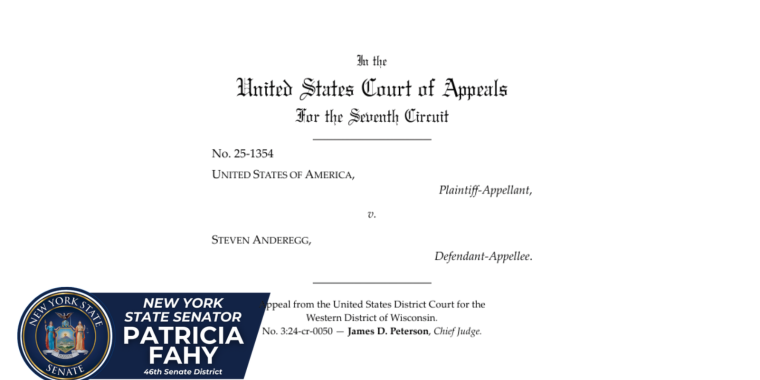
ALBANY, N.Y. – Senator Patricia Fahy (D—Albany) announced today she’s introducing legislation (S.XXXX/A.XXXX) to criminalize the possession of child sex abuse materials generated by artificial intelligence or digitization, following a Seventh Circuit Court panel ruling that said the First Amendment protects a person’s right to possess child sexual abuse photos and videos.
A three-judge panel considered charges brought against Steven Anderegg in United States v. Anderegg, which included offenses for producing, distributing, and possessing AI-generated child sex abuse material. They ruled that the First Amendment protects a person’s ability to possess AI-generated child sex abuse materials, so long as the material does not depict or resemble an actual person or child and hinges largely on existing Supreme Court precedent from a 2002 decision that considered a federal law prohibiting the possession of ‘virtual’ child sex abuse materials.
Specifically, the Seventh Circuit Court panel asked the Supreme Court to revisit the issue of AI-generated child sex abuse materials given the proliferation and explosive use of AI across our broader economy and society.
Legislation introduced today by Senator Fahy would address this legal vulnerability and criminalize the possession of AI-generated or digitized child sex abuse material in New York State. The bill expands New York’s existing statute regarding child sex abuse material in Penal Law § 263.11 to include AI-generated materials, photos, and videos.
New York law prohibits the creation and distribution of traditional child sex abuse material and was amended in 2025 to cover sexual performances “created or altered by digitization.” However, Article 263 incorporates the definition of “digitization” in Penal Law § 245.15, which requires an existing image to be altered in a realistic manner. As a result, that definition does not encompass wholly synthetic child sex abuse materials generated from scratch through artificial intelligence, where there is no underlying image to alter. Article 263 also generally requires a sexual performance “by a child,” which does not readily encompass a wholly synthetic child who does not correspond to an actual person. This leaves a gap in current law for the creation and distribution of wholly synthetic AI-generated CSAM.
Last year, the National Center for Missing & Exploited Children received a stunning 400,000+ reports involving AI-generation and child sex abuse materials, up from just 4,700 AI-related reports in 2023 two years prior. More than 182,000 of last year’s reports involved offenders possessing, generating, or attempting to generate AI-generated child sex abuse materials.
“Protecting our children crosses party lines and this legislation sends a strong message to those who seek to do them harm or use artificial intelligence to generate obscene material: New York State will hold you accountable under our laws,” said Senator Patricia Fahy (D—Albany). “The Seventh Circuit Court’s ruling in United States v. Anderegg has created an unintended and dangerous grey area in application of laws criminalizing the possession of child sex abuse material, and New York should not wait to take action to protect our children from the abuses and misuse of artificial intelligence.”
###
Newsroom
Go to Newsroom