Sen. Fahy Introduces Legislation to Protect At-Risk Students in Homeschooling as New Data Reveals Alarming Chronic Absenteeism Rates
October 5, 2026
-
ISSUE:
- Access to Education

Two bills and push follows heartbreaking story in Mechanicville, NY
ALBANY, N.Y. – Senator Patricia Fahy (D—Albany) announced today she’s introducing new legislation (S.10714) aimed at strengthening protections for children who transition from traditional schools to home instruction. To ensure students who are already at serious risk of educational disengagement do not fall through the cracks in the system when transferring to home school, the bill establishes enhanced educational continuity reviews for students with a pre-existing history of severe chronic absenteeism. Senator Fahy also announced she has introduced a Senate companion bill for “Raylee’s Law” (S.10715/ A.3492), which is sponsored in the Assembly by Assemblymember Alex Bores. This legislation strengthens safeguards when a child’s transition to homeschool raises concerns related to child abuse or neglect.
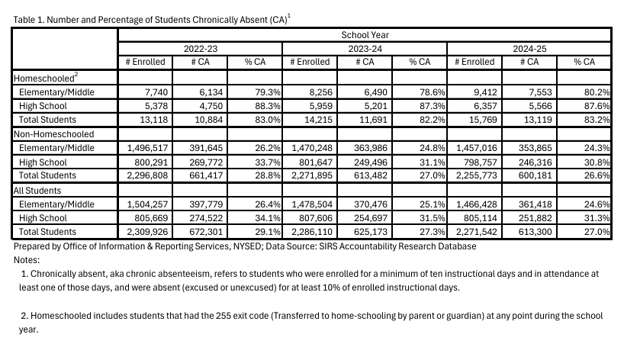
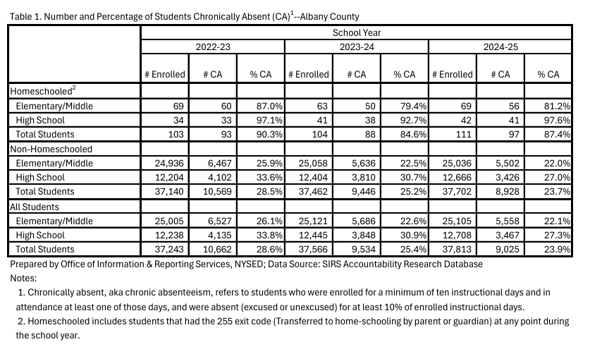
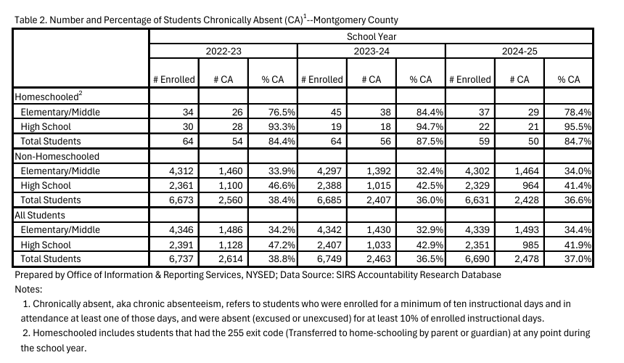
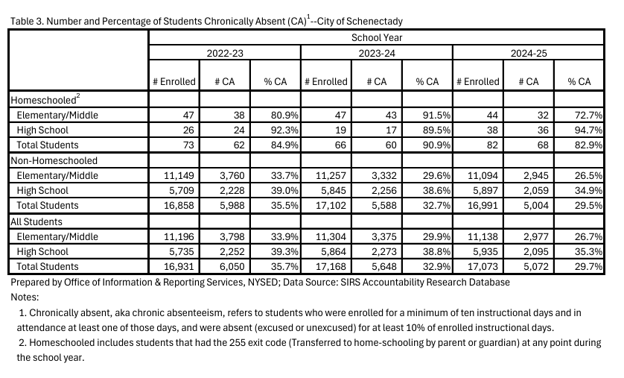
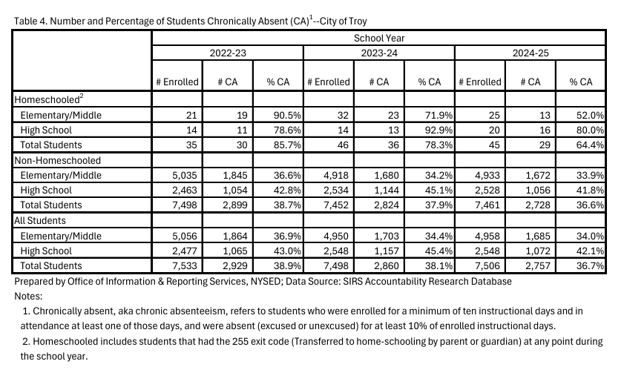
Strikingly, recent data from the State Department of Education show that, for the 2024-25 school year, students who later transitioned during the school year to home instruction were more than three times as likely as their peers to have been chronically absent. The new legislation comes on the heels of the devastating deaths of four children in Mechanicville, whose case involved years of documented warning signs of potential abuse, neglect, and chronic school absenteeism before the children were ultimately withdrawn for home instruction. Recognizing this troubling pattern of educational disengagement before withdrawal for home instruction, these two bills aim to preserve the right to homeschooling while ensuring vulnerable children do not simply disappear from systems designed to protect their education and well-being.
Legislation introduced today would enhance educational continuity and oversight for students with a history of severe absenteeism who transition to home instruction. Specifically, S.10714 establishes an enhanced review process for students who were absent for at least 20% of enrolled instructional days during either the current or immediately preceding school year, twice the threshold used to define chronic absenteeism.
Within sixty days of commencing home instruction, families subject to enhanced review would be required to provide evidence demonstrating that the home instruction program is being implemented and required instruction is occurring. Under the existing home instruction process, months can pass before a district receives meaningful evidence of a student's educational progress, with the primary academic assessment occurring annually. S.10714 creates a 60-day checkpoint for students with a history of severe absenteeism, allowing districts to verify early in the transition that instruction has actually resumed. If evidence is insufficient or deficiencies are found, the district must provide families an opportunity to cure it before escalating intervention. A satisfactory showing immediately ends enhanced review and returns the family to the ordinary home instruction process.
This approach is designed to provide earlier intervention for students already experiencing significant educational disengagement, while preserving the right to home instruction. The bill does not authorize mandatory home entry, and doesn’t allow districts to dictate a family’s curriculum or method of instruction or impose additional requirements on the broader homeschooling community. This legislation seeks to empower school districts to continue ensuring that all children in New York State, regardless of homeschooling status, continue to receive the education they are entitled to, regardless of where they are served.
Fahy is also introducing the Senate version of Raylee’s Law (S.10715/ A.3492), which would prohibit the home instruction of a child if there is a pending child abuse or neglect investigation against either custodial parent or a person instructing the child, and if either has ever been convicted of domestic violence, child abuse, or neglect. These bills seek to provide additional attention to circumstances where an already vulnerable child’s transition to home instruction will remove them from regular contact with mandated reporters.
Chronic absenteeism has only worsened since the COVID-19 pandemic. In the 2022-2023 school year, roughly one in three students in New York missed at least 10% of school days, equating to at least 18 days of school. For example, children who are chronically absent between preschool and second grade are far less likely to read on grade level by third grade.
“Following the tragic deaths of four children in Mechanicville this year, this legislation is another step toward ensuring that children do not slip through the cracks when they transition out of a traditional school setting,” said Senator Patricia Fahy (D—Albany). “If a student isn’t getting an education, it means we are failing that child. Alarming new data shows that in the 2025 school year, students who transitioned to home instruction were more than three times as likely as their peers to have been chronically absent. These bills give school districts the information and tools they need to better serve home-school students by identifying severe absenteeism before a student transition to home instruction, verify that instruction has actually resumed, and intervene earlier when it has not.”
Stunning statistics paint a disturbing picture across the Capital Region and New York State. Locally, 87% of Albany County students receiving instruction at home during the first year are considered chronically absent, compared to 23% of non-homeschooled students. In Montgomery County, 84% of students who are homeschooled during the first year are chronically absent, compared to 36% who are non-homeschooled. Across New York State, 83% of homeschooled students in the first year are considered chronically absent, compared to 26% of students who are non-homeschooled. Full statistics from the State Education Department (SED) are below.
Statewide:
Locally:
###