Returning to Albany for first day of session, state lawmakers focus on affordability
Originally published in
Spectrum Local News
on
.

As the halls of the State Capitol in Albany began to fill with lawmakers, lobbyists and staffers Wednesday, the back-to-school comparisons were so abundant that you could practically smell a fresh pack of #2 pencils.
With everyone dressed in their best on the first day of the legislative session, Assemblymember Michaelle Solages gave that sentiment a little extra flair.
“When we return to Albany for the first day of session, it’s like a mix between the first day of school and prom,” she said. “We are having fun, we’re talking about the issues that are important and we’re hitting the ground running.”
Heading into an election year, for Solages and countless other lawmakers, the issue of affordability is clearly the most important one. She started her 2026 legislative session on the Capitol’s Million Dollar Staircase, rallying for universal child care with her daughter Christine, who looked perfectly content in her mother’s arms amid all of the cheering and fiery speeches.
“We stand here in solidarity with parents all across the state because too many individuals are opting out of the workforce because they can’t afford child care,” Solages said.
In an interview with Spectrum News 1 following the rally, she discussed her priorities for the upcoming session both as a legislator and chair of the powerful Black, Puerto Rican, Hispanic and Asian Legislative Caucus. Solages said taking meaningful steps toward universal child care is near the top of that list for two key reasons.
“It’s an economic issue because parents are paying so much for child care and it’s also an educational issue because it’s making sure we provide our youngest learners with high quality education,” she said.
Child care is excepted to play a role in Gov. Kathy Hochul’s State of the State agenda that the Legislature will process as part of budget negotiations, and Solages stressed that she will bring real life experience to that conversation.
“To be an elected official, it’s about taking your experiences and your perspectives and putting pen to paper making policy,” she said. “As a mother, I experience these challenges firsthand. My daughter is in pre-K and that was a relief because it allowed me to not have to worry about child care. I didn’t have to worry about how do I take care of her and balance my job, so I take that perspective and I hope to change the dynamic for parents across the state.”
Even in the chambers, the first day of session is often one that leans heavily on pomp and ceremony rather than actual business, and the issue of affordability was key as expected in floor speeches from both Senate Majority Leader Andrea Stewart-Cousins and Assembly Speaker Carl Heastie.
“We must do all we can to lower costs for our families, ensuring their dollar stretches even further,” Heastie said. “This means continuing to invest and incentivize the construction of new properties across the state, lowering the cost of housing, as well as funding meaningful relief for those burdened by high rents. By continuing to invest in child care, after school programs and summer camps, we can make them more affordable and accessible to hardworking families.”
Stewart-Cousins also went all in.
“We are beginning a new year in a moment when the pressures facing New Yorkers feel heavier and more immediate in their daily lives,” she said. “Families are opening utility bills they can barely afford. They are walking grocery aisles where prices rise faster than paychecks. They are worried about the cost of housing, health care and the overall cost-of-living.”
In her remarks, Stewart-Cousins mentioned the New York For All Act. The failure to pass the bill was a source of frustration for progressive lawmakers at the end of last session and several even called for a special session to pass the bill which has struggled to gain traction.
The expectation is that immigration-related legislation will play a more prominent role in this upcoming session than last, when the current Trump administration was still new and policies weren’t entirely clear.
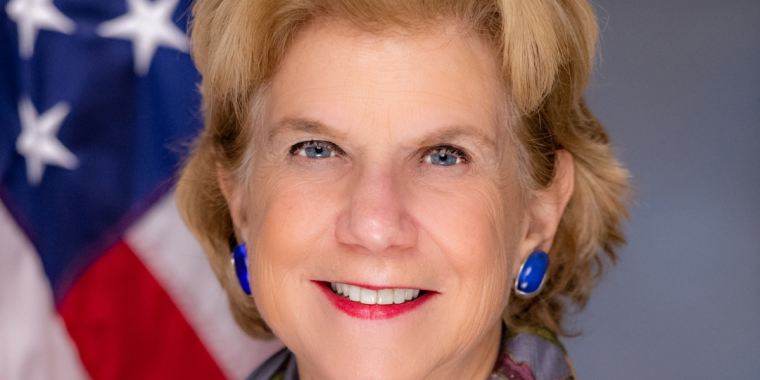
For State Sen. Pat Fahy, immigration-related policy proposals will be key. While New York For All is largely seen as a catch-all for limiting cooperation with U.S. Immigration and Customs Enforcement, Fahy and several other lawmakers have introduced more targeted legislation.
“I’ve got a lot of work there, whether it’s taking the masks off ICE, whether it’s better data — my radar bill on ICE enforcement,” she said.
State Sen. Shelley Mayer is similarly pushing targeted legislation that would require schools to have a clear policy prohibiting ICE from entering schools unless they have a judicial warrant, and she anticipates that the Legislature will come back to Albany with momentum to pass that and other legislation relating to immigration.
“I think the consensus of the members of the Senate majority is we’ve got to do something quicker, we cannot stand on the sidelines. We are talking to other states,” she told Spectrum News 1 last month. “There is real risk to schools and other places that I think should be sacred, but schools are my purview and as far as I’m concerned, we should move quickly.”
For progressives, there is also concern about rollbacks to previous victories. Last year it was Discovery laws, this year it is Raise the Age.
While it’s unclear if Hochul will ultimately push for changes to the state’s youthful offender law in her budget proposal, district attorneys across the state have made it clear they want changes, and Hochul expressed a degree of openness over the summer. Last year, DAs played a key role in Hochul’s push for Discovery changes.
Solages is concerned about the idea of reforming a law that she argues has never been fully funded or implemented.
“I’m willing to have a seat at the table to talk about how we change Raise the Age, but I don’t want us to take an axe to the policy when we just need a scalpel,” she said. “I want to have a conversation that’s holistic. No law is perfect, and may need to make changes and amendments, but right now Raise the Age has not been implemented with the intention of the legislation, the funding is not there, so I’m worried that folks are saying Raise the Age is not working when in fact it hasn’t been given the proper implementation. We are trying to fix it in the wrong way.”
Republicans have long pushed for action on the law, and have consistently railed against changes to the state’s criminal justice policy, which have been made since Democrats took over both chambers after the 2018 election.
Senate Minority Leader Rob Ortt took a swipe at some progressives during his opening remarks.
“When we work to protect the marginalized, I think it's important that we remember that the marginalized is not the thief or the assaulter or the drug dealer, it’s the victim of those crimes, and that’s who our conference and I believe many of my colleagues across the aisle care about and want to make a better life for,” he said.
When it comes to Raise the Age, State Sen. Rob Rolison, who is ranking member on the Senate Crime Victims, Crime and Corrections committee, wants to see the law tweaked to better account for repeat offenders.
“There has got to be a way that the governor and the state Legislature can get together and find a way to make Raise the Age work, and to make communities safer,” he said. “Not to gut Raise the Age, but if you’re arrested for a violent felony that goes to family court, and I understand the reason behind that, but if you’re arrested again you’re not going to family court, you’re going to go to adult court because we’ve seen that we have individuals out there committing multiple violent felonies are in family court and not being held accountable as they should be.”
Lawmakers left Albany to return to their districts and will return Monday. Hochul’s State of the State address, which will set the agenda and the tone for the state budget process, will take place Tuesday.
Newsroom
Go to NewsroomVoting at 17? MHS Students Lobby in Albany
February 18, 2026
NYS Budget Forum — Feb. 18 — Greenburgh Town Hall
February 14, 2026