Fahy, Romero Release Letter Regarding Albany's Proposed City Budget
October 1, 2026
-
ISSUE:
- Albany
- Local Government

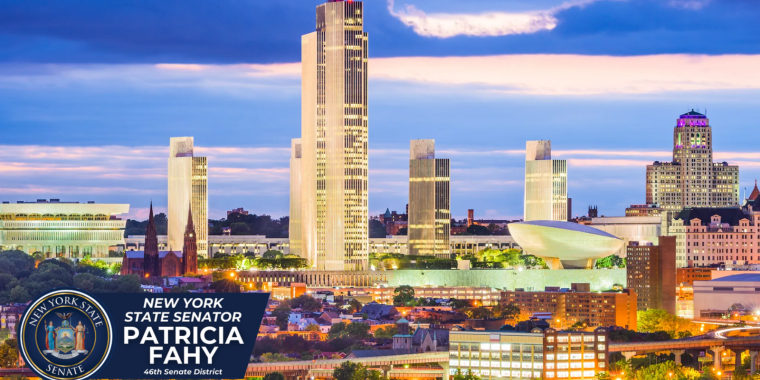
ALBANY, N.Y. — Senator Patricia Fahy and Assemblymember Gabriella Romero released a letter they sent to Mayor Dr. Dorcey Applyrs regarding the City of Albany's proposed budget and revenue raisers. They identified four key areas, including minimizing property tax increases.
The letter in its entirety is also below:
"October 1, 2026
Mayor Dr. Dorcey Applyrs
Albany City Hall
24 Eagle Street
Albany, New York 12207
Dear Mayor Dr. Applyrs:
As you prepare to release the City of Albany’s proposed budget, we want to share additional recommendations and concerns about the revenue measures under consideration, given the burden they may place on Albany residents.
We recognize the serious fiscal challenges facing Albany and the need for sustainable, recurring, and real revenue. At a time when Albany families are already facing significant housing and household costs, we urge you to pursue revenue sources that ask those who create additional demands on City services, those who benefit from Albany as visitors, or those who don’t pay any tax at all to contribute their fair share. We support your proposed targeted reductions and funding cuts and urge you to maximize them while avoiding affecting essential services.
We were proud to secure unprecedented state aid of more than $44 million earlier this year to support the City of Albany, and we will continue working with our colleagues in the State Legislature to identify new aid opportunities where appropriate, given the historic underfunding of Albany and its large share of state-owned, tax-exempt property. Below are suggestions for additional consideration for Albany to implement.
(1) Impervious-area Stormwater Drainage Fee
An impervious-area stormwater drainage fee would allow Albany to shift a portion of stormwater costs away from residential water/sewer customers and move fees toward large, impervious properties that generate significant runoff. This includes big-box stores, warehouses, and large parking lots. This would allow the city to extract revenue from entities that are nontaxable, like colleges, universities, and state-owned land. This revenue-raising approach has been successful for other state municipalities such as Ithaca, NY, which generates revenue for the city's general fund through a stormwater fee.
This is a more equitable approach to funding infrastructure that benefits the entire City, particularly as Albany faces increasing stormwater challenges. To reiterate, this would also decrease the burden on residential homes, while making the larger entities pay their fair share. We would welcome the opportunity to work with your office to pursue any necessary state authorization and develop this mechanism for our city.
(2) Maximize Revenue from Visitors and Short-term Stays
We should ensure that hotels and short-term rentals, including Airbnb-type accommodations, contribute appropriately to the costs associated with their activities. Albany welcomes many visitors to our Capital City who utilize our roads, public spaces, emergency services, public sanitation, and other municipal infrastructure.
Albany County already imposes a 6.5% hotel occupancy tax, and New York State has established an additional framework for taxing short-term rental occupancy. We urge you to explore every available avenue to capture visitor-generated revenue before asking residents to shoulder additional costs.
(3) .5% City Sales and Compensating-use Tax
We received a memo explaining your proposal to bring the combined sales tax rate within the city of Albany to 8.5%, consisting of the existing 4% State tax, 4% Albany County tax, and a new .5% City tax.
We understand why you are considering this revenue source; however, as we both know, consumption taxes are regressive and can place a greater burden relative to income on lower-income households.
For that reason, we strongly urge that we avoid adding a new sales tax without meaningful protections for essential household expenses, particularly residential utilities. We also believe the legislation should explicitly preserve existing State sales-tax exemptions, and explore appropriate protections for other necessities, including eligible prescriptions and groceries.
(4) Minimizing Property Tax Increases
Albany has one of the highest property tax burdens in the Capital Region. Ensuring that we are not adding to that burden should remain a priority, and not raising property taxes above the state’s statutory property tax cap should ultimately be a top priority as we continue to invest in projects and proposals that seek to grow Albany’s population, residential, and commercial tax bases.
We believe Albany can address its fiscal challenges without relying disproportionately on the people who live here. Large commercial properties must contribute toward the stormwater burden they create. We should ensure visitors and short-term rental activity contribute toward the services they use. And if an additional sales tax is ultimately necessary, we should make sure it does not make essential household expenses more expensive. Working people and families are struggling, and we share a desire to provide them with relief.
We will continue to work with our state partners to assist the City of Albany and have worked hard to expedite the $200 million in housing and commercial development appropriated for the CAP initiative and downtown Albany redevelopment, which will assist in long-term financial stability and planning.
We look forward to working with you and the Common Council on a fiscal strategy that is sustainable, responsible, and fair to the people who call Albany home."
###